We’ll be happy to help via online chat or at: orders@premiumbarefoot.com

Choosing a school backpack for your child isn’t just about looks. Together with physiotherapist Lucie Ternová, we looked at how a backpack affects posture, what to focus on when choosing one, and how to help children start school without unnecessary strain.
New exercise books, sharpened colouring pencils, an ironed T-shirt for the first day – there are lots of details to think about when your child starts school. But one is often underestimated, even though your child carries it on their back every day: the school backpack. We spoke with physiotherapist Lucie Ternová about why the right choice matters so much and what to look out for.
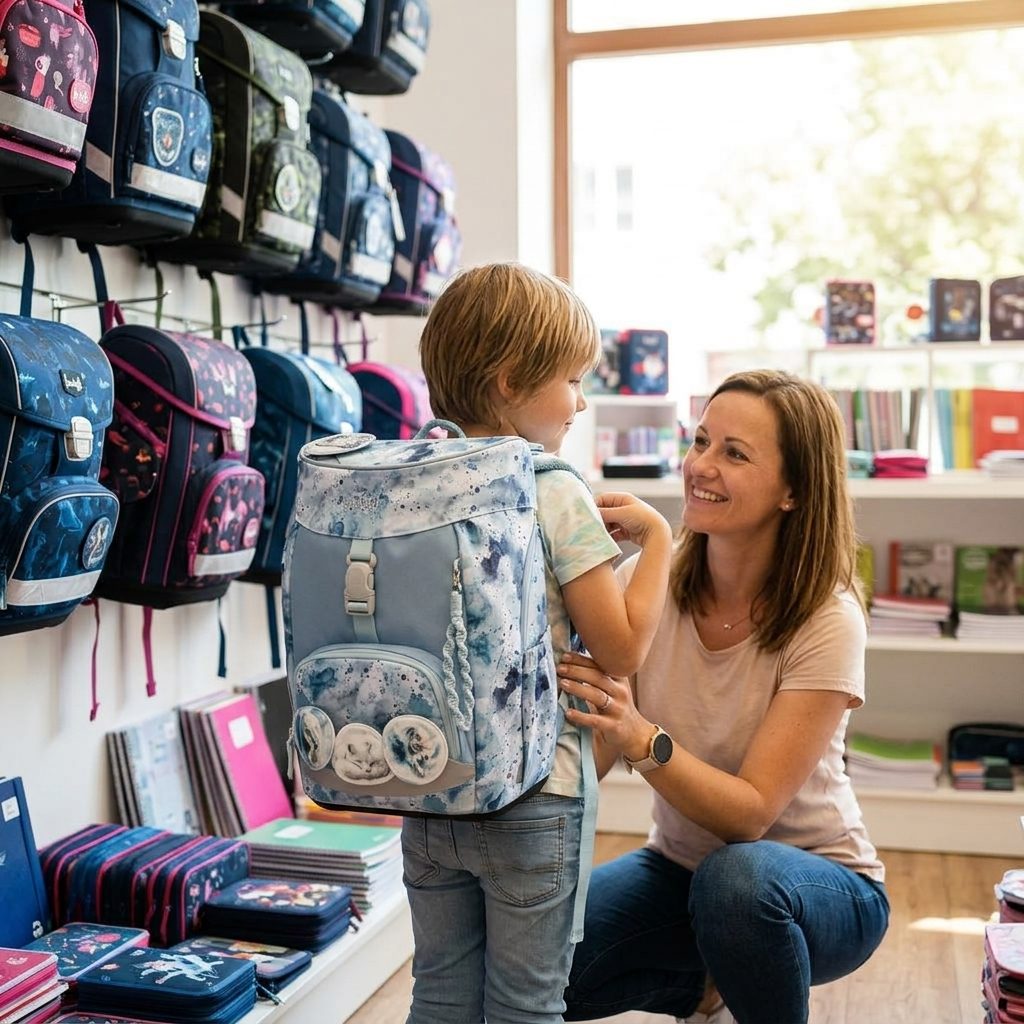
The transition from nursery to primary school is a much bigger change for a child’s body than many parents realise. At nursery, children moved around all day and only carried a backpack occasionally.
Starting Year 1 turns that upside down overnight – your child will spend at least four hours a day sitting at a desk, and on top of that they’ll need to carry a backpack full of textbooks and exercise books every day. A body that’s used to movement suddenly has to cope with a static load it isn’t prepared for.
A poorly chosen or badly adjusted backpack can easily lead to headaches and back pain, poor posture and unnecessary fatigue. Some schools do take this into account and, in the lower years, send children home with almost nothing – but for now that’s still more the exception than the rule.
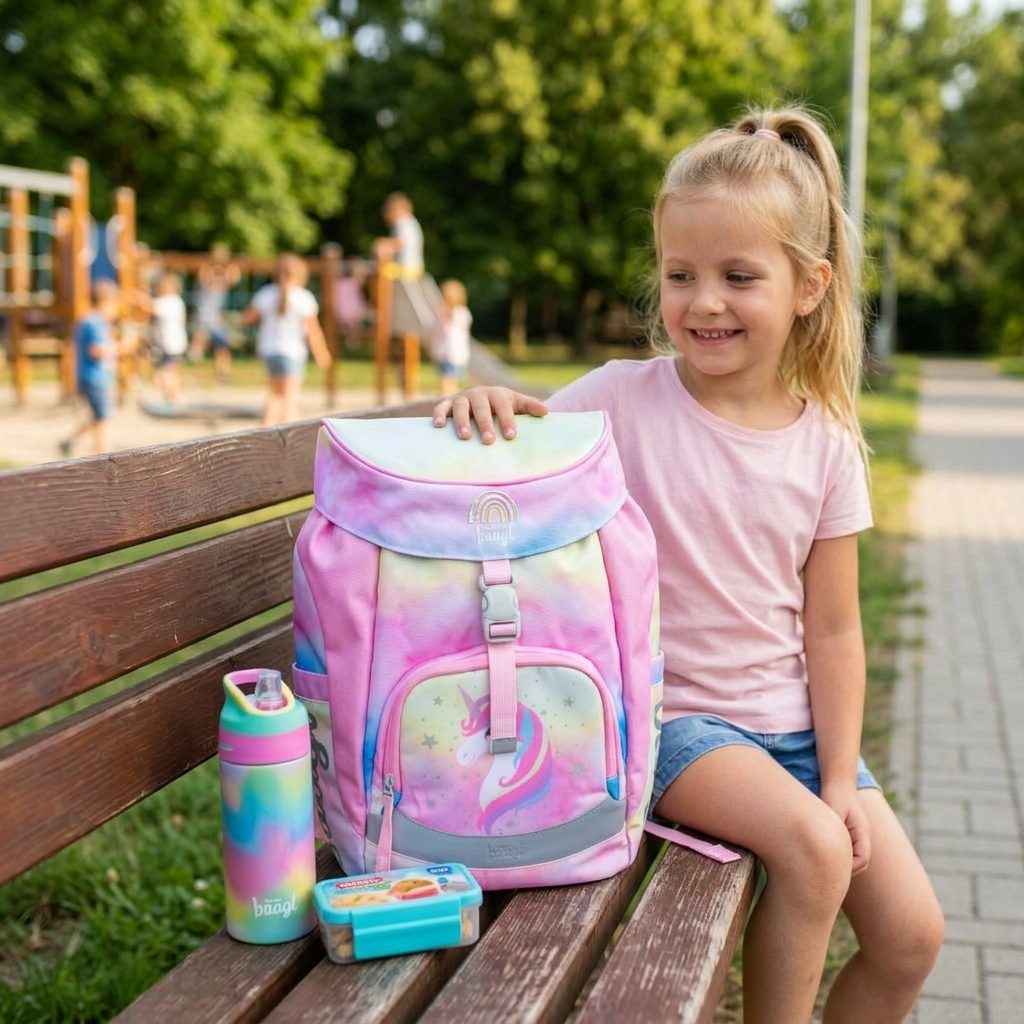
According to Lucie Ternová, everything starts with one basic rule: even the best backpack can’t compensate for a load that’s too heavy for the child’s body.
As a general guideline, the backpack (including its contents) shouldn’t exceed 10–15% of the child’s body weight – and even then, their build matters. To give you an idea: for a Year 1 child weighing around 20 kg, the backpack with everything inside should weigh no more than 2–3 kg.
If the backpack doesn’t suit the child – whether because of its weight or its design – it shifts their centre of gravity. The body tries to compensate in whatever way it can: lifting the shoulders (overloading the neck muscles) or leaning forwards through the torso to keep the weight on the back under control.
In children with hypermobility, this can show up in overall posture too – for example, increased ankle rolling inwards or toes turning inwards. So the wrong backpack doesn’t just affect the back, but the alignment of the whole body.
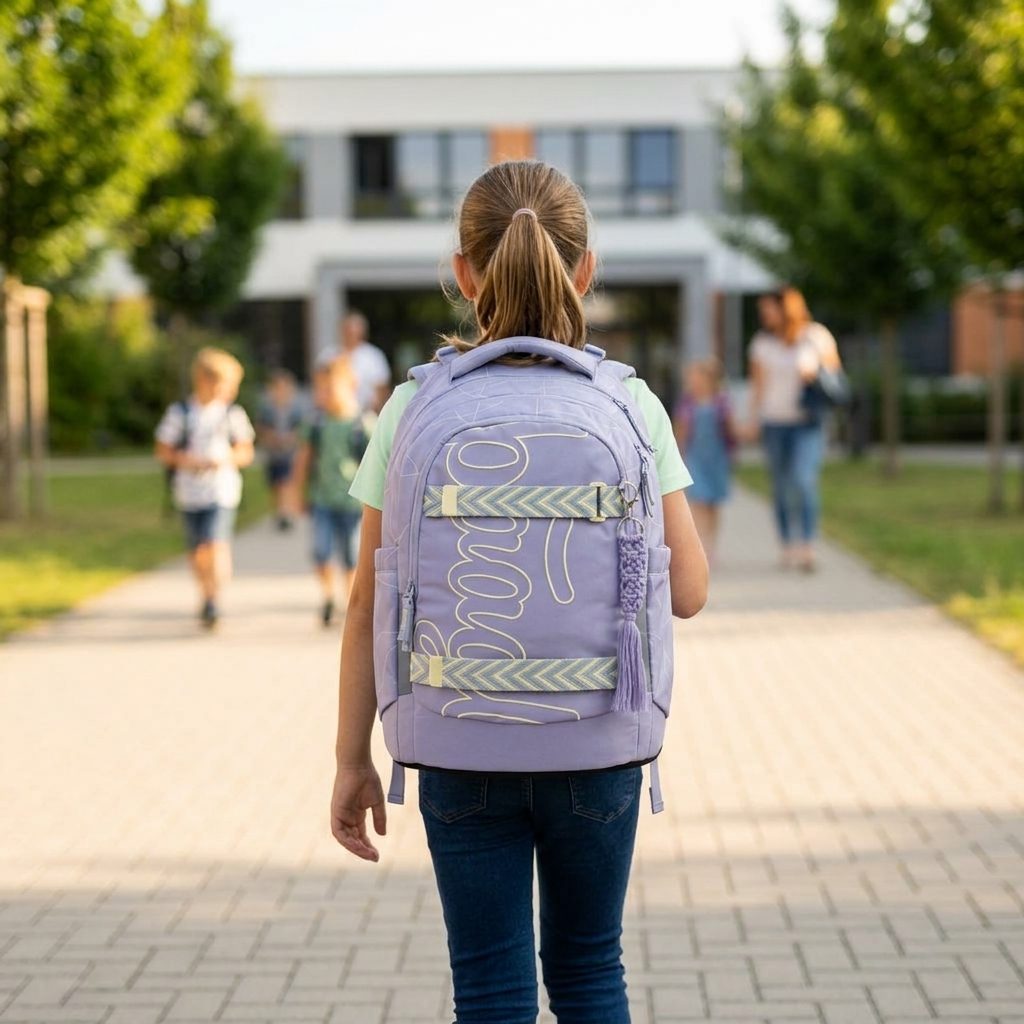
From a physiotherapy perspective, a backpack is clearly the better choice. Thanks to the flexibility of the material, it adapts better to the shape of a child’s back, and the straps sit more snugly on the shoulders and hips.
A backpack is also usually lighter than a rigid satchel, which matters especially for smaller children. Satchels tend to suit more robust children whose bodies can cope better with a firmer, less flexible construction.
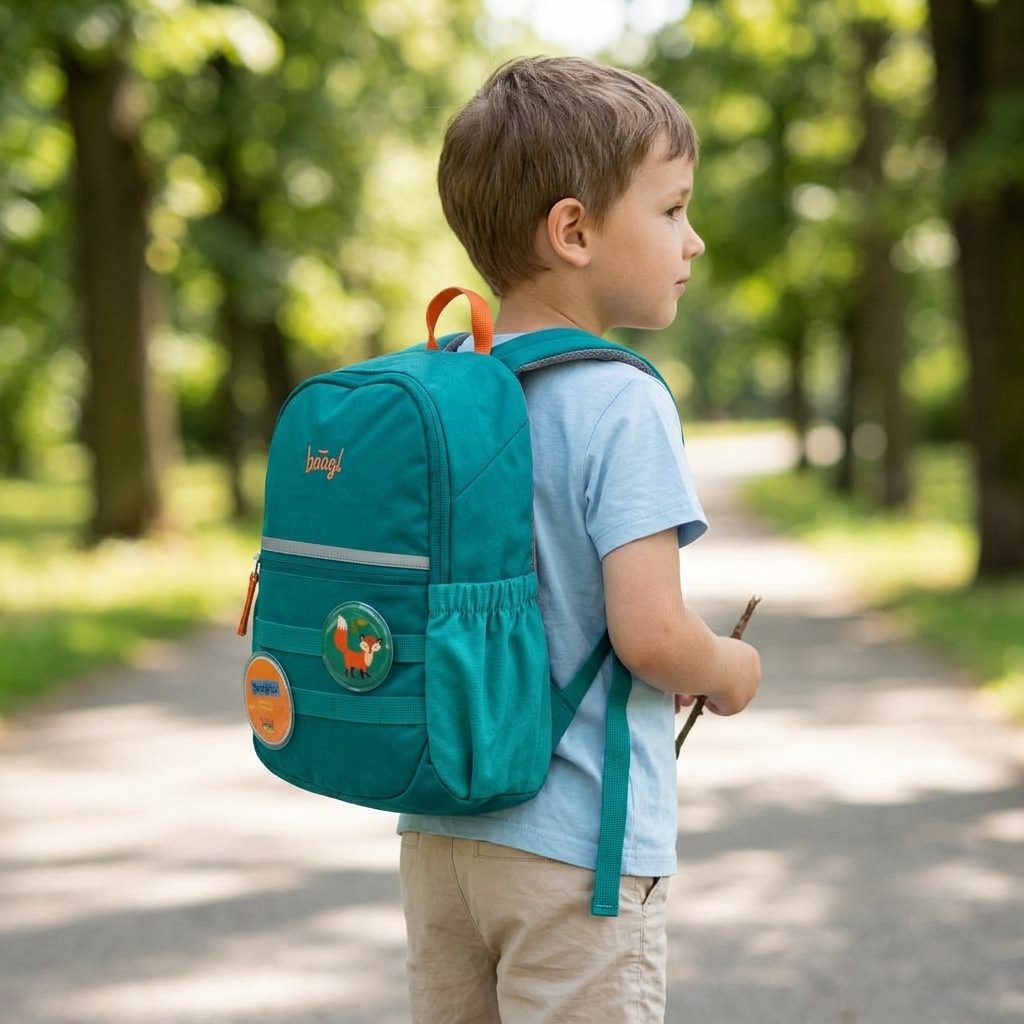
There’s no such thing as a universal “best backpack”. Whether a particular model is suitable depends on your child’s build – especially shoulder width, torso length and muscle tone.
That’s why it’s always best to try the backpack on your child, rather than guessing based on size or age on the packaging. Let’s look at what to focus on when choosing a school backpack:
Backpack size is often underestimated, yet it’s one of the key factors that determines how comfortable it is to carry. The backpack should:
A backpack that’s too big is harder to carry because it’s difficult for the child to stabilise.
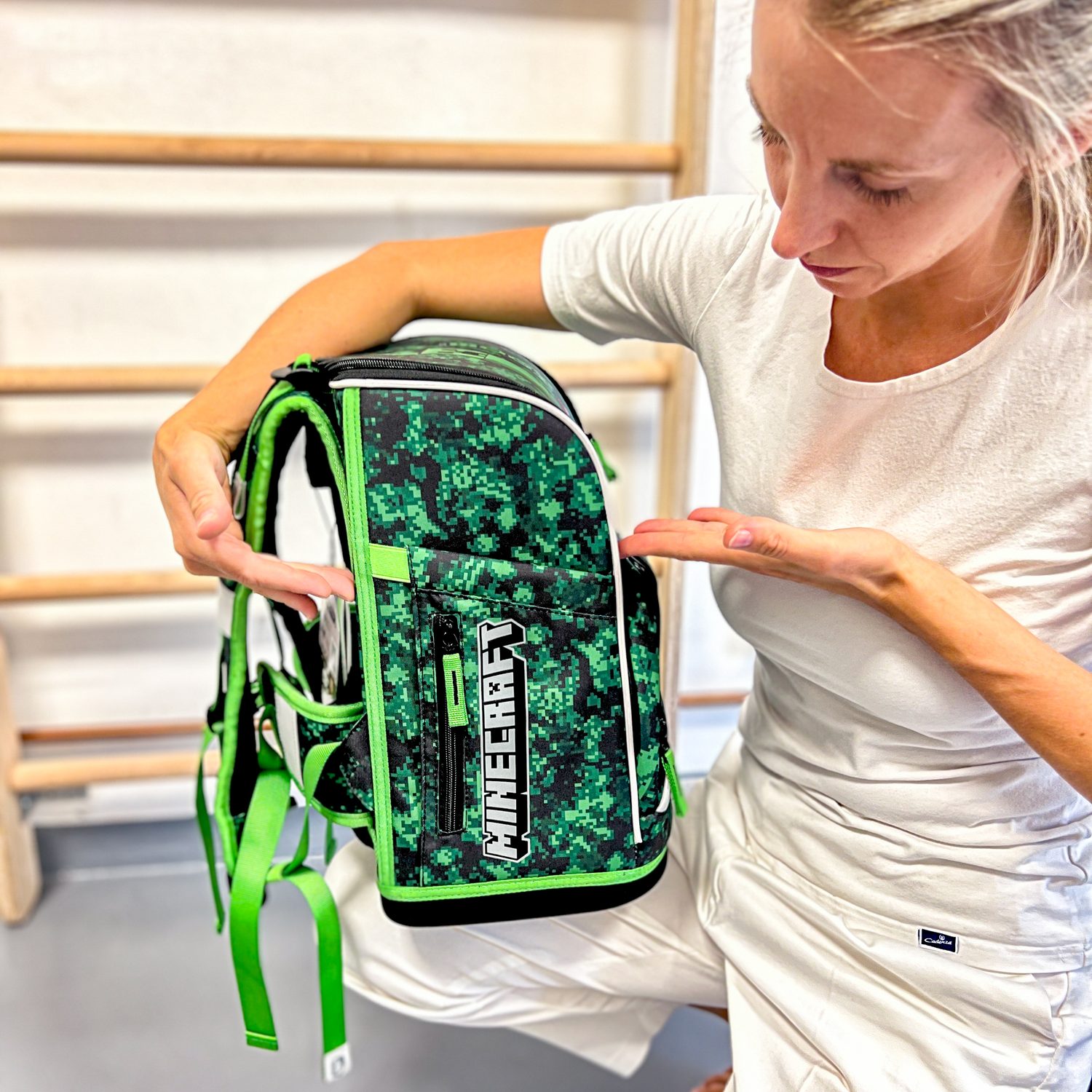
The lighter the empty backpack, the better. Even before you add textbooks, the backpack already has its own weight – and that counts towards the 10–15% limit just as much as the contents do. So it’s worth choosing lighter materials.
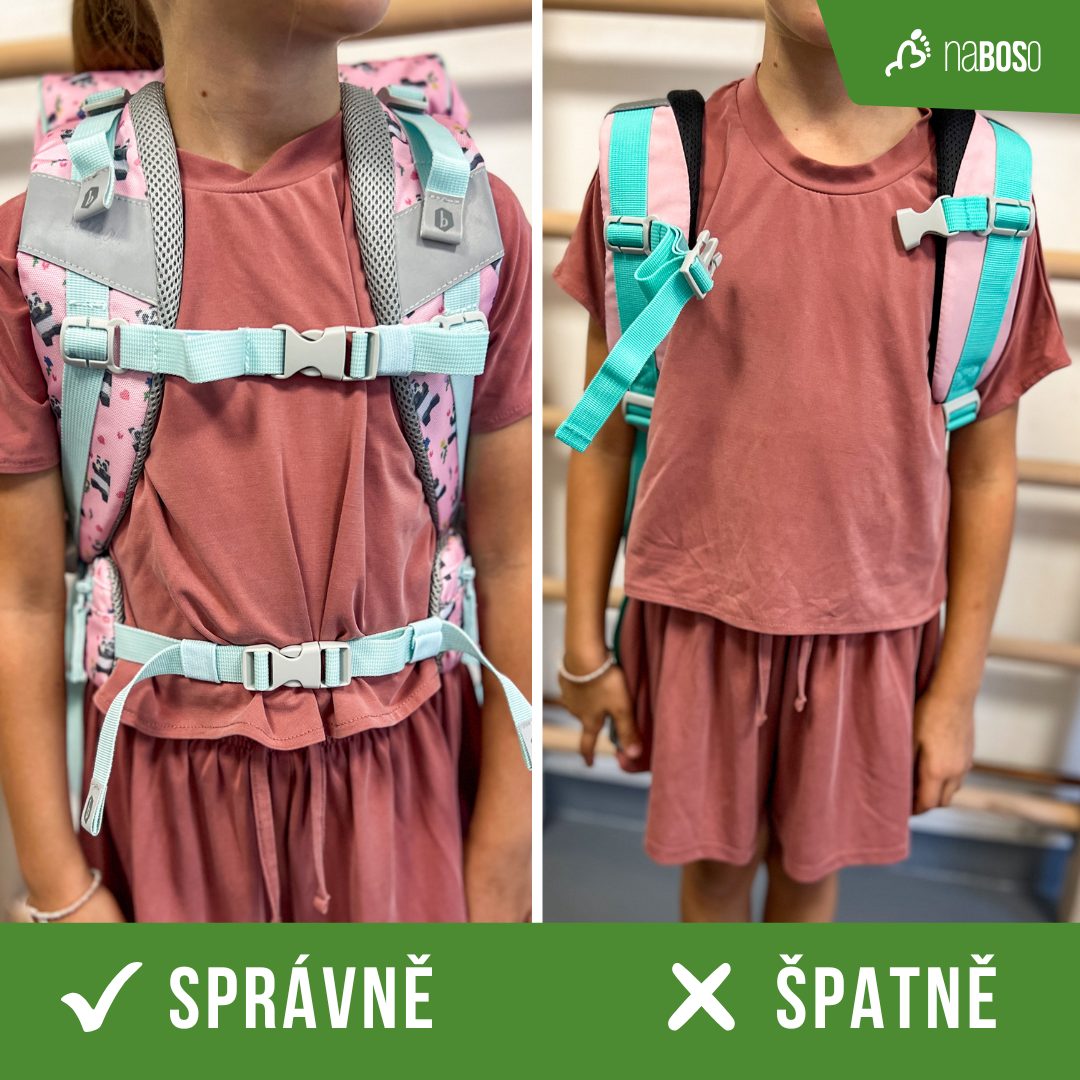
A backpack should always have at least a chest strap – it helps keep the shoulder straps in place and improves stability while walking.
For Year 1 children, who are still small and are only just getting used to carrying textbooks, or if the contents are heavy, the backpack should ideally also have a hip strap. This helps distribute the weight across the torso and transfers some of the load to the pelvis instead of leaving it all on the shoulders. For older children, it’s no longer essential.
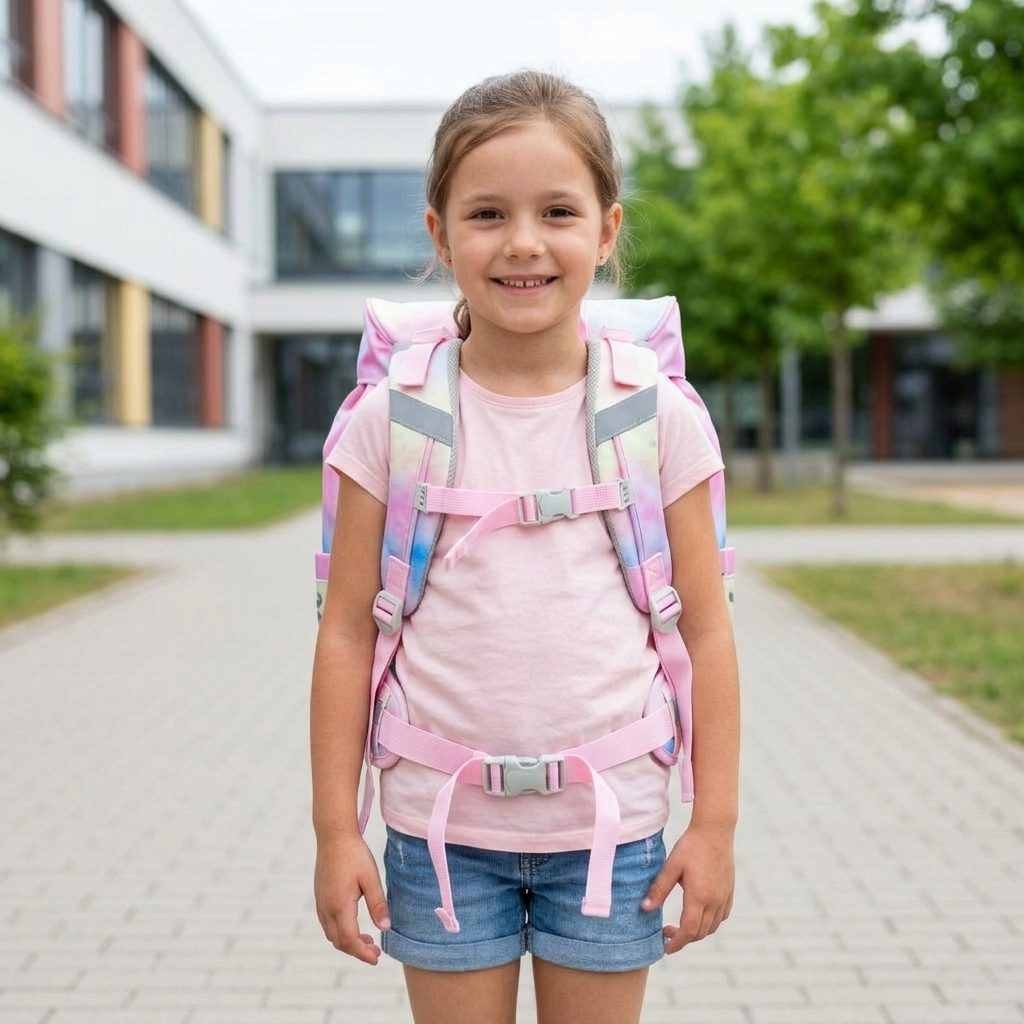
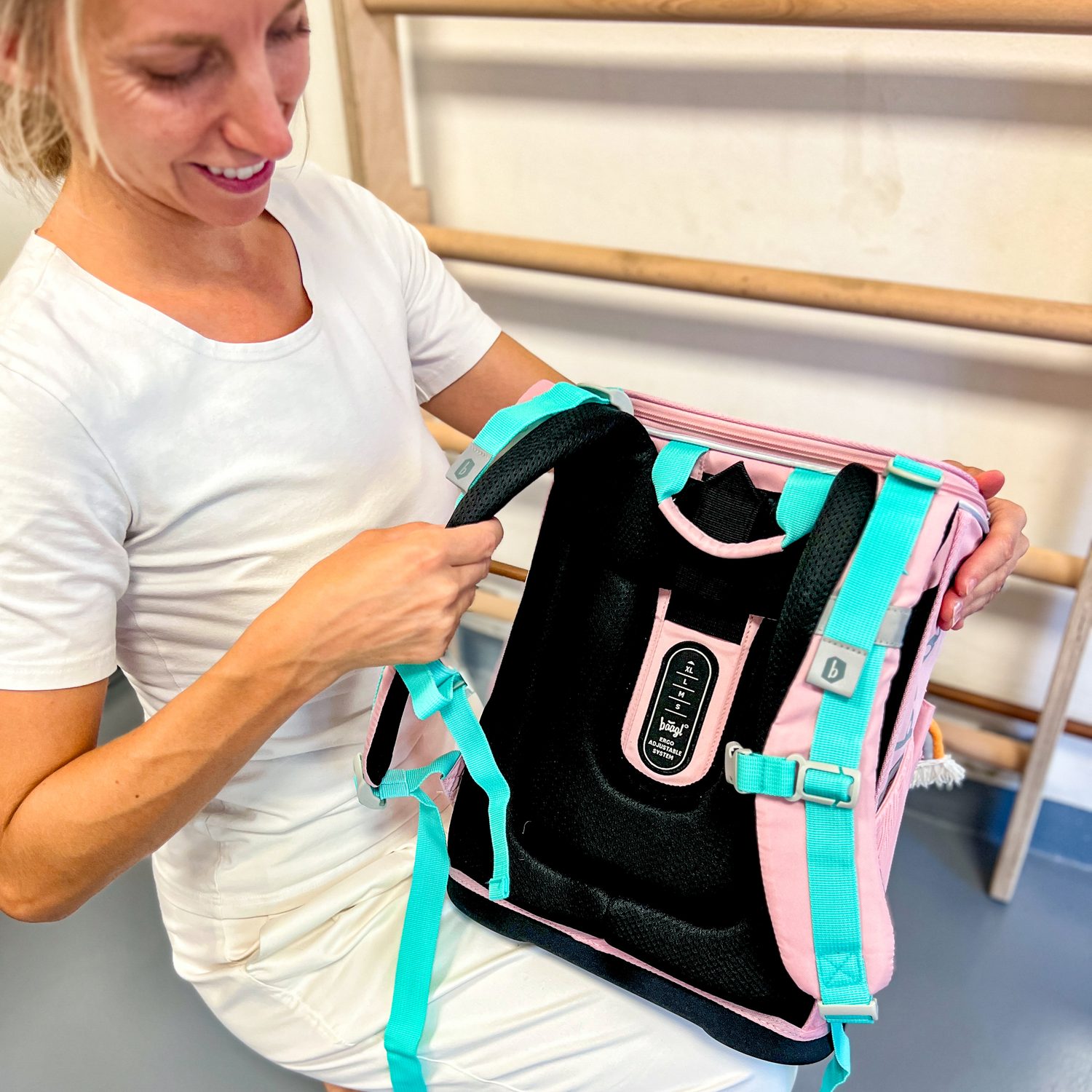
Look for wide, soft straps with good-quality padding to protect shoulders and collarbones from pressure marks – especially for bonier children, where thin straps can dig into the skin. A sufficiently long adjustment range is important too.
A backpack should have a well-organised interior. If it’s just one big, unstructured space where everything shifts around as your child walks, it disrupts stability and balance. Your child then has to constantly (and unconsciously) compensate for the moving load, making walking unnecessarily difficult.
When choosing, also think about durable materials that can handle daily wear, being dropped on the ground and the occasional rain shower. Good reflective elements and easy opening are worth having too.
On the other hand, it’s not that important whether the backpack has the most pockets, how expensive the brand is, or whether it has an “orthopaedic” label. What matters far more is that it genuinely fits your child well.
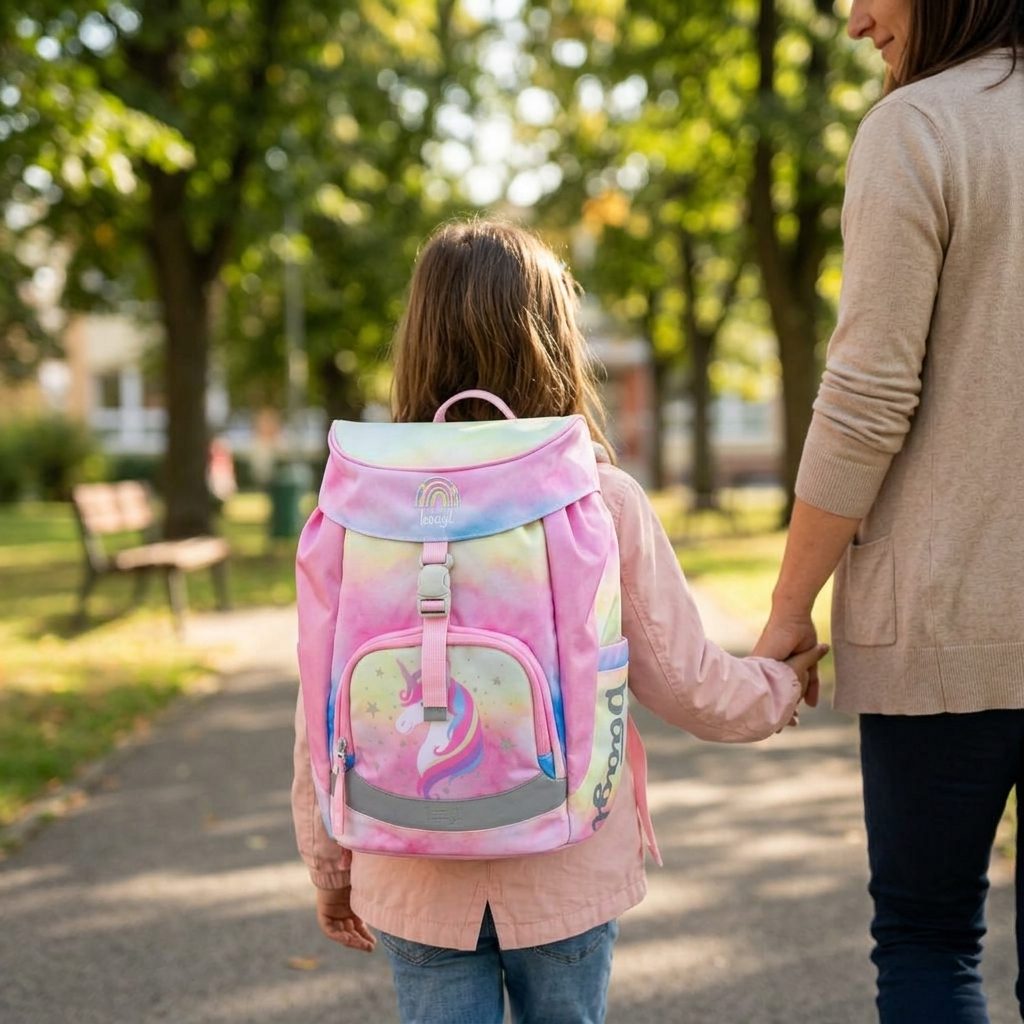
We kept these parameters in mind when selecting the models you’ll find with us – we stock Baagl backpacks, which meet them well. Here are a few tips to get you started.
For small Year 1 children, the BAAGL AIRY backpack is ideal – at just 750 g, it’s among the lightest on the market. It has an ergonomic, well-ventilated back panel, adjustable chest and hip straps, and a magnetic fastening that your child can easily open and close on their own.
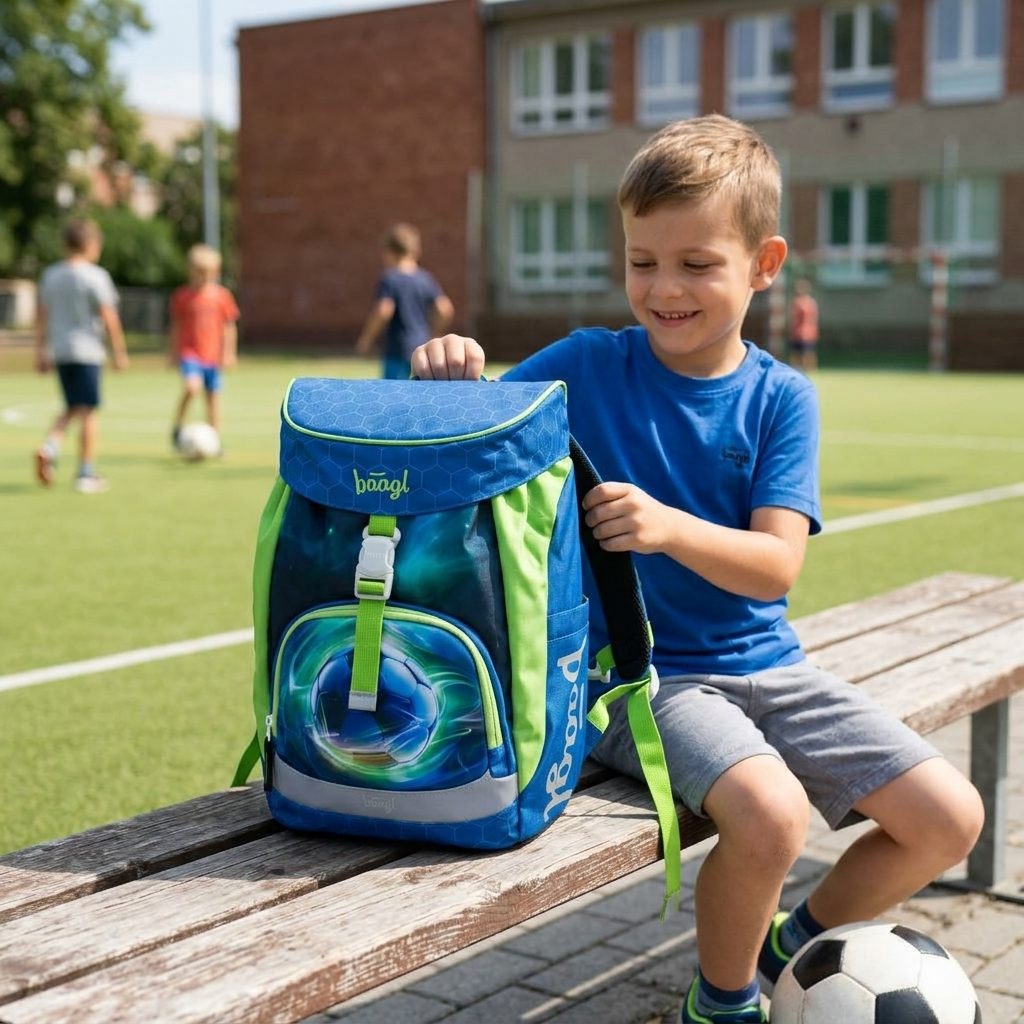
For a sturdier or taller child, the BAAGL ZIPPPY satchel with a reinforced body is a good fit. The back system can be adjusted to your child’s height, and thanks to the solid base it can handle a higher load (weight 1 100 g, volume 18 l, load capacity 6 kg).
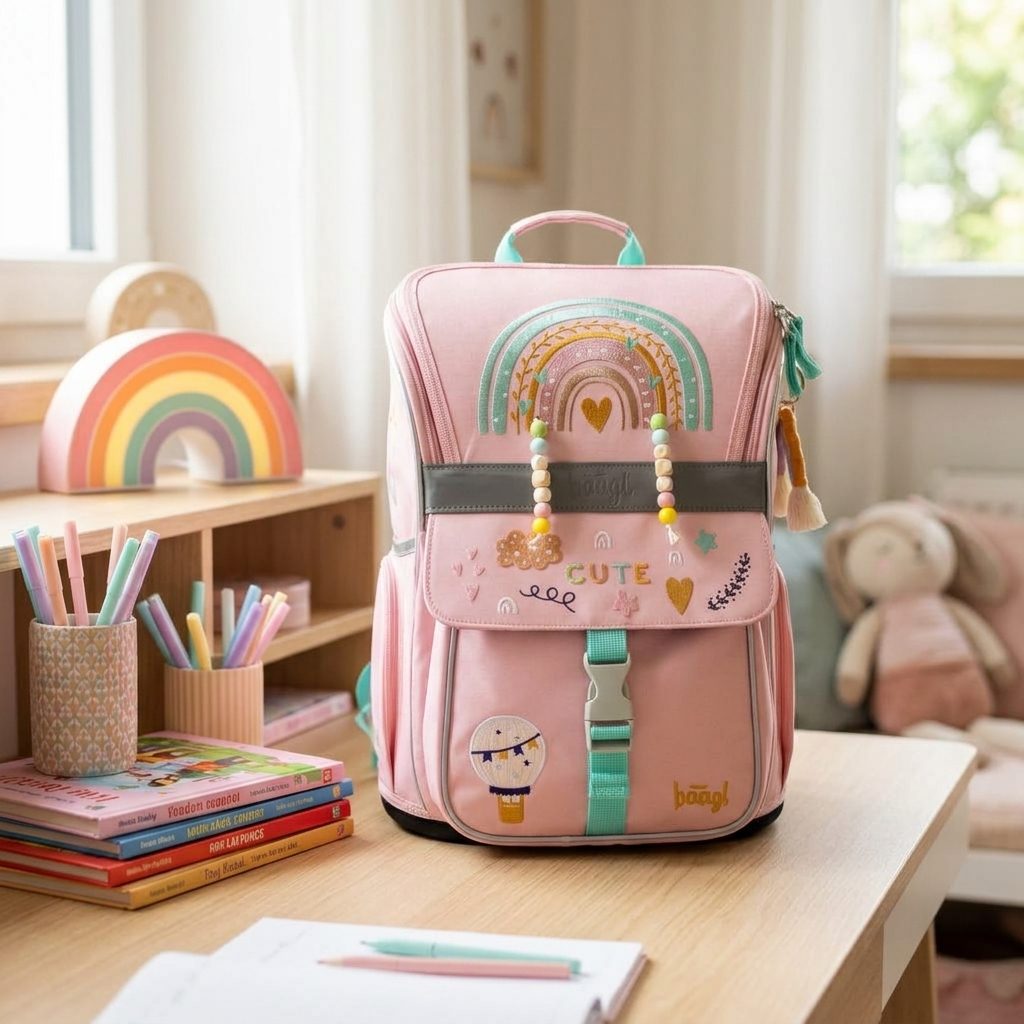
For older children, roughly from Year 3 onwards, when they need to carry more textbooks and exercise books, we recommend the BAAGL SKATE backpack range. It has three separate compartments, including a pocket for a laptop or tablet, and with a 25 l volume and 7 kg load capacity it offers plenty of space for a growing school kit – while weighing just 850 g.
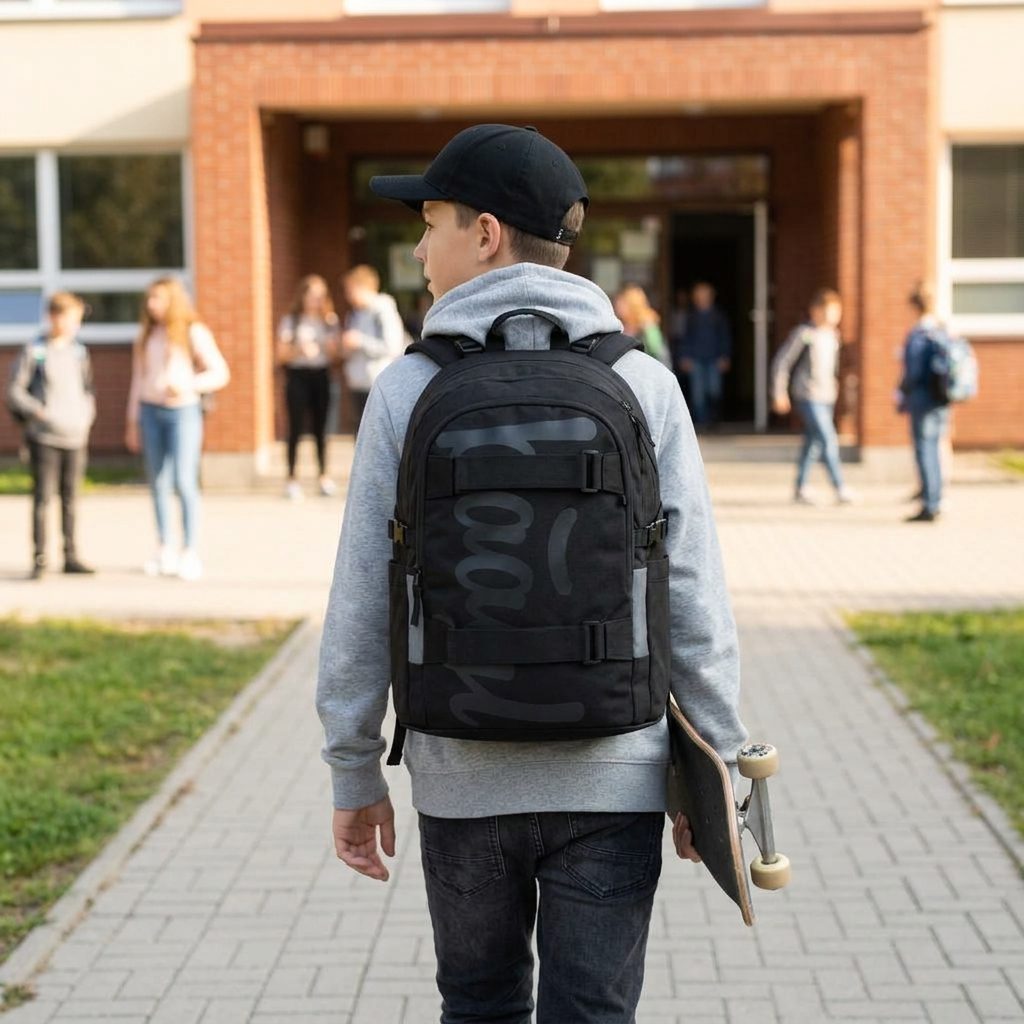
Even the best-chosen backpack will only help if it’s adjusted correctly and worn properly. Here’s how:
Tighten them so that the backpack sits as close to the back as possible and doesn’t hang far behind your child or rest on their bottom. One of the most common mistakes is carrying it on one shoulder – the load is then unevenly distributed and puts one-sided strain on the spine.
The top of the backpack should roughly follow shoulder height – it shouldn’t stick up noticeably above the head, but it also shouldn’t sit too low. The bottom edge should end around the lower back/waist area, not reach down to the bottom.
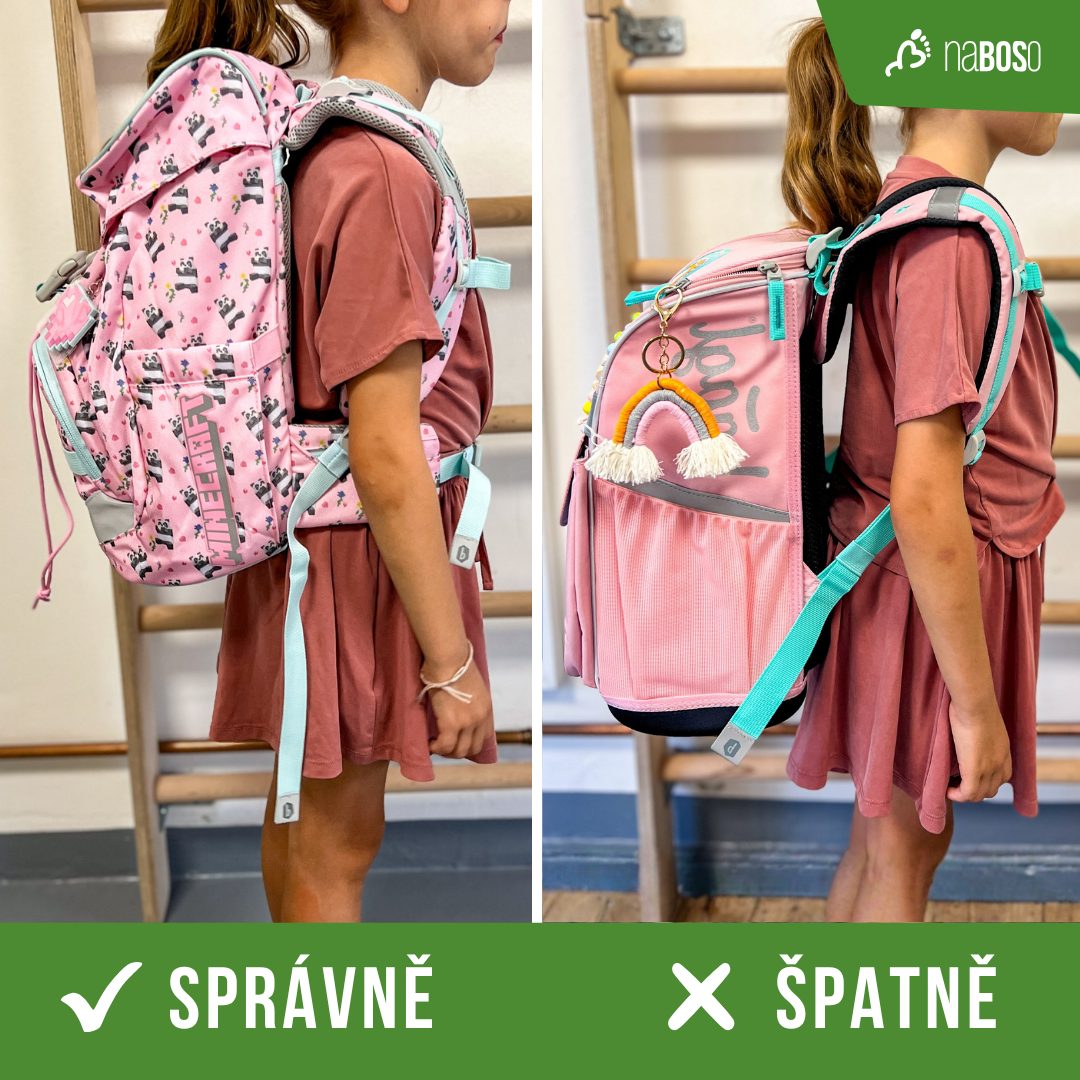
Always fasten the chest strap – it keeps the shoulder straps in place and improves stability when walking and running; it should sit roughly in the middle of the chest and shouldn’t dig in.
If the backpack has a hip strap, use it especially when it’s more heavily packed or when your child has a longer journey to school. The hip strap transfers some of the weight from the shoulders to the hips. It should sit on the upper part of the pelvis, on the hip bones, not around the waist or stomach.
Packing has its own rule too: the biggest and heaviest textbooks should go as close to the back as possible, while lighter items like a pencil case or snack can sit further away, for example in the front pockets.
In practice, it’s often the other way round – small items end up closest to the back and bulky books at the front. That shifts the centre of gravity away from the body, and your child tries to compensate for a poorly packed backpack either by leaning forwards or – if they don’t have the strength – by leaning backwards.
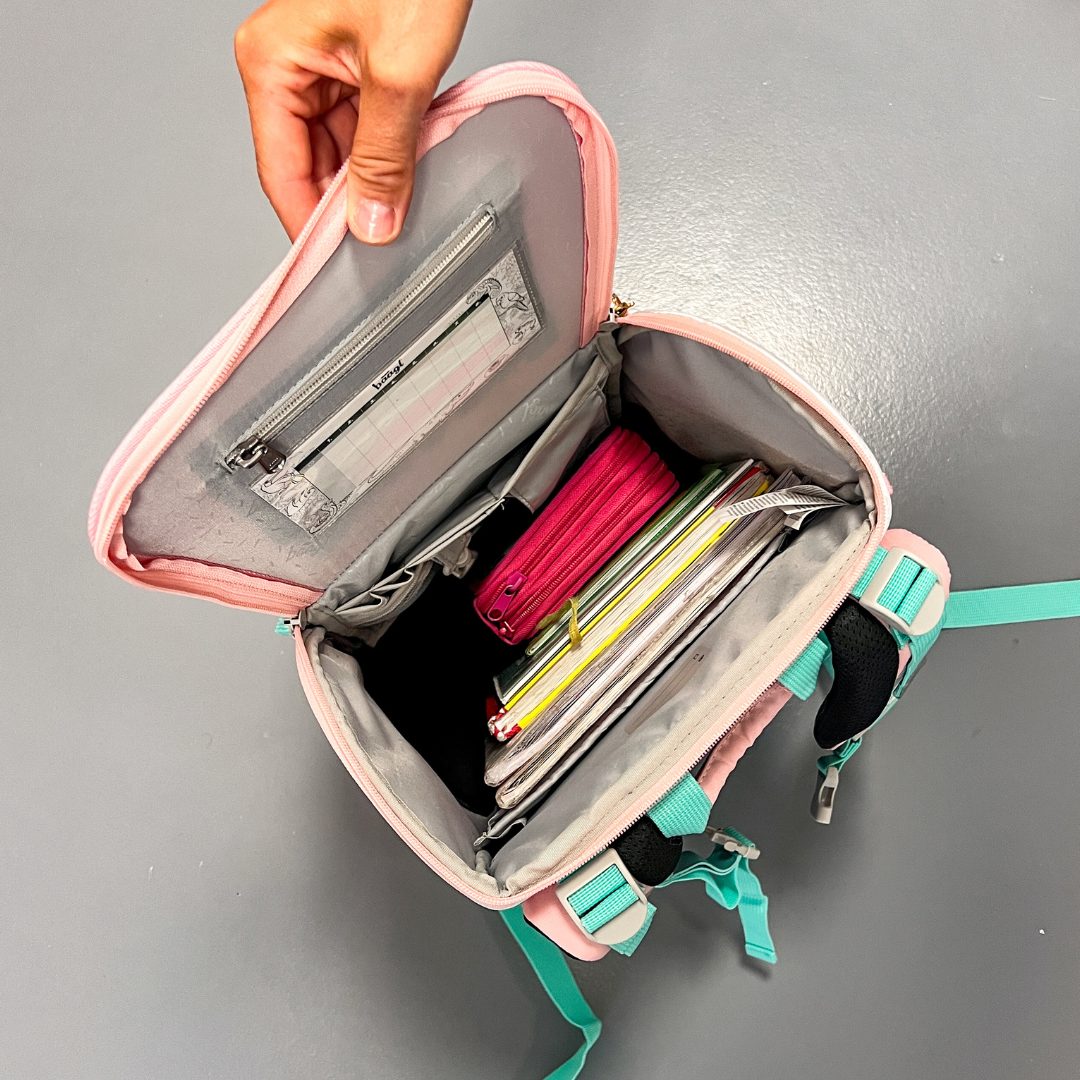
It’s worth checking the strap and belt settings from time to time – children grow quickly, and what fitted at the start of the school year may not fit a few months later.
But a well-chosen and well-packed backpack is only half the story. What your child does with their body for the rest of the day matters just as much.
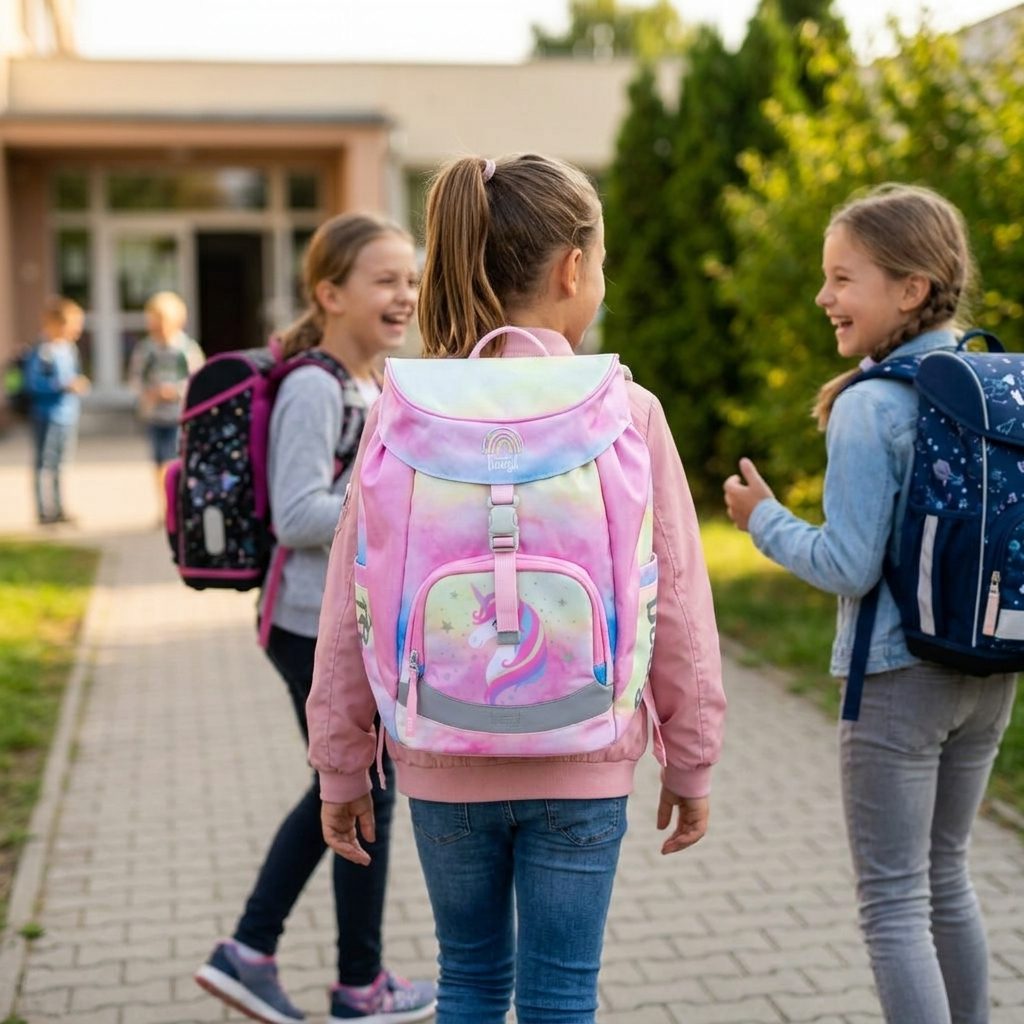
When children start school, their daily dose of natural movement suddenly drops sharply compared to nursery – and according to Lucie Ternová, it’s important to consciously make up for that loss.
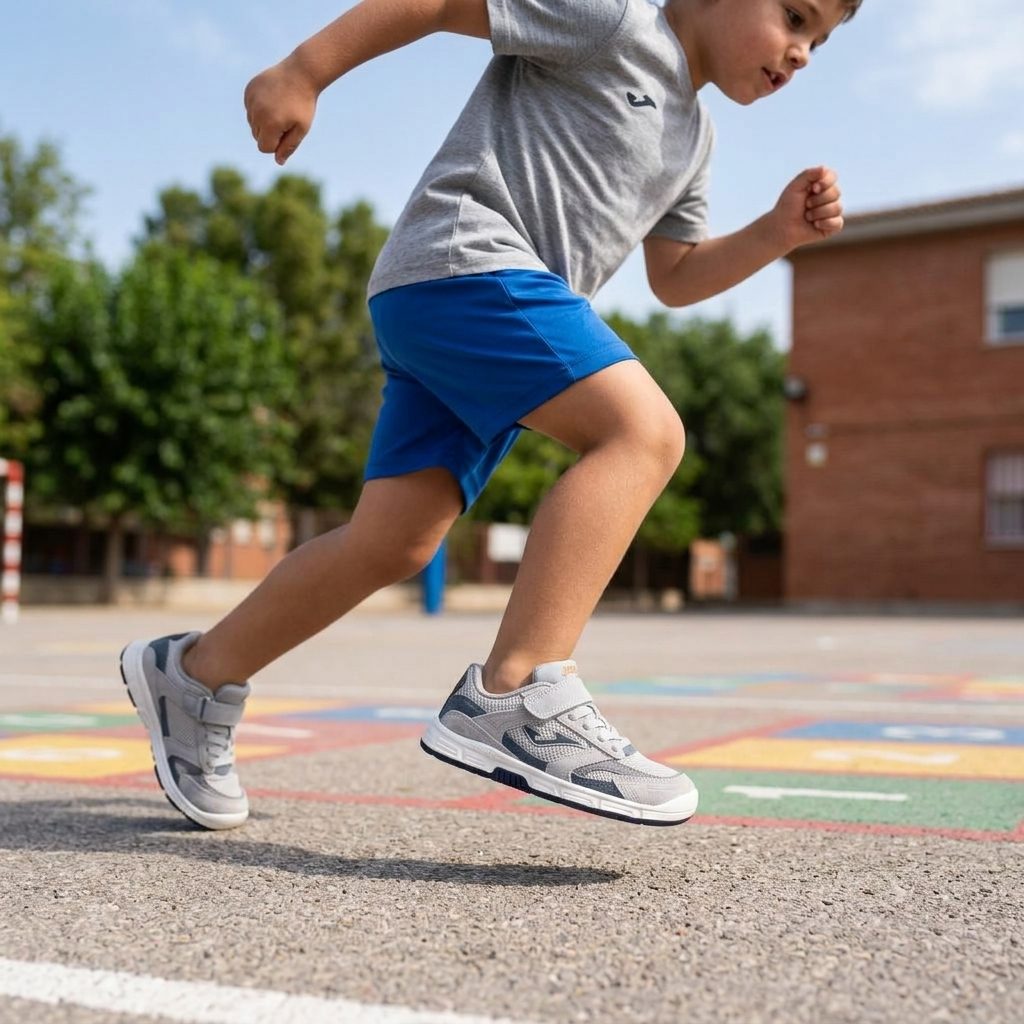
An afternoon at the playground or a regular sports club can help, giving your child back at least some of the movement they miss out on at school.
If possible, it’s a good idea for a parent to carry the backpack to and from school for children in Year 1 and Year 2, easing some of the load that school places on them.
And if you take just one thing away from all of this, let it be this: on the way to and from school, walk or use public transport, not the car. This small but daily habit is one of the most reliable ways to make up for missing movement.
How can you tell something isn’t right? It’s worth watching out for these signs:
If the backpack feels heavy to you, or your child complains about it, the simplest thing is to use scales and check whether it still falls within the 10–15% limit of your child’s body weight.
Lucie Ternová adds that, in her experience, posture changes during the transition from nursery to school mainly due to a lack of movement. However, if your child gets enough movement and carries an appropriately weighted backpack, yet still complains of musculoskeletal pain, it’s worth visiting a paediatric physiotherapist.
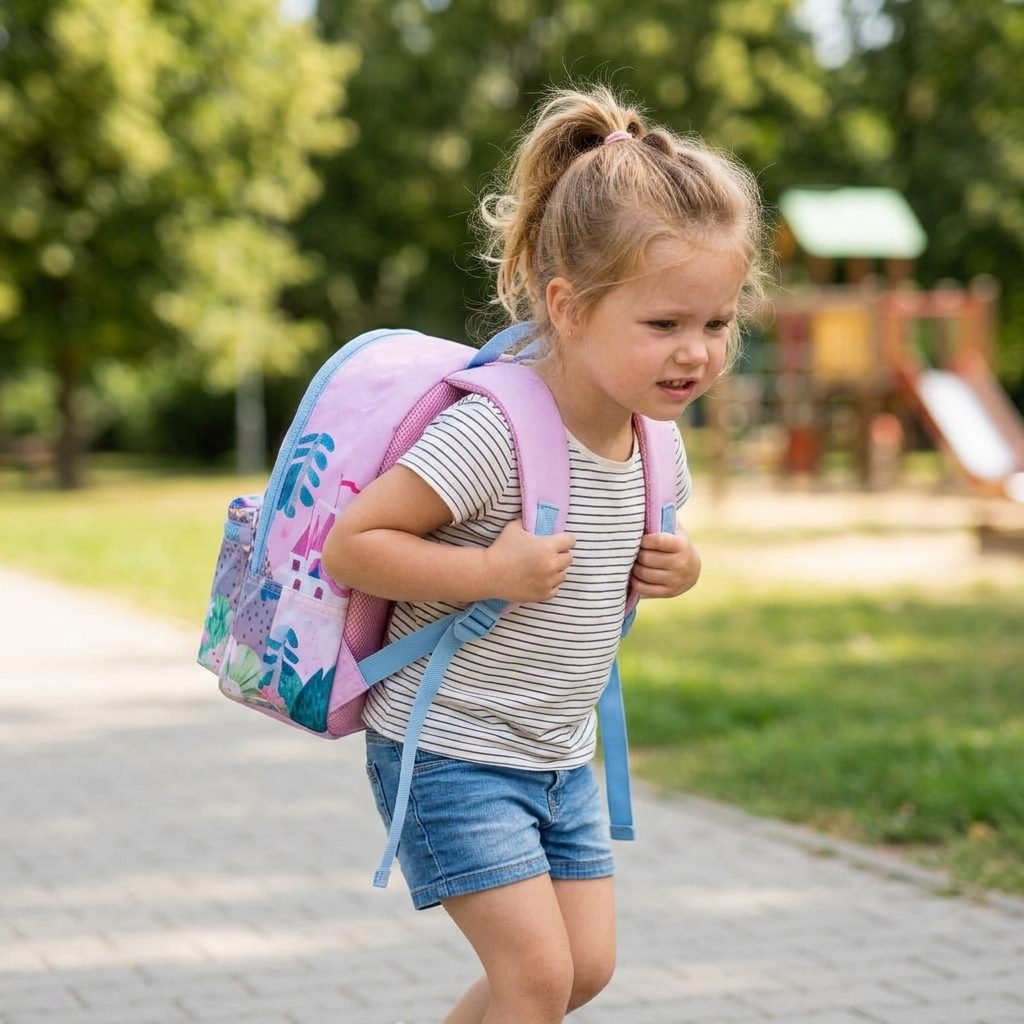
A properly chosen and adjusted backpack saves your child unnecessary strain every day and, together with enough movement, helps them start school feeling lighter and more comfortable.
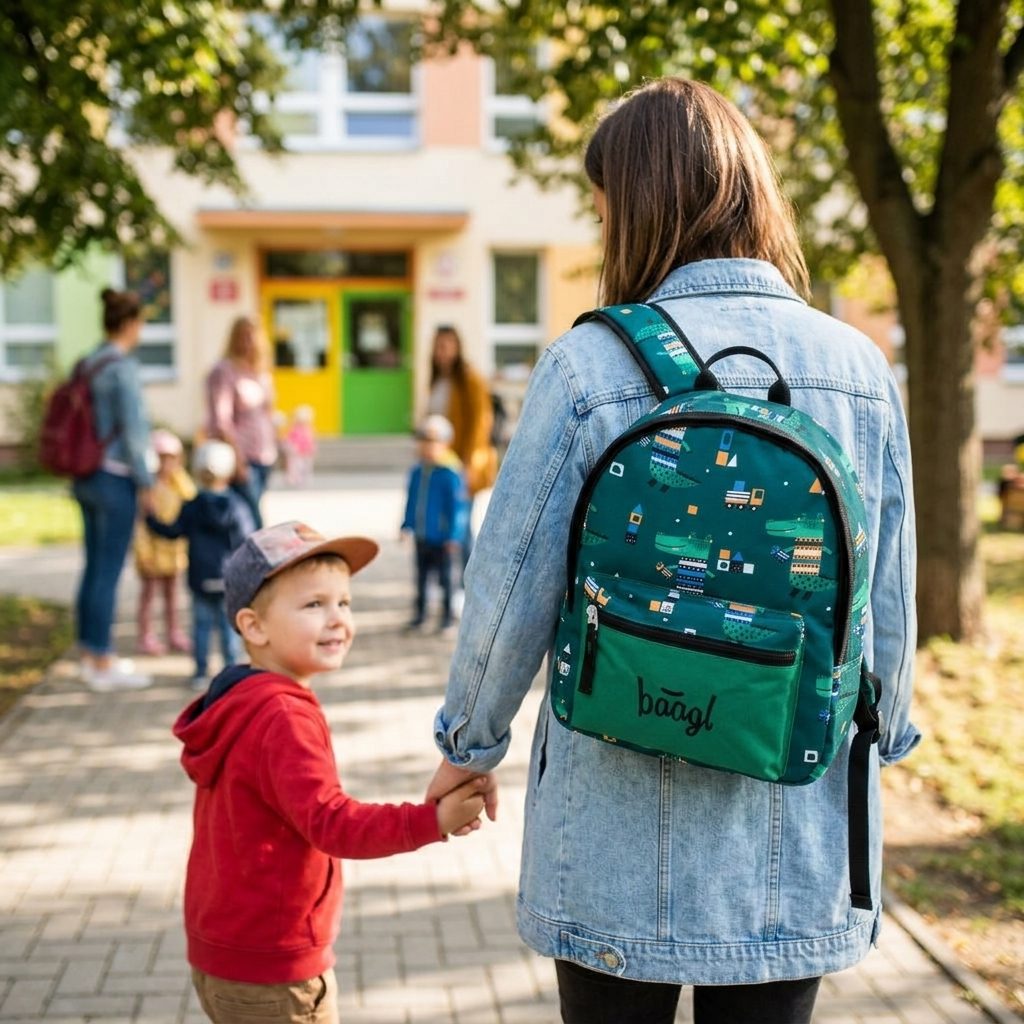
This article was created in collaboration with physiotherapist Lucie Ternová. Lucie is a paediatric physiotherapist who focuses mainly on children’s osteopathy. She is also a certified trainer in Prof. Pavel Kolář’s method — dynamic neuromuscular stabilisation. You can find more information and tips on her Instagram @mamasport.cz.


You are currently on www.premiumbarefoot.co.uk


 £ - EN
 Čeština
 English (US)
 Slovenčina
 Magyar
 български
 Polski
 Dansk
Dansk
 Nederlands
 Svenska
 Suomi
Suomi
 Español
 Français
 Slovenščina
 Română
 Português
 Deutsch (DE)
 Deutsch (AT)
 Deutsch (CH)


