We’ll be happy to help via online chat or at: orders@premiumbarefoot.com

Children Barefoot Selecting and Maintaining Barefoot Shoes
Is your child starting to walk as the weather turns cold? Find out how to keep them warm in a carrier, in the pram and as they take their first steps. Choose barefoot shoes or booties.
The sun is losing its warmth, the leaves are turning every colour and a jumper is no longer enough for a walk. That’s right – winter is on its way, and falling temperatures bring the annual dilemma for mums everywhere: how do you dress your children so they stay warm outdoors? We’re here to help, with advice on how many layers your baby needs in a cosy winter footmuff in the pram, as well as what to wear in a carrier. And of course, we’ll recommend the ideal winter barefoot shoes for first steps – or warm booties if your baby isn’t walking yet.
We’ll answer all these questions and more below. We’ll look at winter essentials for little ones, from footwear to clothing, and share a few extra tips along the way.

Fresh air is good for body and mind, whether you’re a baby, a little one who loves to run around, or a mum. In winter, things get a little more complicated. Every day brings tricky questions: what should your baby wear? How many layers? How long can you stay outside? The general limits depend on your child’s age and the temperature. As a rule of thumb:
A good winter snowsuit, waterproof gloves, a warm hat and, of course, something cosy for their feet are essential parts of any little one’s wardrobe.

In a carrier, your baby has the perfect source of warmth on one side – your body. On the other side is the carrier or sling itself, with everything tucked beneath a winter coat or babywearing jacket. So there’s no need to squeeze your baby into a snowsuit as well. Dress them in several thin layers that you can remove or add to as needed.
An ideal base layer is merino wool, which has distinctive properties, including excellent temperature regulation (it keeps you warm in winter and cool in summer). It also wicks away sweat, is breathable and hypoallergenic. You can find merino clothing for little ones from Czech brands Crawler and Dupeto. The next layer could be a sweatshirt or jumper, with more than one layer if needed.

It’s important to cover any parts of the body that stick out of the carrier. That means the head, neck, hands and feet. A warm knitted hat from Grandma is lovely, but why not ask her to knit a neck warmer to match, or even a balaclava? Curious little heads often peer out of the carrier in every direction, with necks stretched so far that a giraffe would be jealous. Let them explore the world, but keep them warm while they do it.
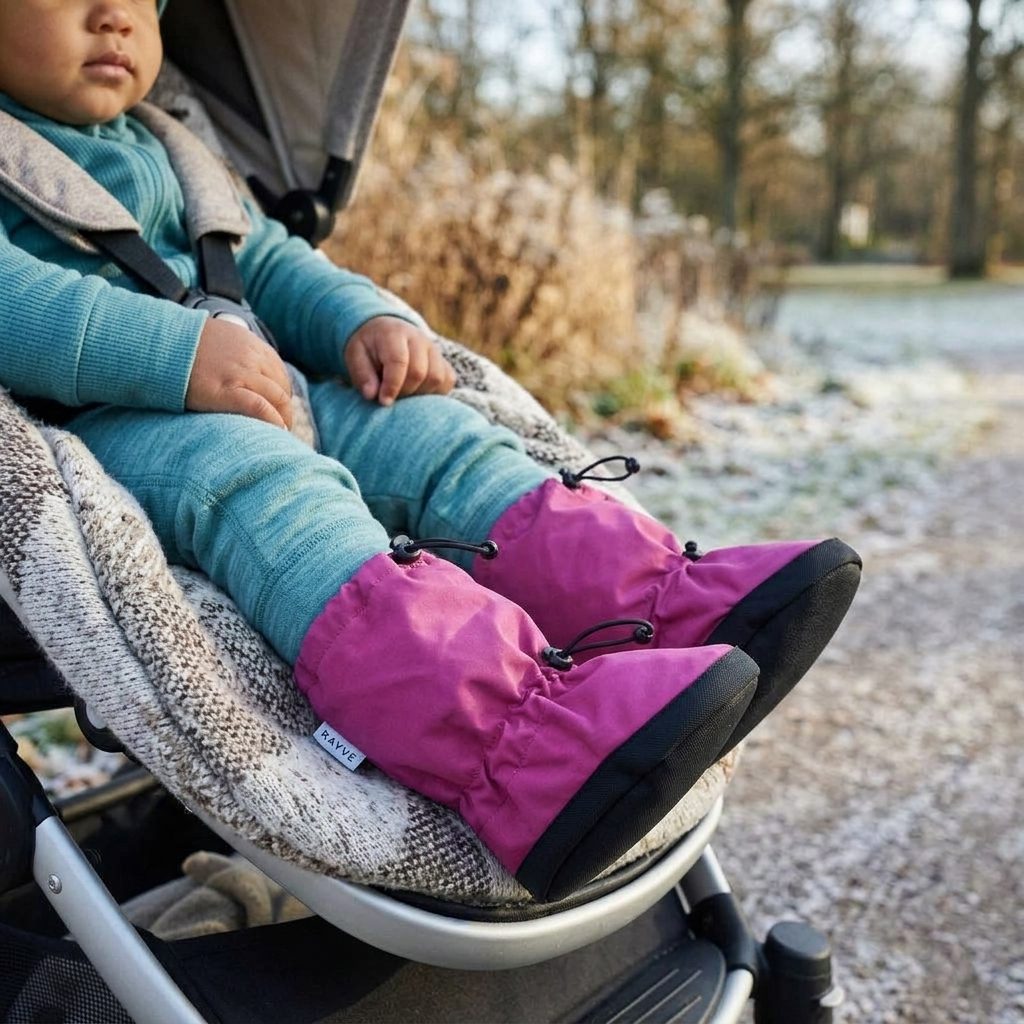
Hands may be tucked inside the carrier or wrapped around Mum. But if your baby likes to wave their arms about, don’t forget a good pair of gloves. Just as you can cover their hands, you can also get leg warmers, booties, or even warm winter booties for their feet. We stock cosy winter booties from Reima and Rayve, as well as wool-lined booties from RAYVE.
Our tip: Protect your baby’s sensitive skin with a good winter cream for children. Cold weather can be harsh on delicate skin, so choose carefully and remember to apply it to those adorable cheeks before every walk. Weleda is one example of a trusted, all-natural brand.
A pram is much like a carrier, except that instead of Mum providing the warmth, you have a winter footmuff. Unless you’re planning to finish your walk at a fashion show, your baby can wear their usual indoor clothes: a bodysuit and sleepsuit made from natural materials. Add a fleece (or warmer) snowsuit and tuck your baby into the winter footmuff up to their neck.

If you live in the mountains or the weather is set to be particularly cold, you can’t go wrong with merino wool base layers. Don’t forget gloves if the snowsuit sleeves can’t be folded over their hands. Feet need to stay warm in the footmuff too, so cosy socks or booties are useful even for the youngest babies.
Remember a warm hat that covers their ears, because most body heat escapes through the head. And don’t underestimate the value of socks. Merino socks are exceptionally soft and warm, and they dry quickly too.

If your curious little one is already exploring the world on foot, a good-quality water- and wind-resistant snowsuit will be a reliable companion for winter adventures. Quality clothing is worth the investment, and it pays to look at the materials and their properties. Ideally, choose performance winter softshell. Pick the right size and it may last for two seasons.
From our own experience, we recommend Reima for children’s performance winter clothing. The brand offers snowsuits as well as separate jackets, trousers, hats, scarves, gloves and waterproof winter booties. The materials are breathable, wind-resistant, have a hydrostatic head of up to 12,000 mm and are relatively easy to clean when they get everyday dirt on them. They also come in lovely, simple designs that are a pleasure to choose from.

A tip worth remembering: keep a small spare blanket under the pram. If the temperature suddenly drops, as it often does on winter evenings, you can simply add the blanket beneath the footmuff as an extra layer.
For the pram and short walks with little ones who are just beginning to explore the world on foot, we naturally recommend warm winter barefoot shoes. Thanks to their thin, flexible soles, the muscles throughout the foot are engaged as your child walks in barefoot shoes. This encourages circulation and helps the feet warm themselves. So there’s no need to worry that the thin sole will make your child’s feet cold.
You can learn more about the benefits of barefoot shoes for children in our guide to choosing first shoes. For now, let’s look at some specific types of winter barefoot shoes for the smallest feet.

Fur-lined winter leather shoes from Bobux are a great choice for keeping little walking feet warm. They have a thin, flexible sole that provides warmth and excellent flexibility for proper foot development and coordination. Leather is naturally breathable, helping to keep feet from getting sweaty. The non-slip material provides grip even in challenging winter weather.

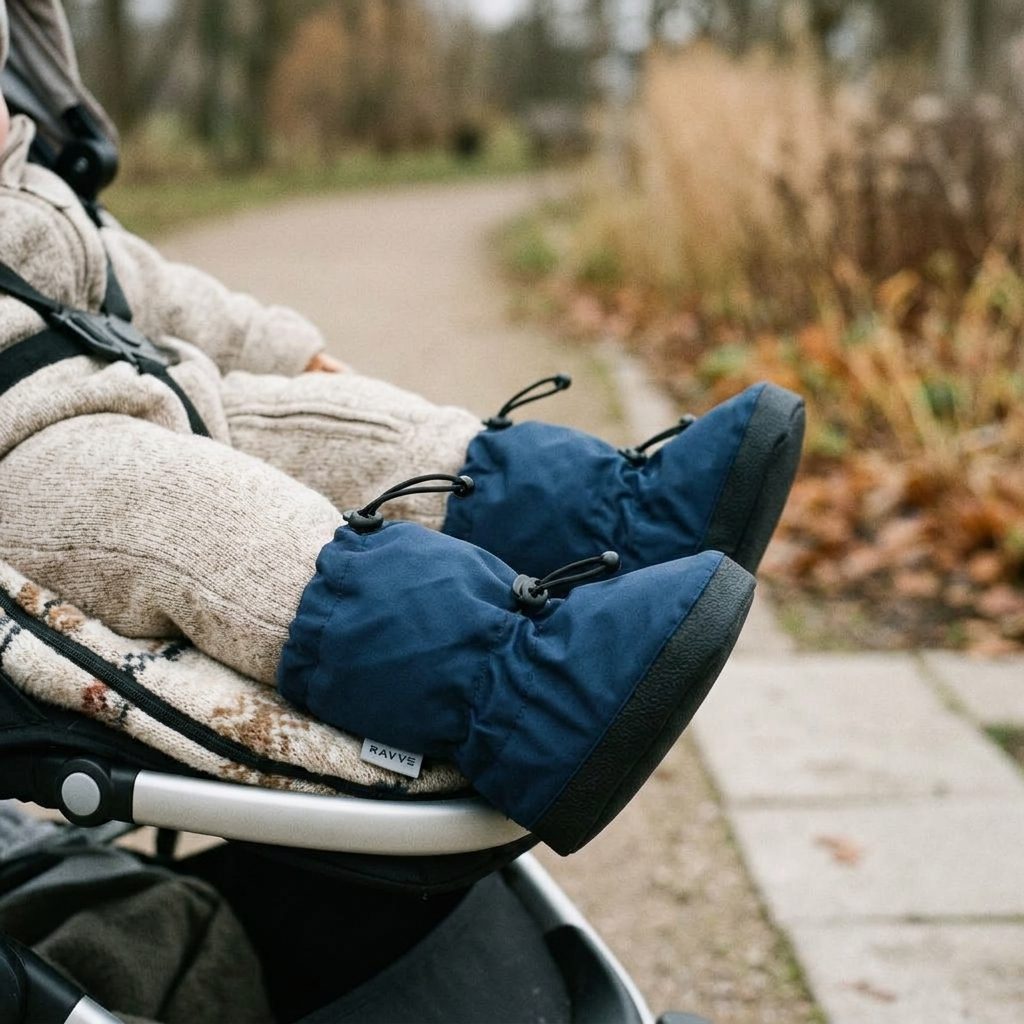
The popular RAYVE winter booties keep little feet warm and comfortable. The upper is made from durable softshell that protects against wind, snow and damp, while the soft insulated lining keeps feet warm. The thin, flexible sole allows the foot to move naturally, making the booties suitable for the pram, the carrier and walks, and helping little ones as they take their first steps. Two drawcords with toggles, one around the ankle and one at the top, make the booties easy to put on and keep them securely in place. They also come in lovely colours that are easy to match with any snowsuit.
That covers winter footwear for outdoors, but little walkers may also need something on their feet at home, at playgroups or when visiting family. As their body gets used to the new movement of walking, it’s especially important to allow their body to rely fully on the foot and its ability to balance. Walking barefoot is ideal, of course, but it isn’t always possible, practical or appropriate.
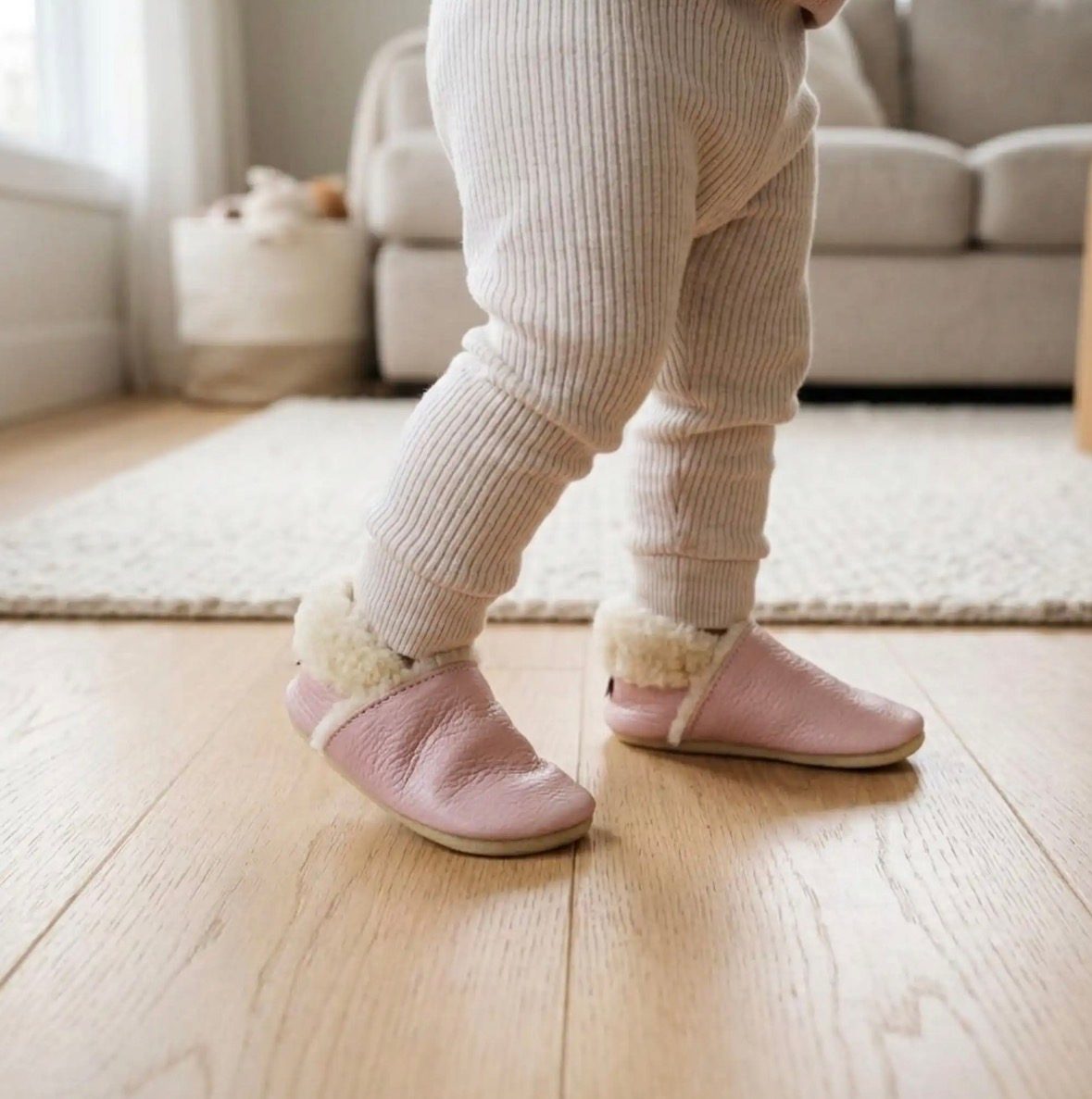
Look for socks and tights with non-slip soles, or choose booties that help prevent slipping. Booties can be another useful part of your baby’s kit to keep close at hand. RAYVE offers slipper-style booties with cute pictures as well as plain colours: RAYVE.
Ideally, wait until your child has been walking independently for more than two months, without any support, before buying their first shoes. They should no longer hold their arms up for balance and should be able to run a little without difficulty. That’s the right time to choose their first shoes.

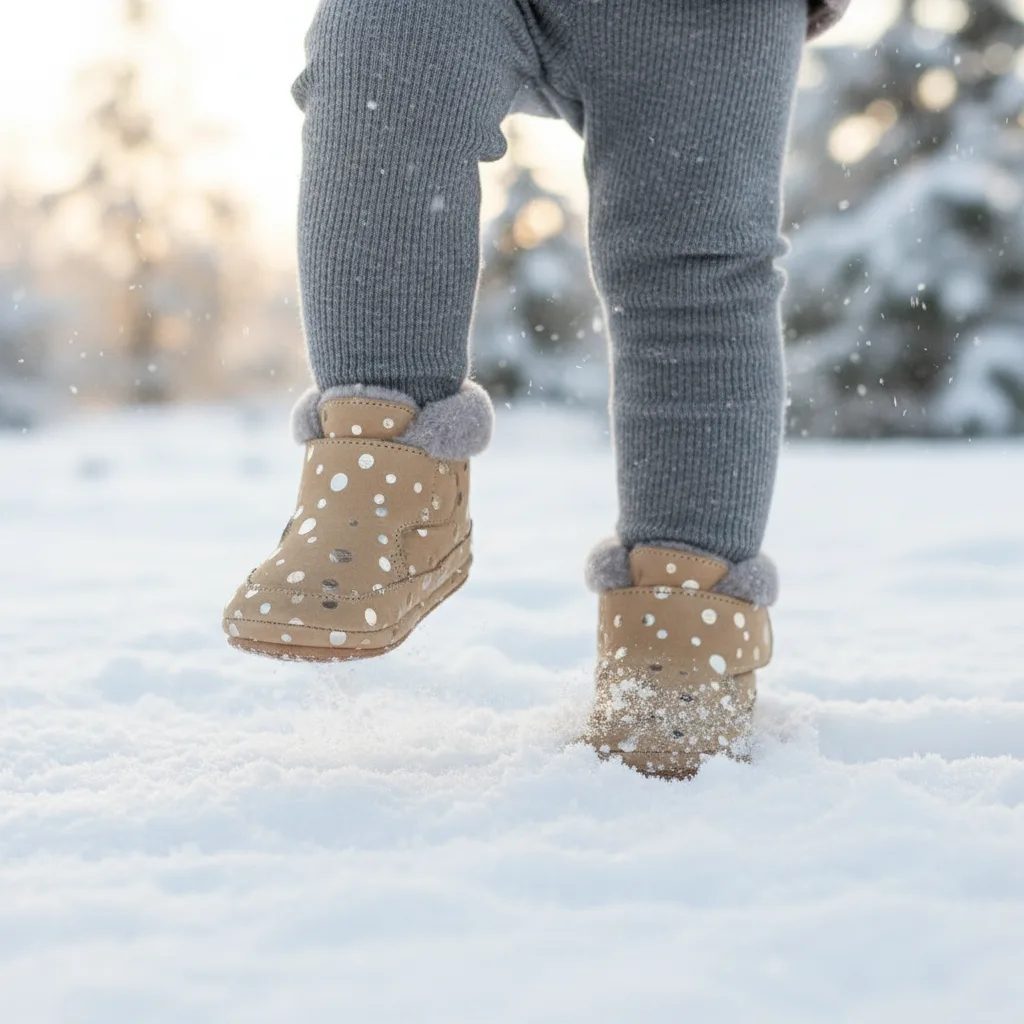
At this stage, you can confidently choose winter prewalker shoes for your little one. These are lightweight, highly flexible leather shoes that even a small child can bend with their feet, encouraging natural walking and healthy development. You could try ankle boots from Froddo, Czech brand Pegres or Bobux – they’re insulated with warm wool.
Winter is well and truly here. Don’t underestimate the importance of good winter gear for your little ones – or for yourself. While your children are playing in the cold, you’re spending just as much time outside, usually walking slowly and patiently or standing around. Do your feet get cold in conventional shoes in winter? They won’t in barefoot shoes. Their highly flexible soles engage all the muscles in your feet, helping to restore temperature regulation – something that’s especially welcome in winter.


You are currently on www.premiumbarefoot.co.uk


 £ - EN
 Čeština
 Magyar
 Slovenščina
 Română
 български
 English (US)
 Slovenčina
 Polski
 Dansk
 Nederlands
 Svenska
 Suomi
 Español
 Français
 Português
 Deutsch (DE)
 Deutsch (AT)
 Deutsch (CH)

