We’ll be happy to help via online chat or at: orders@premiumbarefoot.com

Children Barefoot Selecting and Maintaining Barefoot Shoes
Choosing children’s barefoot shoes isn’t straightforward. We’ll show you what to focus on, when to buy the first pair, and how to tell they fit properly.
If you’re thinking about buying barefoot footwear for your little one, you probably already know that choosing shoes isn’t exactly simple. A small child usually can’t tell you whether a shoe is too small or rubbing somewhere. So as a parent, you’re faced with a tricky task. What should you look out for when buying children’s barefoot shoes?
From mid-June to early August 2026, 961 pairs of shoes were returned to us. For 426 of them, the reason was length — the size was either too small or too big. For another 185, the width didn’t fit. Altogether, that’s 63% of all returns.
For comparison: a defect was the reason for seven pairs out of those 961. Shoes are almost never returned because something is wrong with them. They’re returned because they didn’t fit the foot. And that’s exactly what this whole article is about.
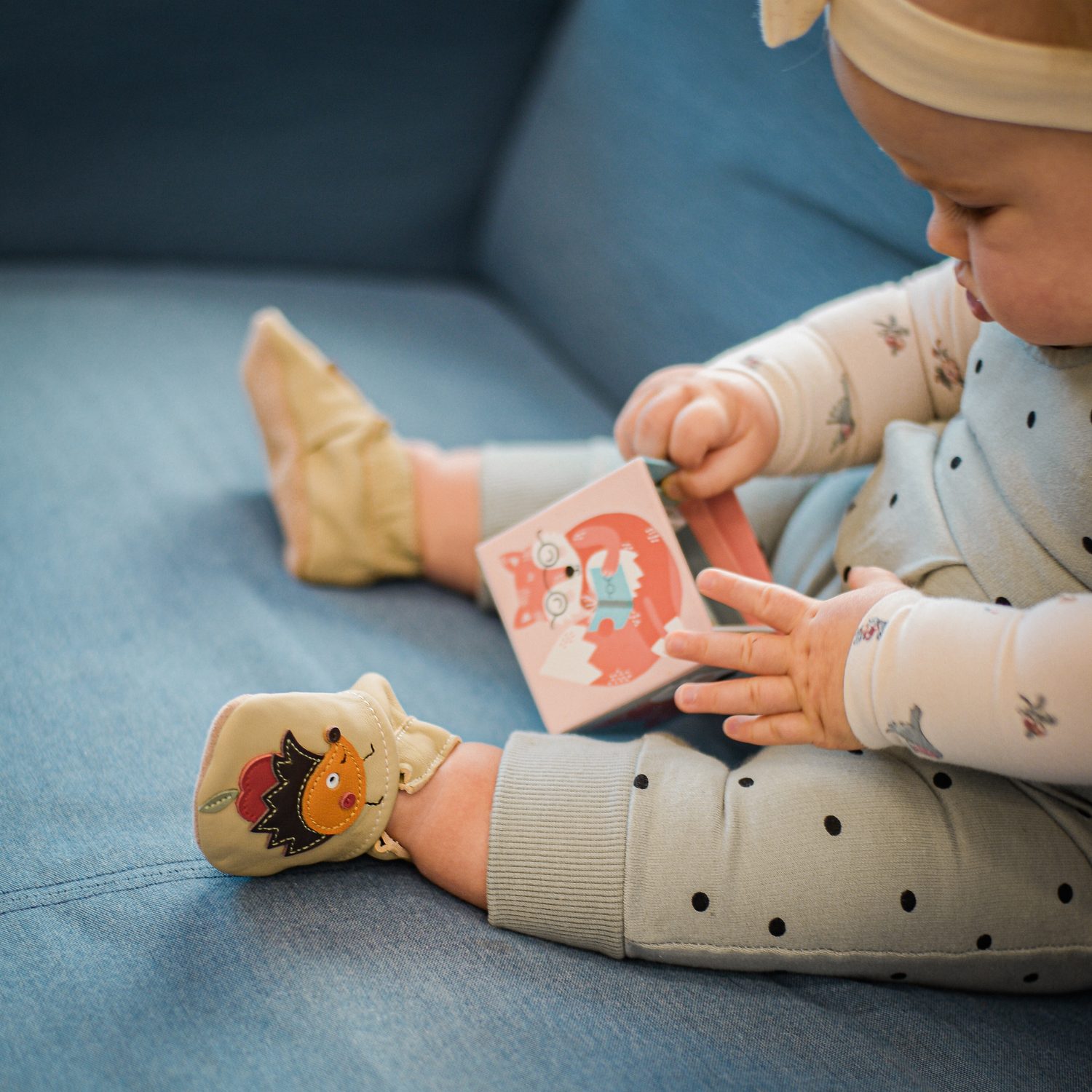
Shoes basically have just two main functions: to protect a child’s foot from injury and to keep them comfortable when walking. The word ‘walking’ is really important here, because there’s no point buying shoes for a child who’s only just attempting their first steps while cruising around furniture — or who’s still sitting in the pushchair.
When buying the first shoes, it’s ideal if your child has been walking independently indoors for more than two months, without any support. Their hands are no longer held up for balance, and they can manage a little run without any trouble.
For one very simple reason. If your child isn’t moving fully independently yet, their musculoskeletal system isn’t ready. Muscles are still forming and developing, and if you put shoes on at this stage, they won’t be able to ‘work’ them (bend them) properly. The shoe starts acting like a little crutch, so walking development then follows the shoe rather than the foot.
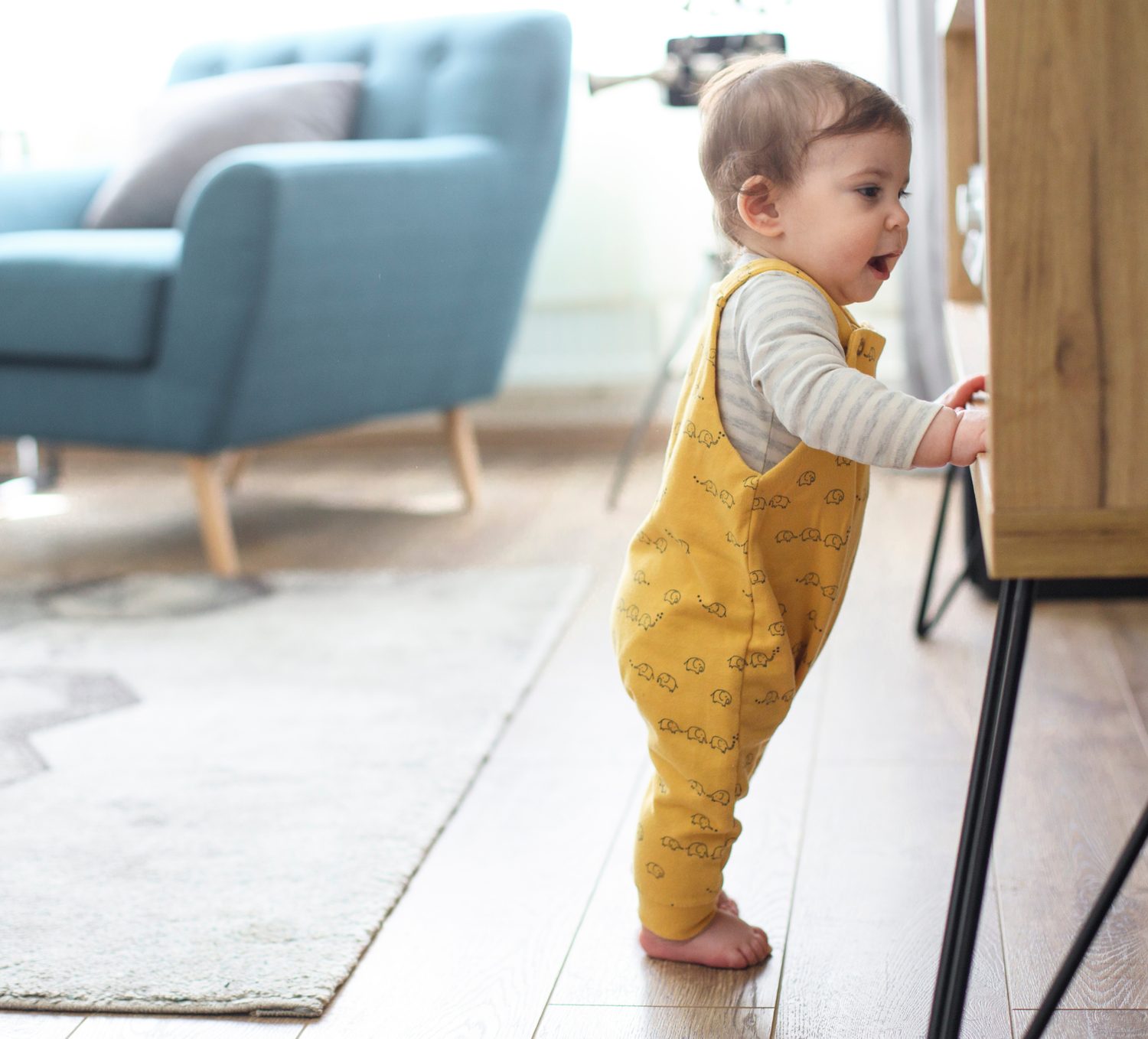
Can’t wait for your child to get their very first shoes? We completely understand. For children who aren’t ready for their first proper shoes yet (they’re just pulling up, walking with support, and so on), you can choose, for example, soft sole shoes, which can be worn indoors and outdoors depending on the model. For colder days, special overshoes are also a great option — they’ll keep little feet dry even in the rain.
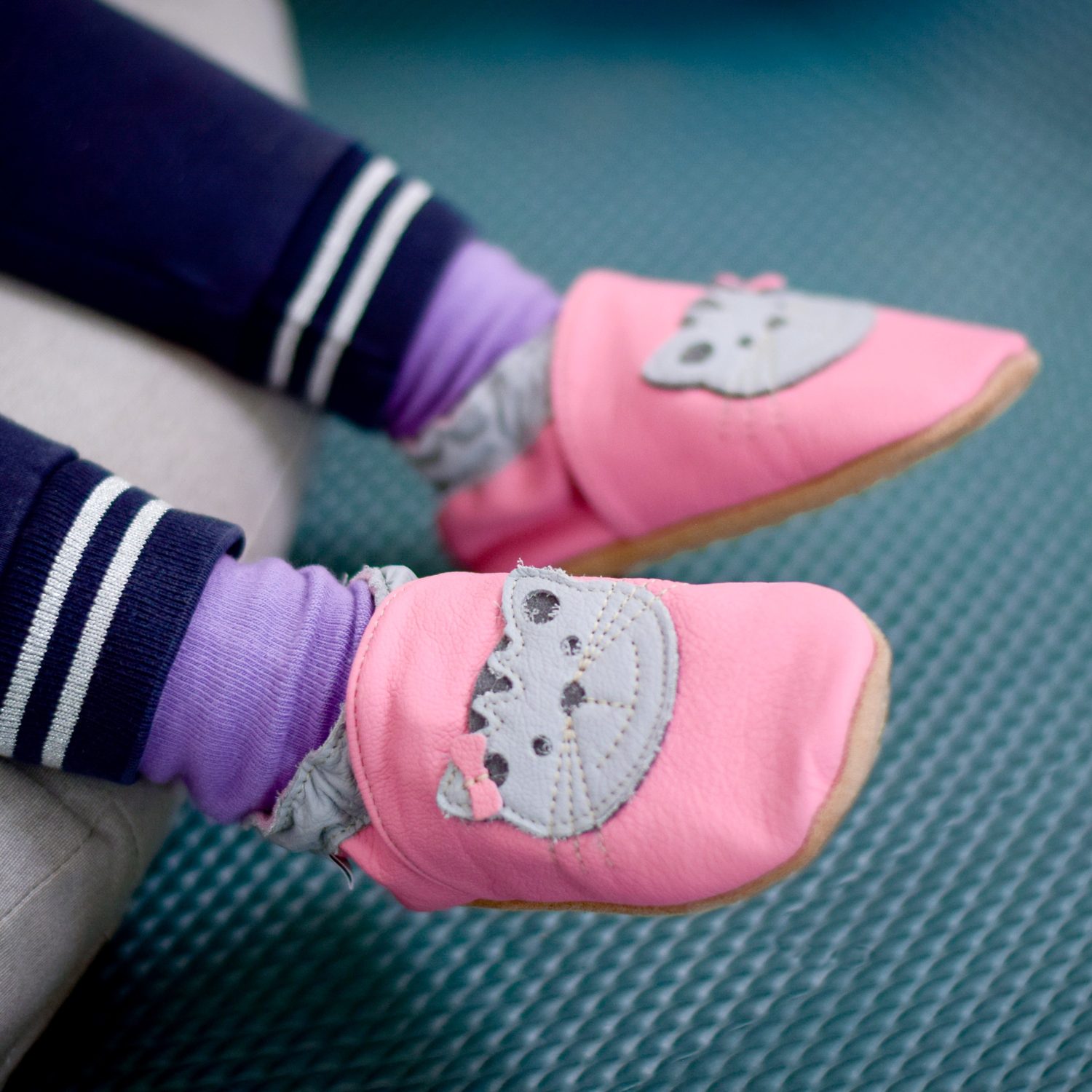
Just like with adult shoes, there are several types of children’s barefoot footwear. Each one suits different activities and different weather. When buying, the key is to think mainly about when and where your child will wear the shoes.
For each type, we’ll also tell you how often it gets returned to us due to sizing. It’s not random — and it’s worth knowing in advance.
All-rounders are slightly higher barefoot shoes that come up to the ankle or above it, and they’re usually made from leather or another water-resistant material so your child can wear them more or less all year round. They’re not extra warm or particularly breathable, and they also have a reinforced toe bumper to cope with playground adventures or riding a balance bike.
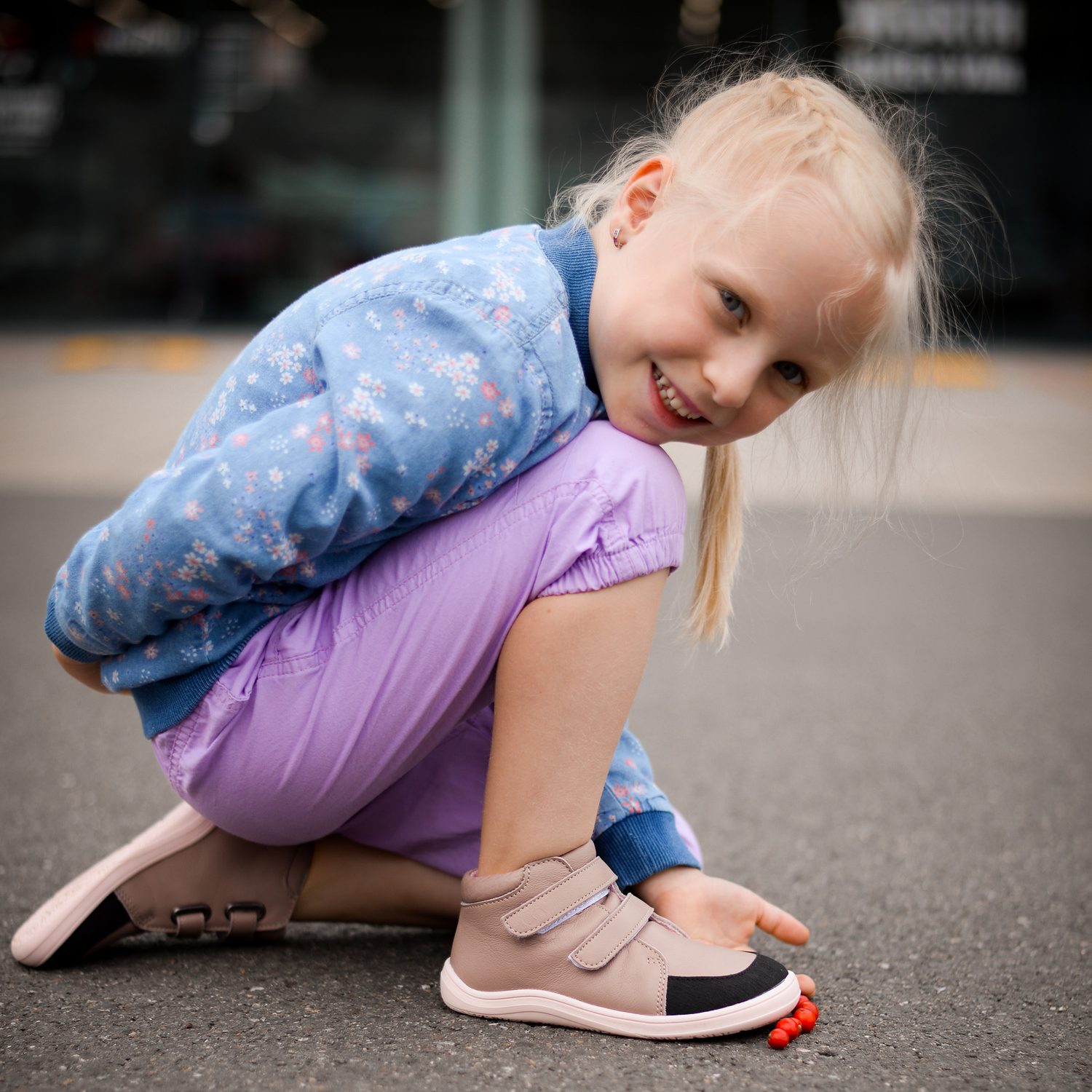
Insulated barefoot shoes are also made from leather or another water-resistant material, and they often include a special membrane inside to help prevent water getting in. Compared to all-rounders, they also have a warm lining — usually merino wool — so you can put them on your child during chilly autumn days, for winter fun, and even in a rainy spring.
Watch out for winter socks. The most common mistake we see with winter shoes is buying a size bigger ‘for thick socks’. The result is a shoe the foot slides around in, the child shuffles, and paradoxically their feet get colder because they stop moving properly. The right approach is the opposite: keep an allowance of 9 to 12 mm and remember that a terry sock takes up around 2 to 3 mm. If you’re on the borderline, go up within that reserve — not by a whole size.
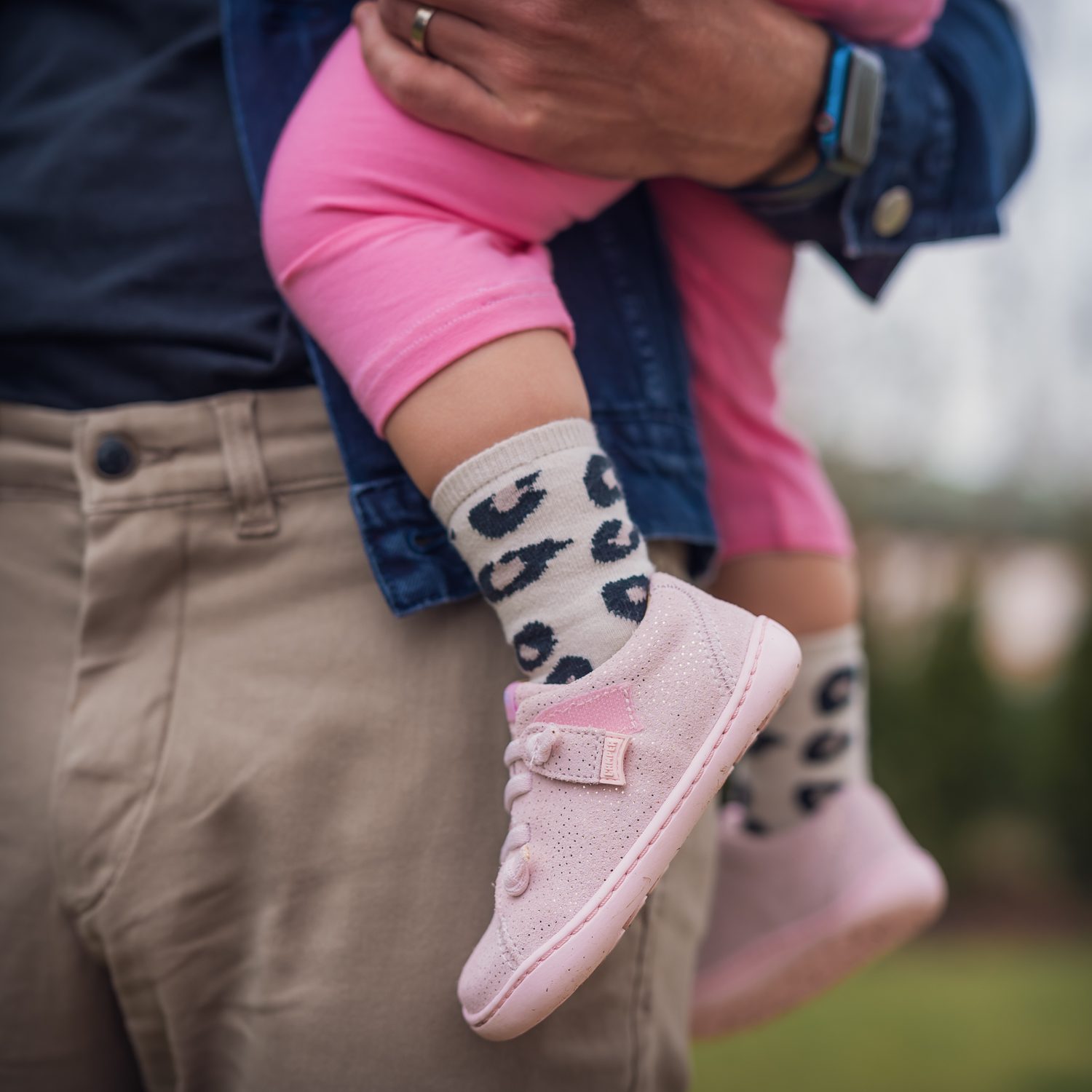
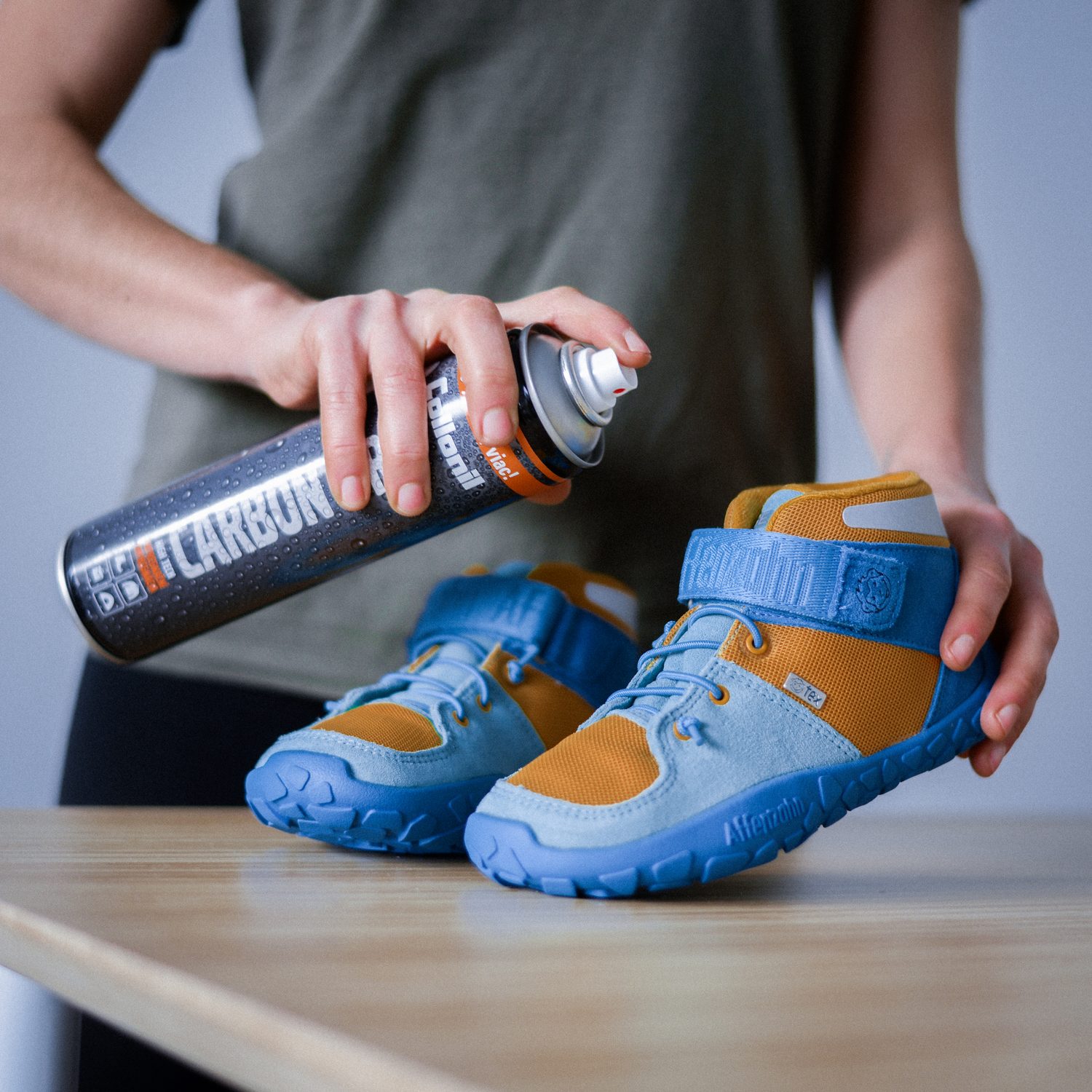
Warm summer days call for barefoot trainers in textile or leather, known for being wonderfully lightweight. They’re designed for summer and for outdoor play during warm spring days and early autumn. They’re not primarily water-resistant, so if you want to improve their resistance, we recommend using a waterproofing spray — it also helps protect the material from dirt.
With trainers, we see returns of roughly one in every eight pairs sold, which is above average. That’s usually because trainers are bought for longer wear, and parents try to guess the size ahead.
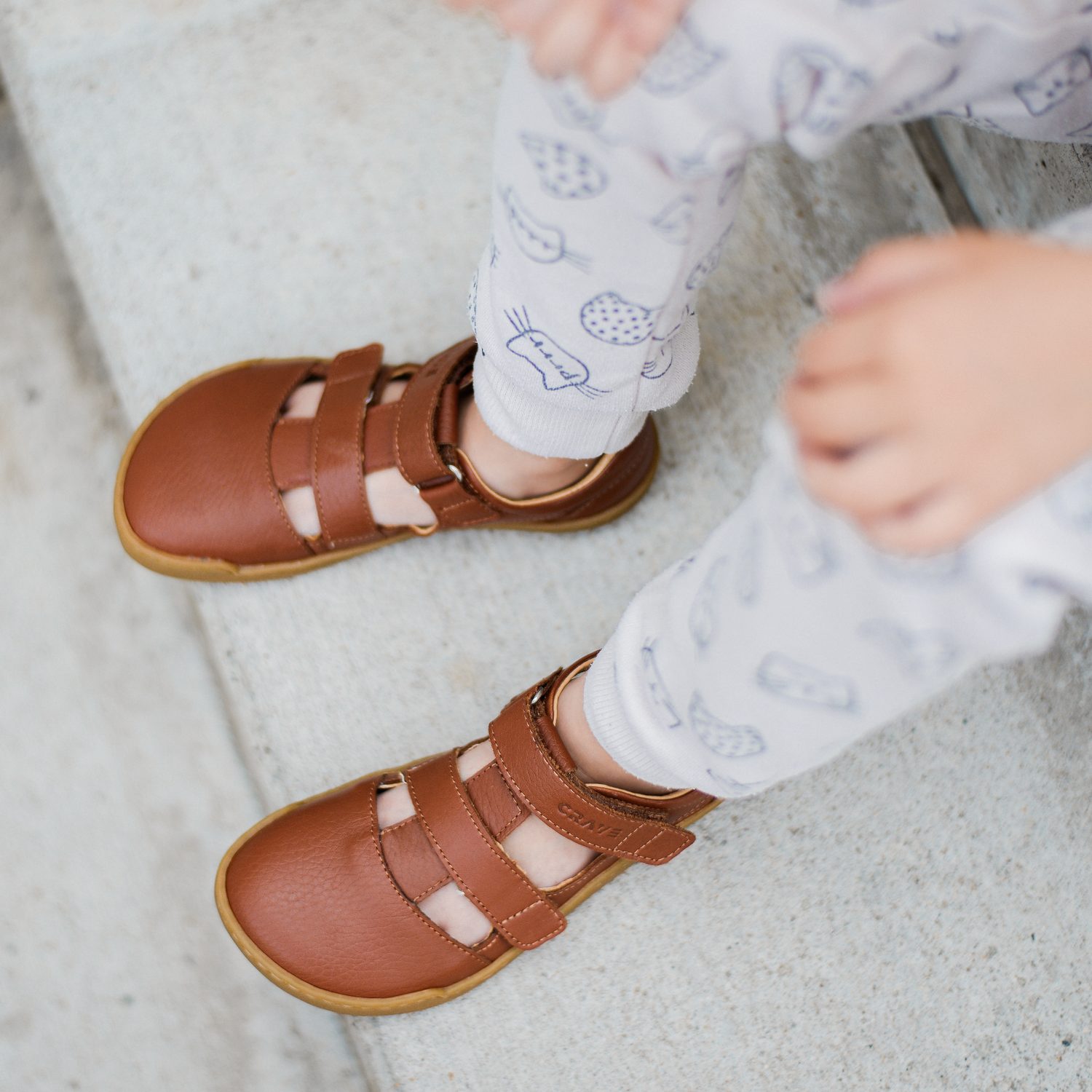
For the hottest days, barefoot sandals are perfect. Children’s versions are often closed-toe with a toe bumper, but there are also brands offering open styles. They’re most commonly textile or leather, and they work not only outdoors but also as indoor shoes.
Measure carefully here. Sandals are clearly the riskiest children’s category — we get back roughly one in every five pairs sold. There’s nothing mysterious about it. The more open the shoe is and the less you can tighten it, the smaller the tolerance. A sandal with fixed straps won’t forgive even a few millimetres. Measure the foot fresh — not from a piece of paper from last month.
A special type of footwear that looks like a sock at first glance. It’s made from a thicker fabric and has a walkable sole on the bottom for everyday outdoor use — but children also wear them quite often as indoor shoes. A thinner sole is found on sock shoes from Slipstop, which are also suitable for water. Models with a thicker sole include leguanito by leguano. In children’s sizes, you’ll also find the popular Skinners. A big advantage of all of them is that they can be machine-washed.

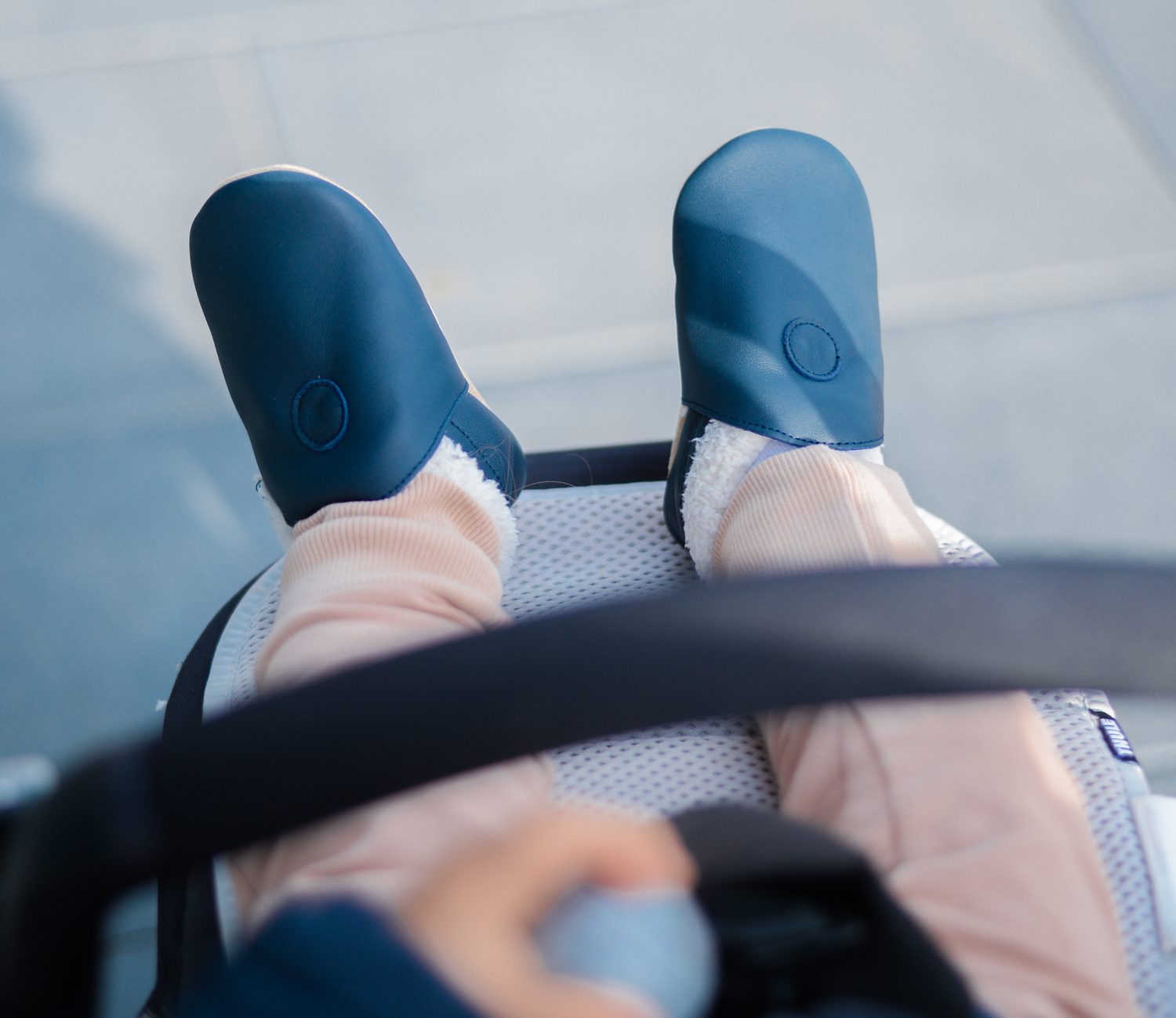
The ideal little shoes for first steps, if your child can’t toddle barefoot, are soft sole shoes. Their strengths aren’t just the soft sole, but also the fact they don’t stiffen the ankles at all — so the foot can move freely. A very thin sole is better for indoors, but some models can be worn outside too.
We get more returns than you might expect — roughly one in every seven pairs. Usually because they’re bought for a child who’s changing from day to day.
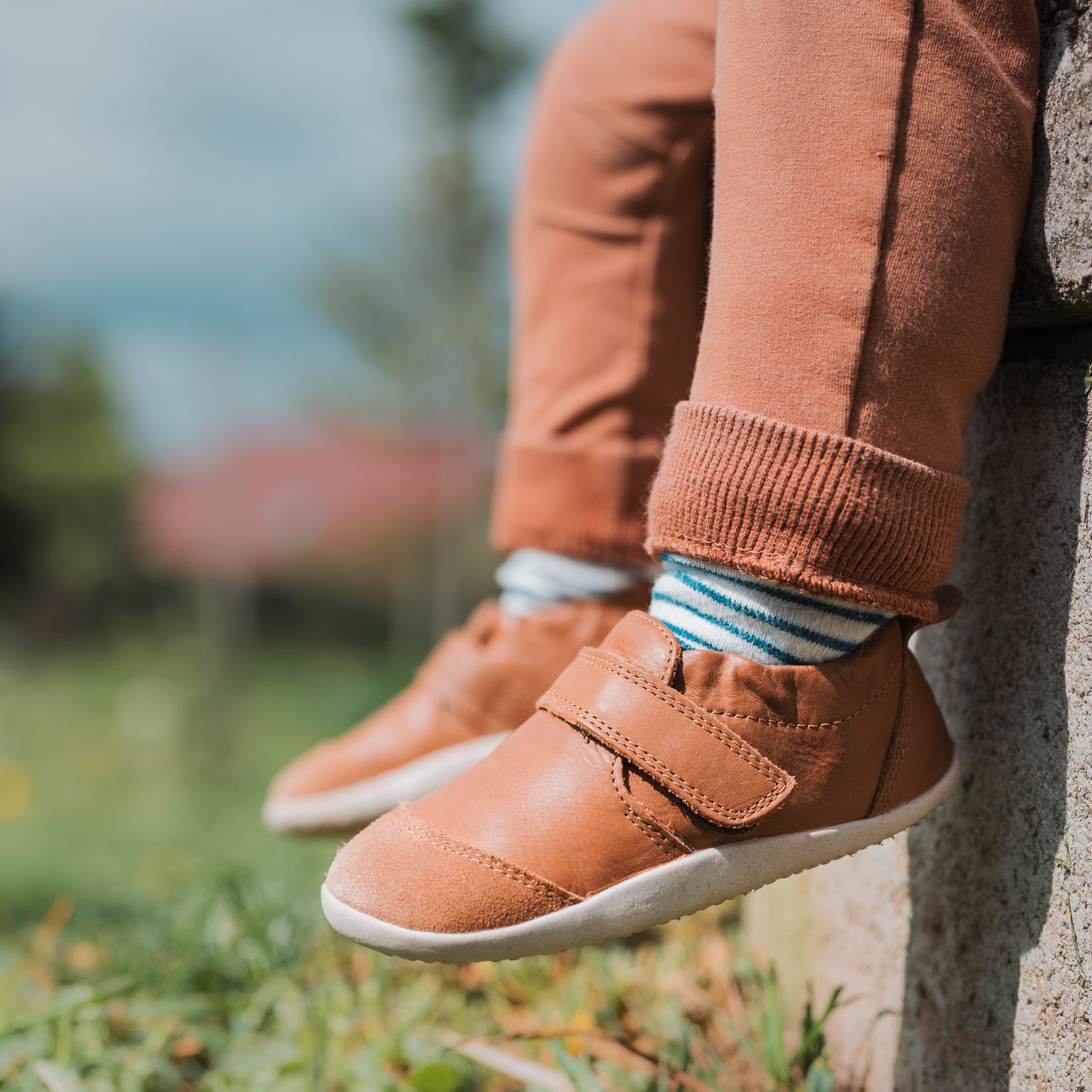
Prewalkers and first shoes are very lightweight and flexible, so even a small child can bend them while walking. We recommend them for a child who has been walking independently indoors for at least two months, without any support. For brand-new walkers, choose soft sole shoes.
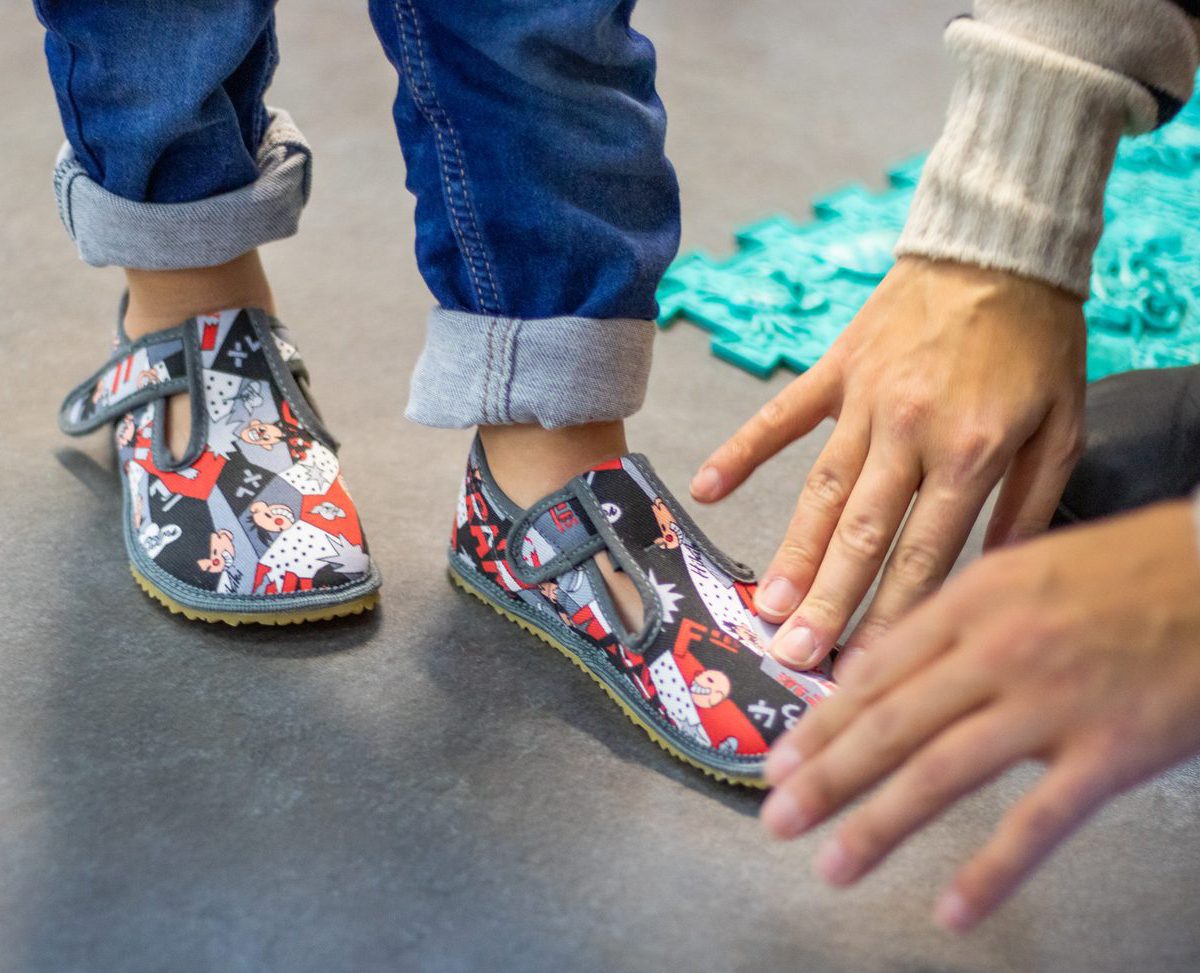
Barefoot indoor shoes are great as slippers at home, and for nursery or school. They protect children’s feet, help prevent slipping, and are pleasantly soft and flexible. Most nurseries want a closed heel and a light-coloured sole that doesn’t leave marks, so ask before you buy — each nursery does it a bit differently. This article can help you choose: Time to get slippers, backpacks and snacks ready — and back to the classroom.
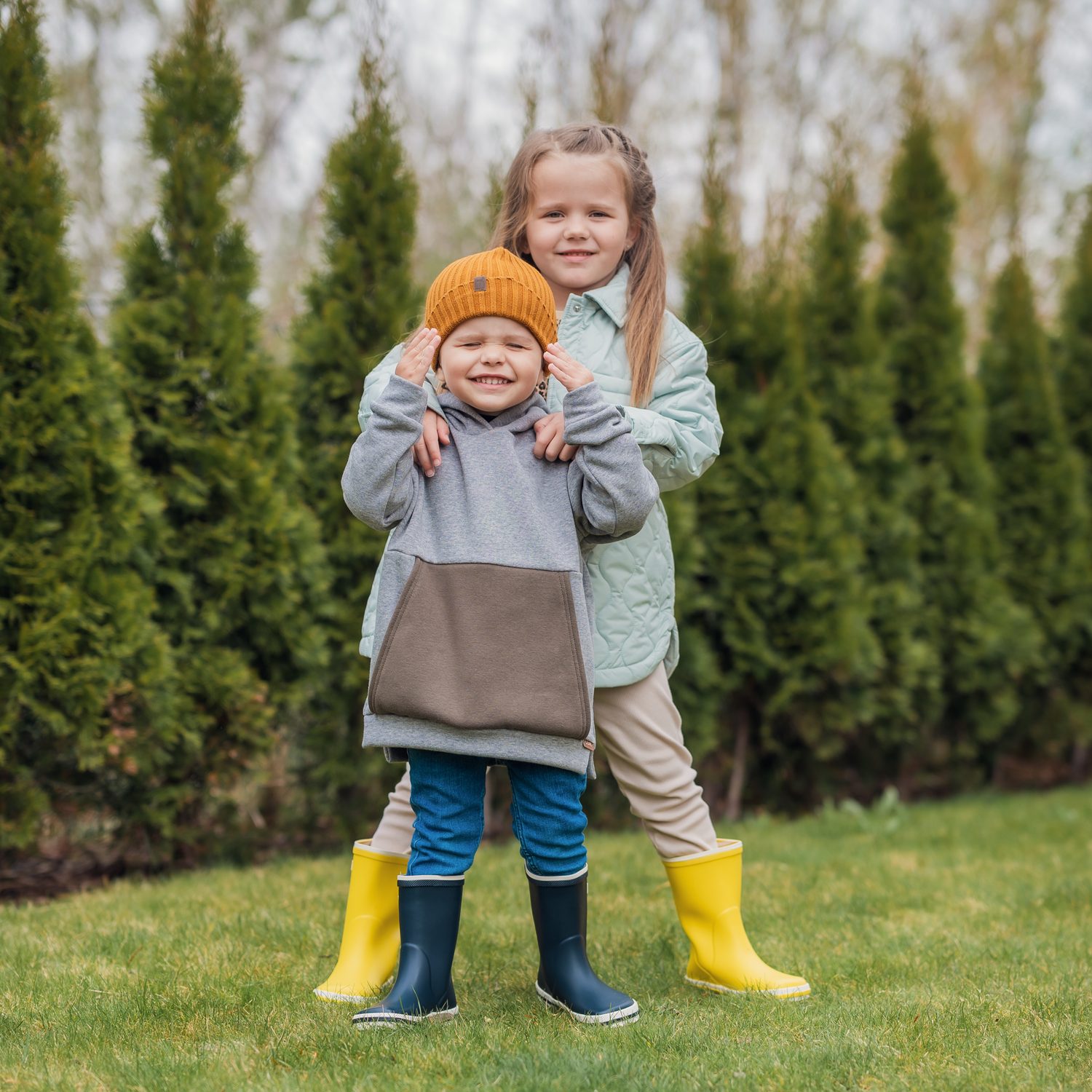
Jumping in puddles and dancing in the rain with little feet staying dry? Put your children in barefoot wellies and relax. Like other barefoot shoes, wellies are lightweight, fully flexible, with no raised heel and no narrow toe box. Read the article How to choose the right healthy wellies for our little ones.
A final fun fact: wellies are the safest bet in the whole children’s range. We only get back roughly one in every 27 pairs, because the roomy shape forgives a few millimetres either way.
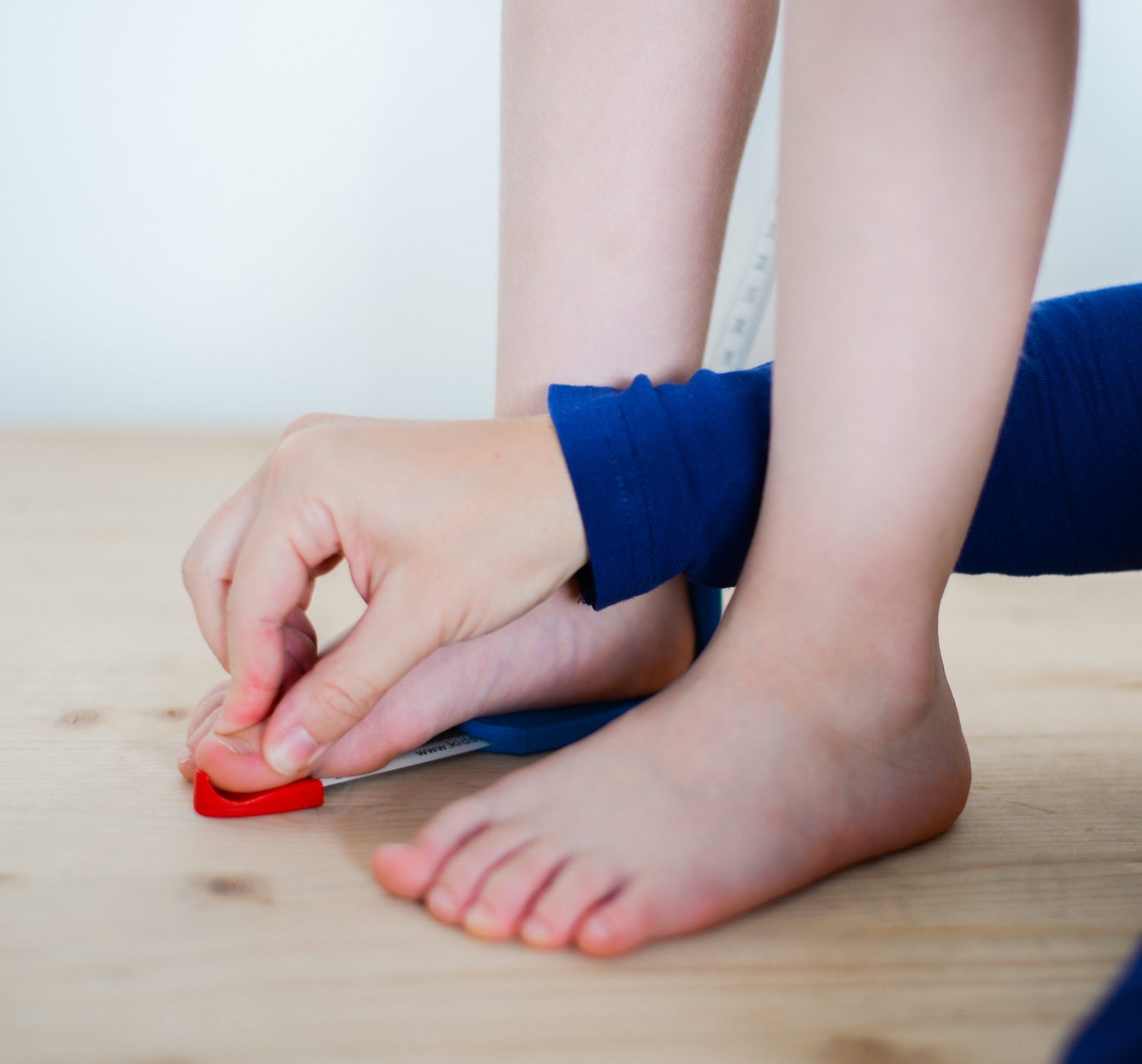
Foot length is not the same as the shoe’s internal length, often referred to as the insole length. You need to add an allowance to the foot length so the foot can work properly while walking and your child doesn’t bang their toes into the front. For children, 9 to 12 mm is recommended; for adults, 5 to 10 mm.
You can measure using the PLUS12 measuring tool or in a shoe box. One important detail: PLUS12 measures the foot including a 12 mm allowance, so it gives you the recommended internal shoe length straight away — you don’t add any extra allowance.
You’ll find the full step-by-step process — including measuring width and how to measure the inside of the shoe — on the Size guide page.
In all three naBOSo.cz shops, we measure children’s feet with PLUS12 and then measure the inside of the shoes again in the stockroom. That way, your child doesn’t try on ten pairs — just two or three — which saves time and nerves.
The size from the last pair is useless — brands use different lasts, and between two EU 25s there can easily be a 7 mm difference. Measure regularly:
| Child’s age | Interval |
|---|---|
| up to 3 years | every 2 months |
| 3 to 6 years | every 3 months |
| 6 years and up | every 4 months |
Feet grow fastest up to around age three — it can easily be two sizes a year. Set a reminder on your phone, because otherwise you’ll remember only when your child tells you something is rubbing. And by then, it’s too late.
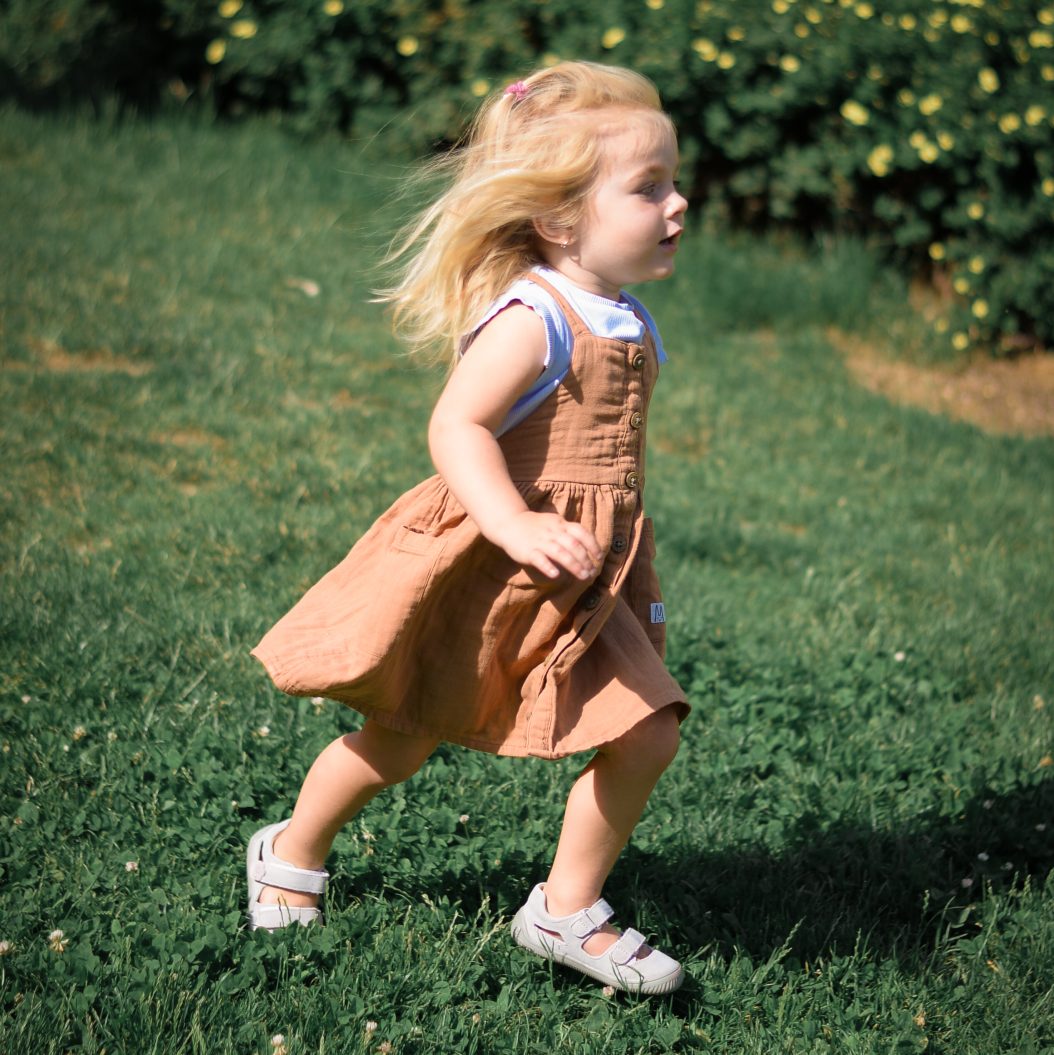
Most children won’t tell you. Little ones can’t describe what feels uncomfortable, and older children get used to pressure. Here are signs you can spot yourself:
The most reliable check is the insole. Most children’s barefoot shoes have a removable insole specifically so you can check fit this way.
Shoe width is set by the manufacturer, most often by the last used during production. But unlike length, it’s not so easy to measure: it’s measured in different places and at different angles, and when we re-measure shoes we often find the manufacturer’s stated dimensions can differ by as much as 10 mm. That’s quite a lot.
That’s why, for every option on naBOSo.cz, you’ll find not only the internal length but also the internal width in millimetres. The table below gives you a rough guide, and the specific number on the model gives you certainty. And in every category, you can filter by both measurements straight away.
A shoe shouldn’t be tight — it should be wide enough for your child to comfortably spread their toes while walking.
| Narrow | Medium | Wide |
|---|---|---|
| leguano | Froddo | Pegres |
| Bobux | RAYVE | D.D.step |
| Froddo Prewalkers | Hopi Hop |
Don’t take the table as gospel. Many brands change over time or create new models with different widths. You’ll always find the exact number on the specific variant.
Some children have a higher-than-average foot (a noticeably higher instep), while others have a much lower, flatter foot. As with the ankle, it’s best to try shoes on. It also helps a lot to look closely at the shoe — in an online shop you can often tell the cut from the photos.
For a high instep, shoes from D.D.Step are often a good fit. For a low instep, it’s worth looking for models with a Velcro strap across the whole instep that can be tightened, or with elastic laces.
Instep height is the only measurement you can’t read from a chart, because it isn’t measured. If you’re not sure, pop into a shop or message us — we’ll be happy to help.

So how can you tell? There’s only one piece of advice here: try, try and try again. Every child has a completely different ankle shape — as well as different Achilles tendons and shins — and you can’t precisely say which brand makes shoes for narrow ankles and which for wider ones. In general, manufacturers often solve this by adding Velcro. That lets you tighten the shoe around the ankle, and for a narrower foot you can even trim the strap.

Some children have a higher-than-average foot (a noticeably higher instep), while others have a much lower, flatter foot. As with the ankle, it’s best to try shoes on. It also helps a lot to look closely at the shoe — in an online shop you can often tell the cut from the photos. For a high instep, D.D.Step and BEDA are suitable brands; for a very low instep, you can look at models from Affenzahn or Bundgaard. If you’re still not sure, don’t hesitate to get in touch — we’ll be happy to advise.

We get it — children’s shoes aren’t cheap. But you walk differently in shoes that are too big. Your child lifts their feet higher, trips, shuffles their heels, and the shoes wear out before they grow into them. The money you ‘saved’ comes back as a worn-out pair you’ll end up throwing away anyway.
A jacket or trousers? Fine. Shoes? Not really. The sole and insole adapt to the first child’s gait within a few months, and the second child then steps into a shape that doesn’t fit them. Sandals, wellies and shoes worn only a few times are the exception.
‘We’re in EU 27s,’ almost every other parent tells us at the counter. But a 27 in one brand and a 27 in another are two different shoes. Millimetres yes — the size number, no.
For children, the transition to barefoot shoes is much easier than for adults. The younger the child, the shorter the transition — for toddlers, practically none. Their feet haven’t been shaped by years of narrow shoes, and their muscles adapt quickly.
For a school-age child who has spent ten years in shoes with a heel and arch support, allow a few weeks. Start at home and on shorter walks, then build up gradually. If your child complains of tired calves, that’s normal and should pass in a few days. Pain isn’t — slow down in that case.
The best thing is still to go barefoot at home. It’s free — and it works better than any shoe. You’ll find more in the article How to transition to barefoot without pain.
The right allowance, shoe width and how well it fits around the ankle are all essential parameters — but the most important guide when choosing the right size is observation. Focus on how your child walks when completely barefoot. Once you put shoes on, their walking style and overall movement should look similar. Some children walk perfectly well with a 20 mm allowance, while others struggle even with the generally recommended 12 mm.

Whether you’re buying your child new trainers, all-rounders or slippers, it’s worth giving them at least basic care — cleaning them properly and waterproofing them regularly. We’ve summarised how to care for different materials so they don’t lose their properties or appearance in the article With proper care, your barefoot shoes will last for years.
In-store, we’ll measure your child’s foot, measure the inside of the shoes too, and work out whether the issue is length, width or instep.
Českomoravská 2517/13, Praha 9
Mon–Fri 10:00-19:00, Sat–Sun 9:00-16:00
V. P. Čkalova 6, Praha 6
Mon–Fri 10:00-18:00, Sat–Sun 9:00-16:00
Na Bělidle 28, Praha 5
Mon–Fri 10:00-18:00, Sat–Sun 9:00-16:00
And if you order and don’t get it right, no worries. We’ll exchange the size, and you have 14 days to return. Some parents order two sizes side by side, try them on calmly at home, and send one back. That’s roughly every thirteenth return we receive — and it’s absolutely fine.
Author: Michaela Řeháková, Shop Manager at naBOSo Dejvice


You are currently on www.premiumbarefoot.co.uk


 £ - EN
 Čeština
 English (US)
 Slovenčina
 Magyar
 български
 Polski
 Dansk
Dansk
 Nederlands
 Svenska
 Suomi
Suomi
 Español
 Français
 Slovenščina
 Română
 Português
 Deutsch (DE)
 Deutsch (AT)
 Deutsch (CH)

