We’ll be happy to help via online chat or at: orders@premiumbarefoot.com

Want to achieve the most natural movement when you run? Choose the right barefoot running shoes with zero drop. We’ll explain the key differences.
If you’ve ever bought sports shoes, you’ve probably heard the terms ‘drop’ and ‘zero drop’. But do you actually know what drop is? Let’s take a look at the differences between sports shoes and barefoot shoes, go through the pros and cons, and see who comes out on top in this sporting showdown.
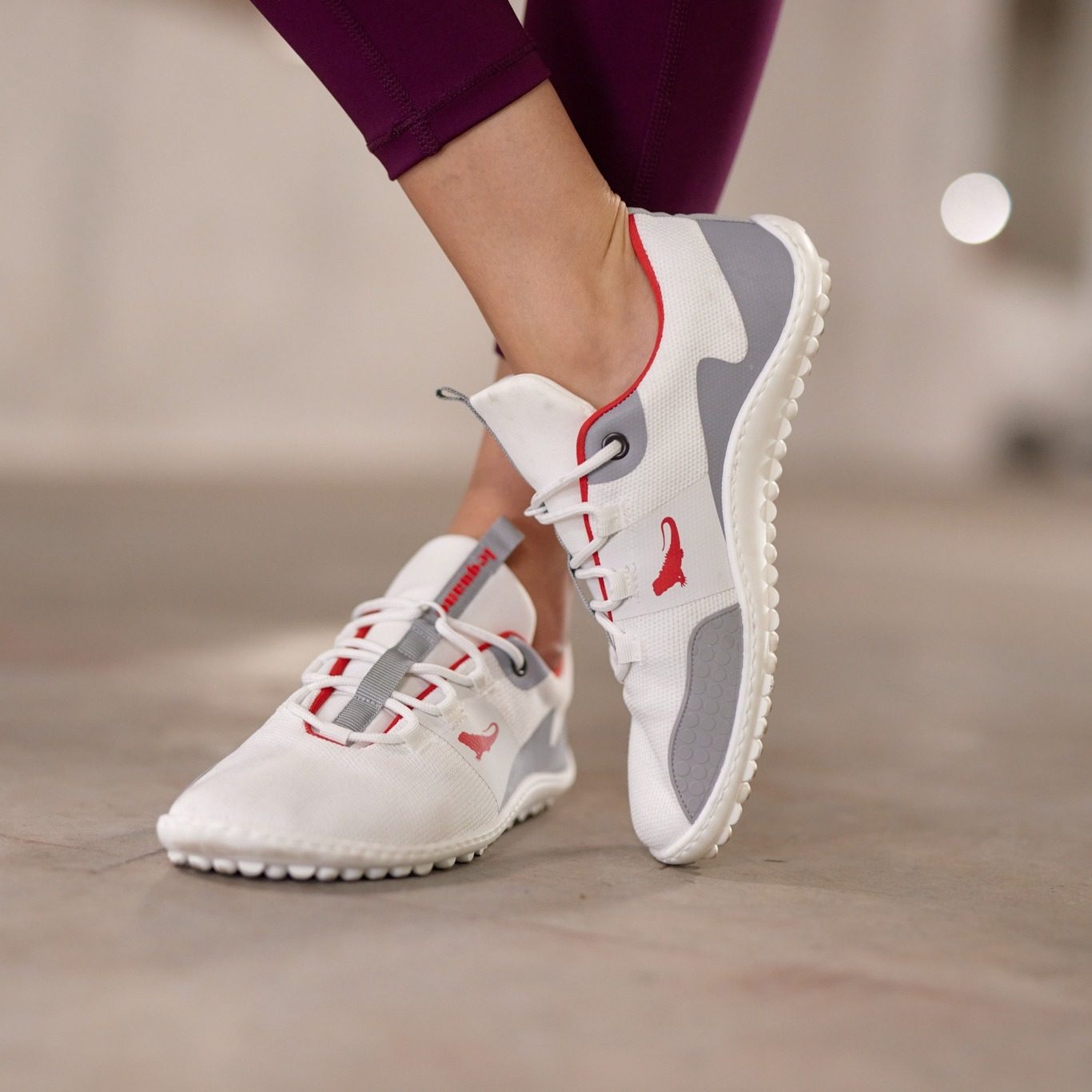
Drop is the difference in sole height between the heel and the toe, which puts your whole foot into a certain tilt. It’s easy to picture with classic women’s court shoes, where the heel is clearly much higher than the front of the foot. Most conventional shoes have some drop; it used to be the norm.
Over time, though, it became clear that drop can contribute to a shortened Achilles tendon – not only a pronounced drop, but even the smaller drop found in sports shoes. That’s because cushioning absorbs impact, but that’s a job our bodies are designed to handle largely through the Achilles tendon. When something else helps out and takes the impact for it, it can become less engaged, which may lead to the shortening mentioned above.
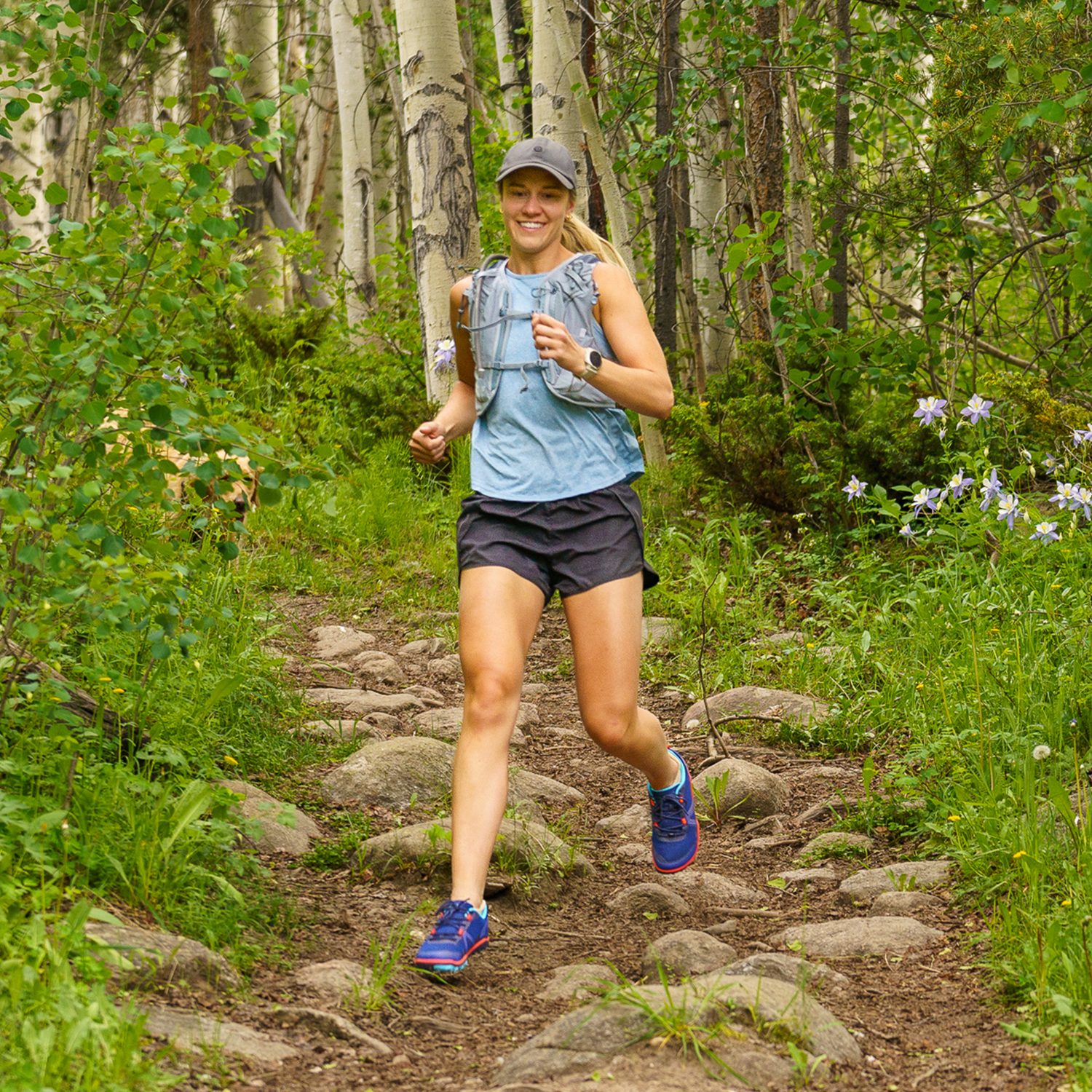
But that’s not the only issue conventional shoes with drop can bring. Problems with proprioception (your sense of body position) are also common. This impressive-sounding word describes your sense of your own movement and posture. It’s like a sixth sense. The human body is naturally wired to feel the surface it moves on.
That’s why we have hundreds of thousands of nerve endings in the soles of our feet. But when a thick sole cushions impact, your body doesn’t properly feel the ground beneath you and sends a signal to the brain. In an attempt to ‘find’ the surface, the body may encourage heavier footfalls, which can lead to issues with the knees, hips and the musculoskeletal system overall.
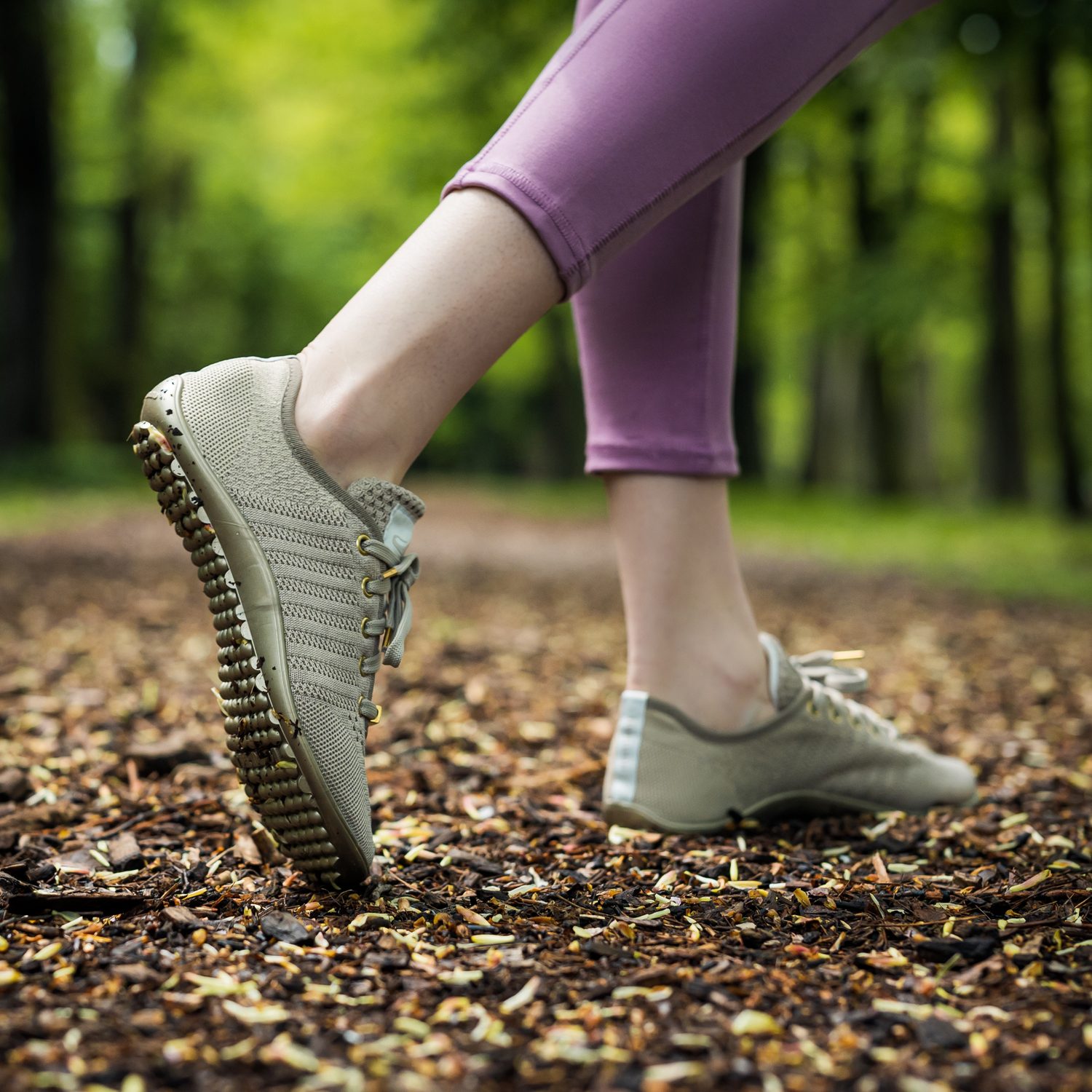
Zero drop means there’s no height difference between the heel and the toe. You could say the sole is flat. But that doesn’t automatically mean it’s barefoot footwear – important point. Even with a flat sole, sports shoes are often fairly thick and cushioned, which affects your foot strike and overall gait. So they’re still the opponent of barefoot shoes, which aim for the most natural foot movement possible, with as little interference from the shoe as possible – meaning the thinnest sole you can reasonably have.
That’s why zero drop is only one feature and doesn’t address other parameters such as shape, toe space, heel fit and so on. Barefoot footwear, on the other hand, looks at the shoe and natural walking/running as a whole.
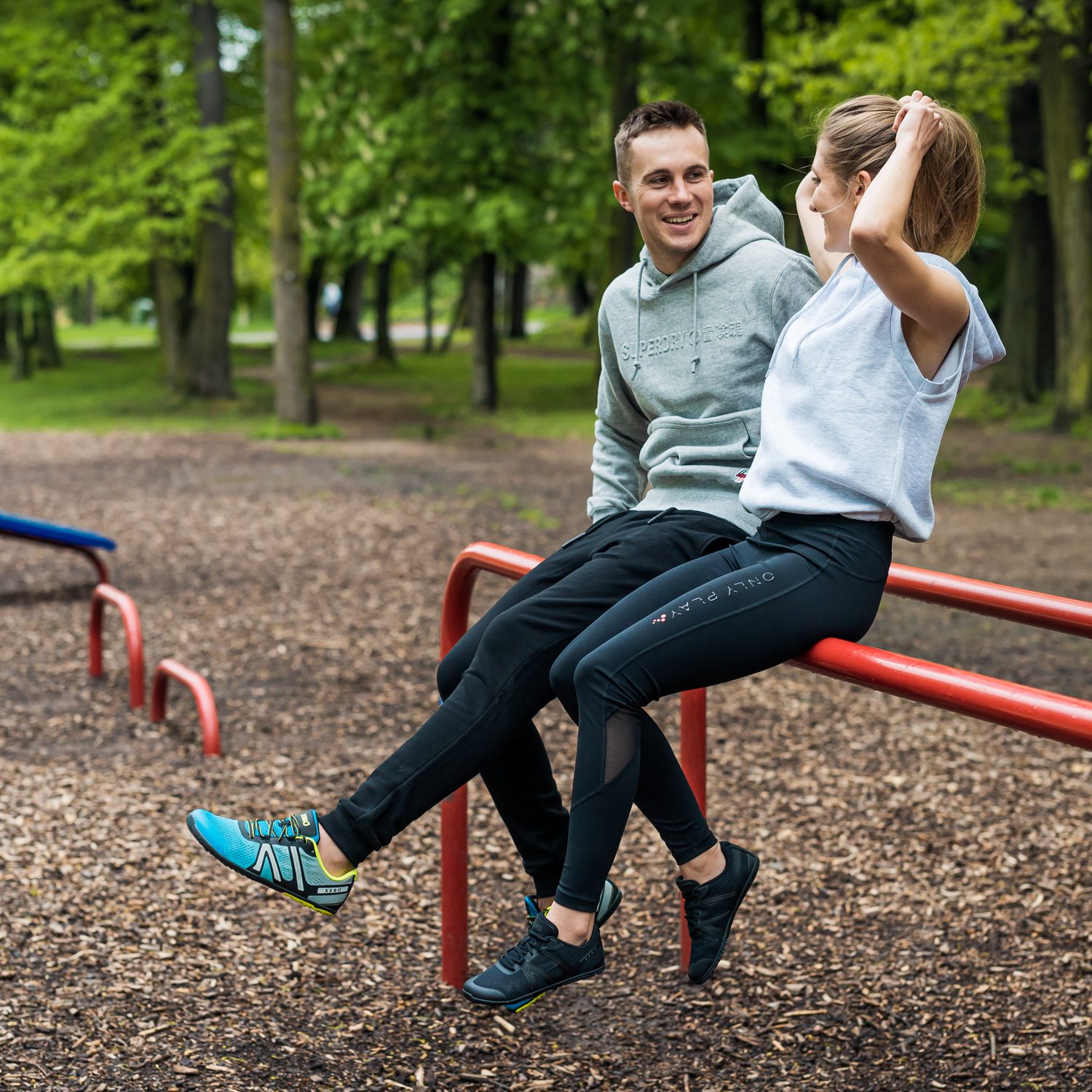
There’s also a third player in our footwear match-up: so-called minimalist shoes, which are often confused with barefoot shoes. Not heard the term before? Let’s break it down. While barefoot shoes typically have a sole thickness of 3–6 mm, minimalist shoes are around 4–7 mm thicker. Even though they have less foam cushioning than many other sports shoes, natural movement and impact are still cushioned.
Minimalist shoes tend to resemble conventional footwear more closely and don’t focus on the shape of the toe box to provide enough room for natural toe movement. They commonly have a drop of 4–8 mm. That means the heel is raised compared to the toe, putting the foot into a tilt. And we already know that this tilt encourages a less natural stance and heel impacts are more cushioned, which can contribute to the gradual shortening of the Achilles tendon.
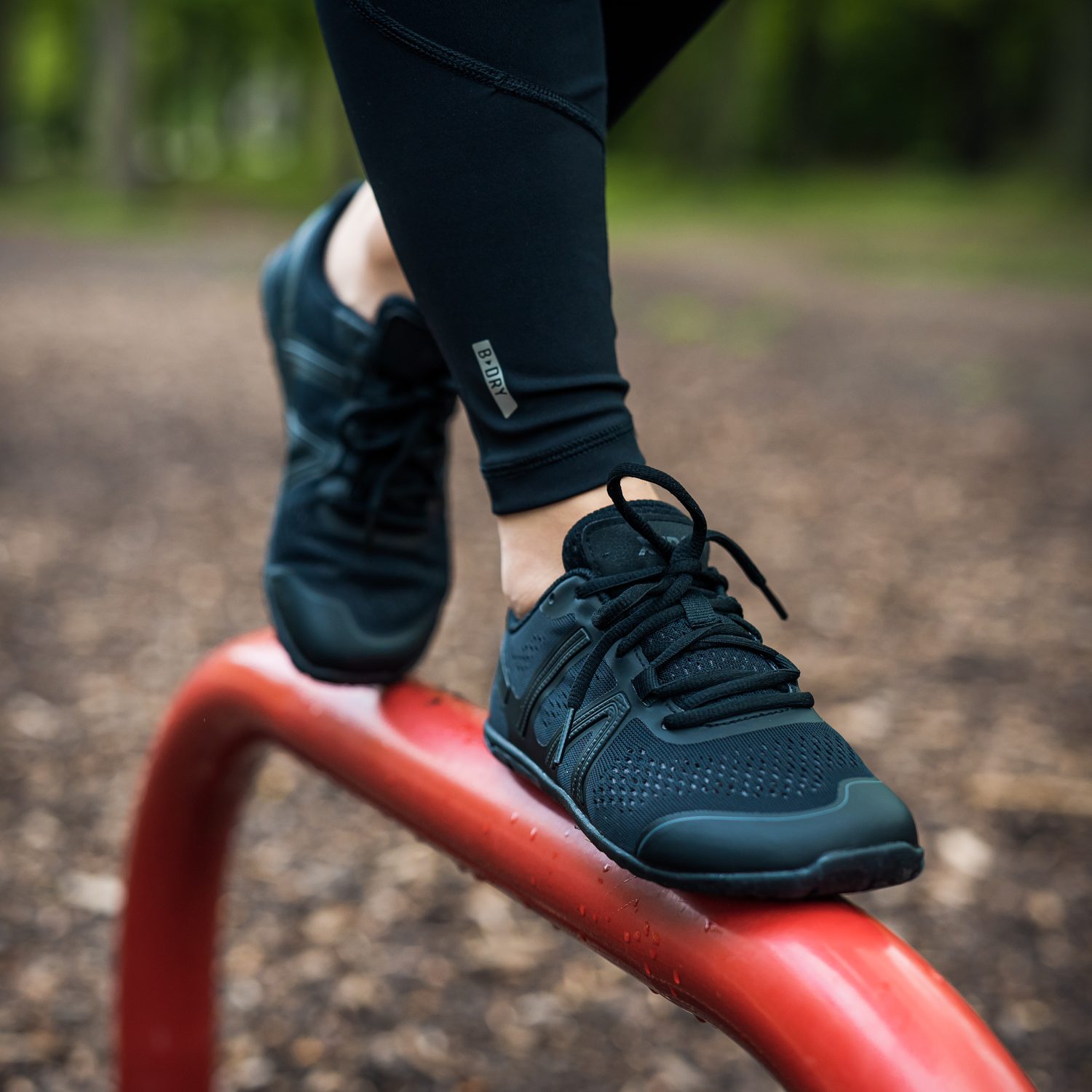
Choosing the right sports shoes is a real science. The shoe needs to fit like a glove, it should keep you stable on uneven ground and ideally not restrict your foot at all. A shoe that rubs or pinches – whether at the big toe, the heel or across the instep – is simply the wrong choice.
It also depends on the surface you train on or plan to run on. There’s a big difference between running on soft woodland paths and meadows versus an asphalt cycle path. We champion the most natural movement in the most natural environment possible – ideally barefoot shoes and the forest. That said, in nature your feet also have to deal with more varied terrain, which is often more demanding than tarmac. And let’s be realistic – not everyone has a protected landscape area (CHKO) on their doorstep.
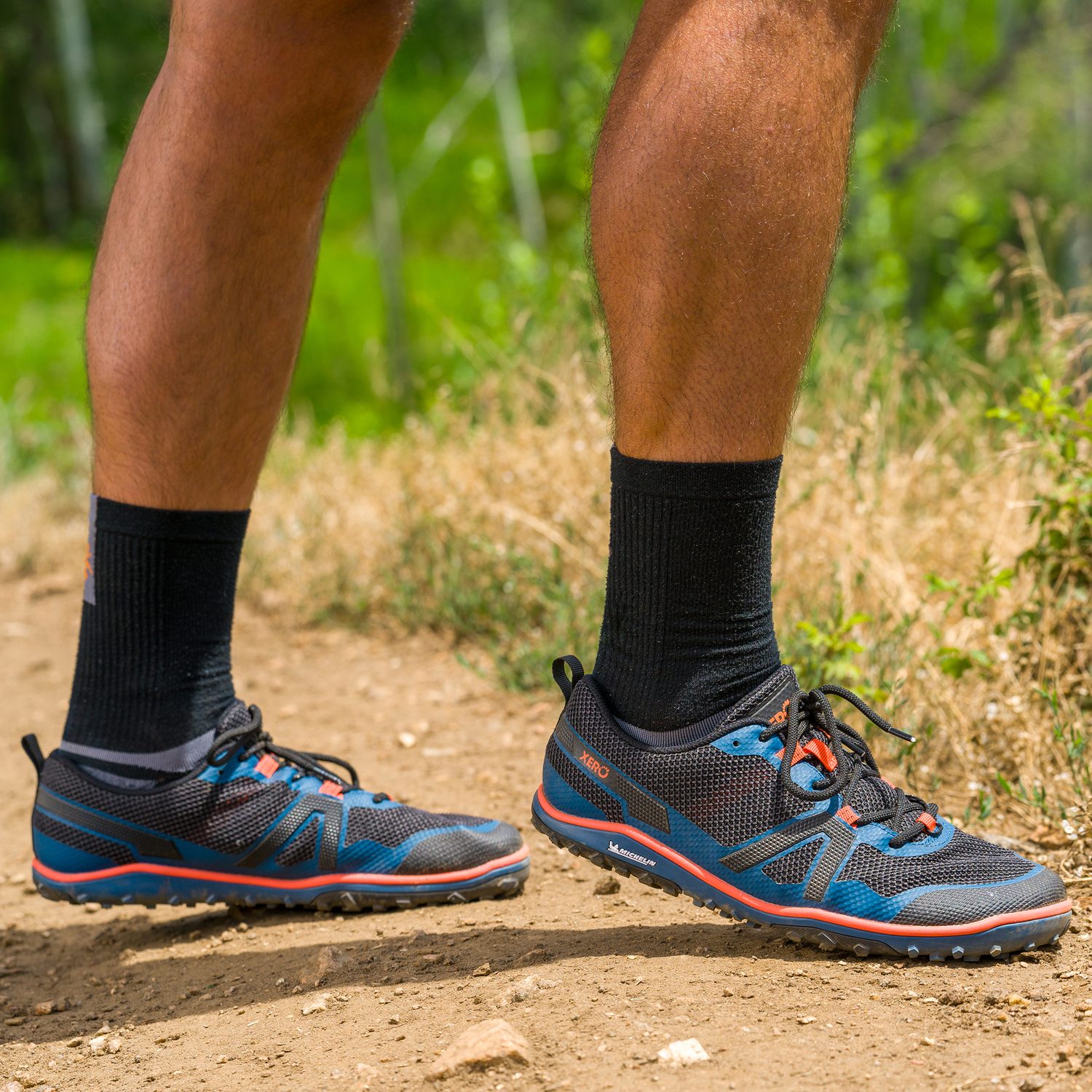
Hard surfaces don’t have to be a problem at all – for so-called ‘asphalt runners’ they can actually feel more comfortable. Here we recommend starting with a shorter distance, even half the distance you were used to running in conventional sports shoes. Your calves and all the other 33 foot muscles need a bit of time to adapt and train for a different type of movement. But you’ll get there.
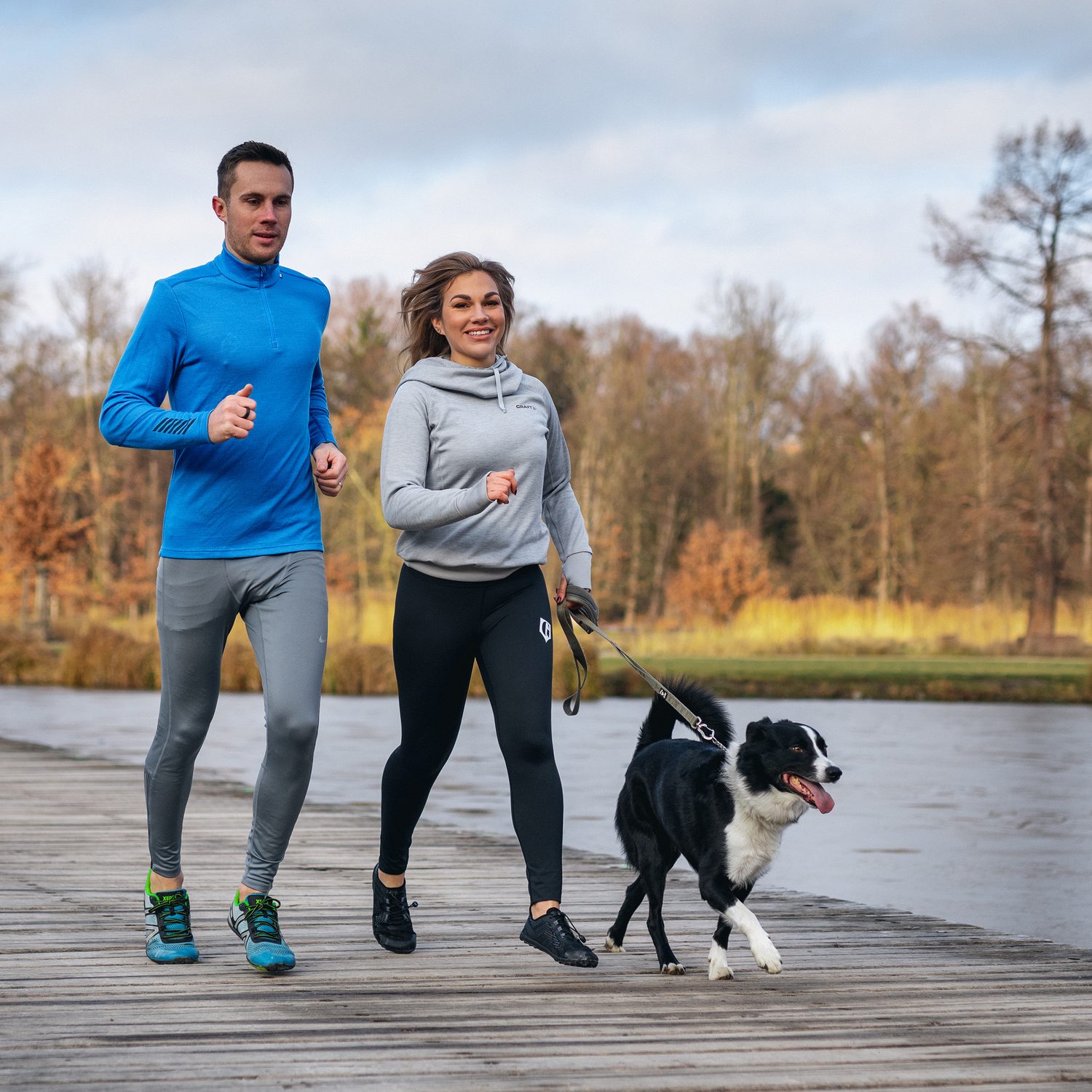
When you run in barefoot shoes, your body naturally adjusts your technique and posture (that’s proprioception again – the sixth sense). We intuitively know what would hurt. That’s why the body tends to drop the classic running mistake – heavy stomping – and instinctively shifts towards more careful, lighter steps.
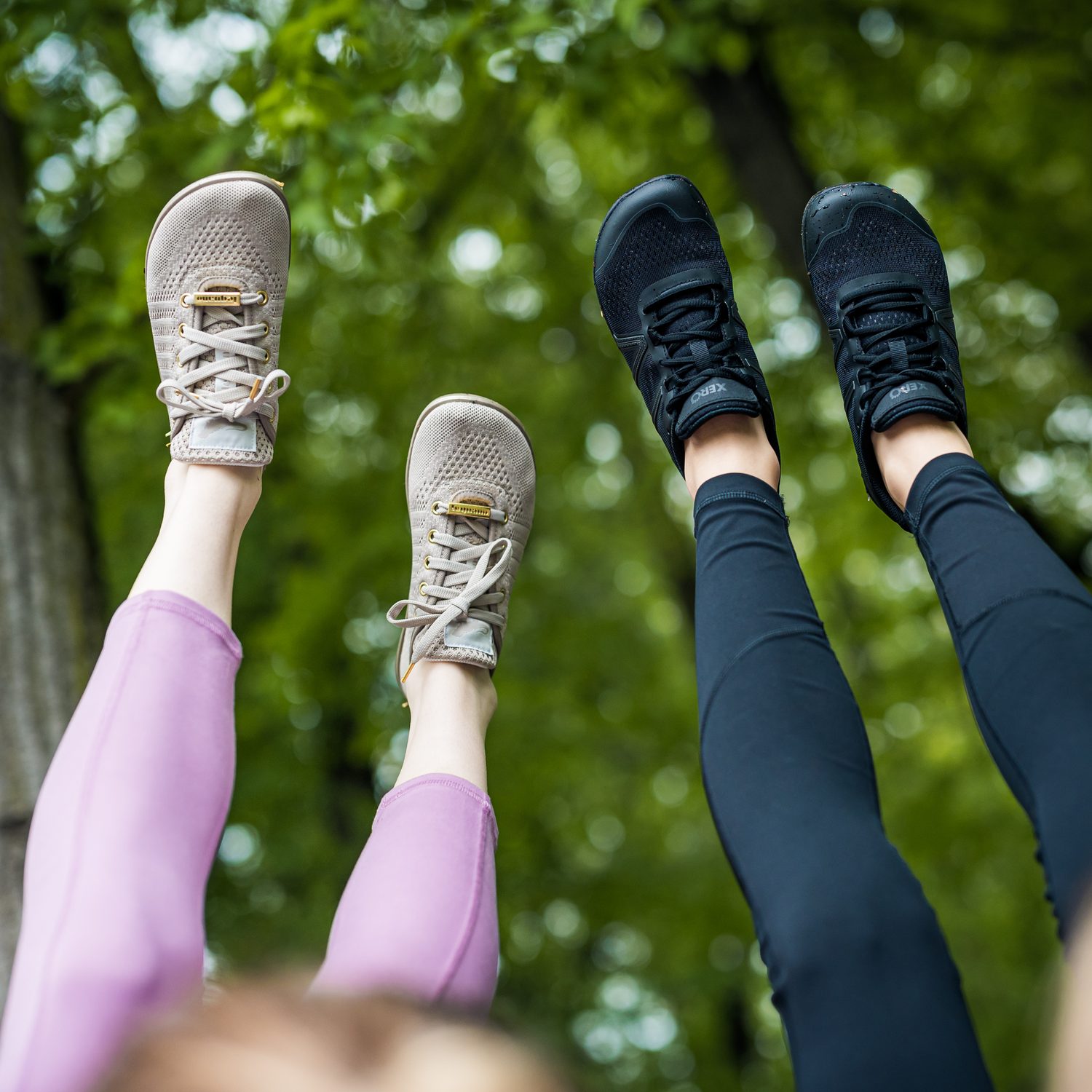
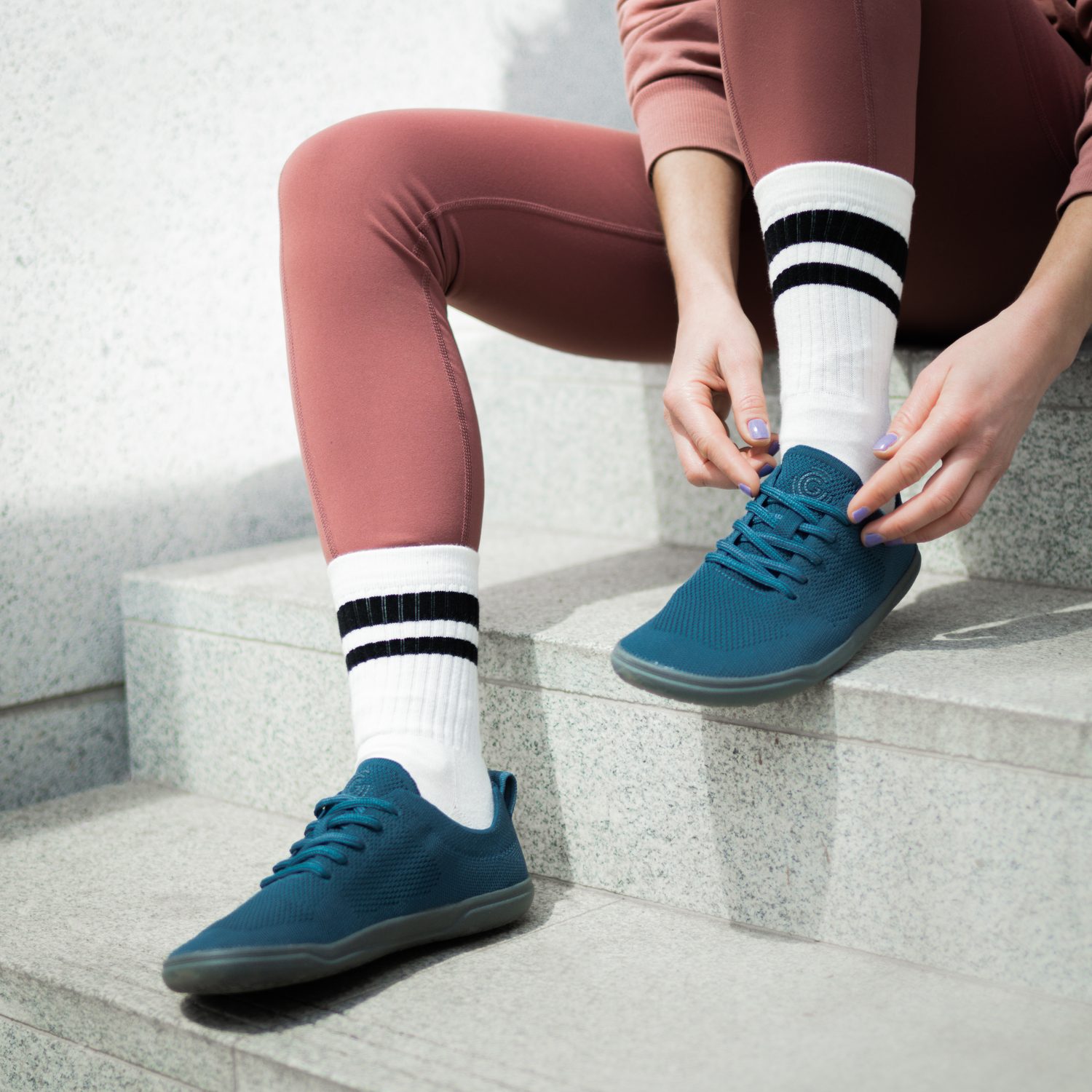 So, running in barefoot shoes? Absolutely yes! And if you’d like to learn more about running, take a look at our article How to run in barefoot shoes.
Naboso’s selection of tried-and-tested running shoes:
You’ll find more models in the article How to run in barefoot shoes?
The human foot has 200 000 nerve endings. Yes, really – that many zeros. Let’s give it natural movement and as much contact as possible with the ground we walk on. Your feet and body will thank you, and you’ll soon feel for yourself how your walking and running become lighter. For an even more intense movement experience and better circulation and foot function, use NABOSO sensorimotor insoles. After training, treat your feet to a few minutes of relaxation with the NABOSO Neuro Ball. You can also keep your feet in shape with exercises – we’ve written more about that in the article Keep your feet in shape.
So who wins today’s sporting showdown? What will you run in next time? The choice is yours.
What else might interest you on this topic?


You are currently on www.premiumbarefoot.co.uk


 £ - EN
 Čeština
 English (US)
 Slovenčina
 Magyar
 български
 Polski
 Dansk
Dansk
 Nederlands
 Svenska
 Suomi
Suomi
 Español
 Français
 Slovenščina
 Română
 Português
 Deutsch (DE)
 Deutsch (AT)
 Deutsch (CH)

