We’ll be happy to help via online chat or at: orders@premiumbarefoot.com

Children Barefoot Walking, Movement and Health
Children’s feet deserve freedom – and summer is the perfect time for it. Physiotherapist Marie Langová explains what barefoot walking does for a child’s body, where it’s fine to take shoes off, and when to reach for the right barefoot footwear.
Children show us themselves – they come in from outside, kick off their shoes, scrunch their socks into an untidy little bundle and happily run around barefoot. At home it’s an obvious choice. But what about outdoors? Summer is simply made for letting children’s feet finally breathe. At the playground, in the park, in the sandpit, by the water or even on the grass outside your building – there are more chances to go shoeless than you might think. And it gives children far more than just that wonderful feeling of freedom. That’s why we teamed up with children’s physiotherapist Marie Langová to share why bare feet are so beneficial in summer, where to be careful – and what to put on your child’s feet when shoes really are needed.
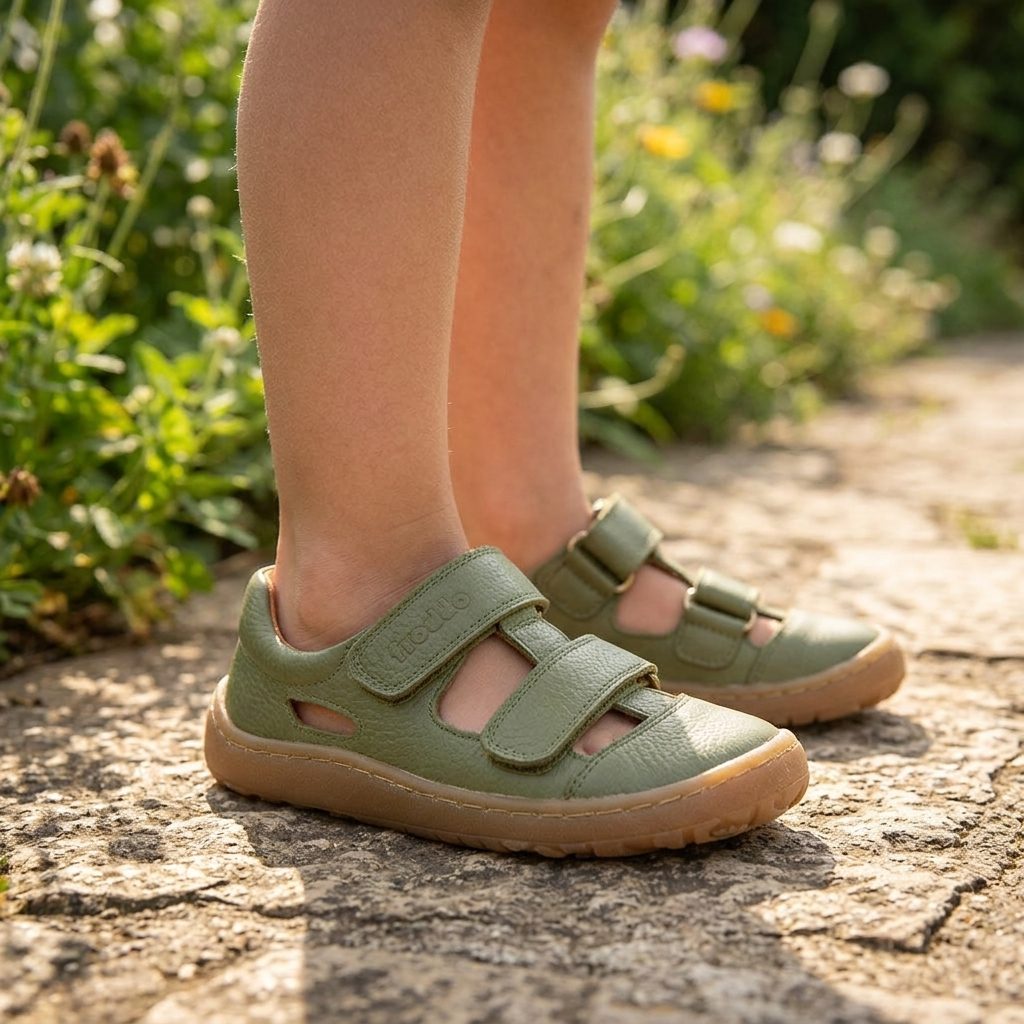
Walking barefoot is one of the most natural things for a child’s body. The foot is packed with nerve endings, and every contact with the ground sends valuable information to the brain: is the surface warm or cold? Hard or soft? Smooth or uneven? The more different surfaces little feet experience, the better the nervous system develops – along with the muscles throughout the foot.
With the very youngest children it’s even more noticeable – a baby’s foot in the first year of life literally works like a grasping organ. They curl their toes, rotate the foot, explore what’s underneath. Every sensation is information. And the more information, the better the whole body functions.
“A bare foot receives stimuli we simply don’t experience in shoes. Every little stone or grain of sand, every change in temperature and surface – all of it is an important message for a child’s nervous system. The bare foot works at full capacity, muscles strengthen naturally and the arch develops better,” says Marie Langová.
And what about those famous ankle boots that are supposed to ‘support’ the ankle? Today we know it’s actually the opposite. A foot in a rigid shoe weakens – just like a leg in a brace after a knee injury. Children build strong feet and stable ankles through movement, not external support. That’s why we moved away from stiff ankle boots for young children a long time ago and put our trust in freedom of movement.
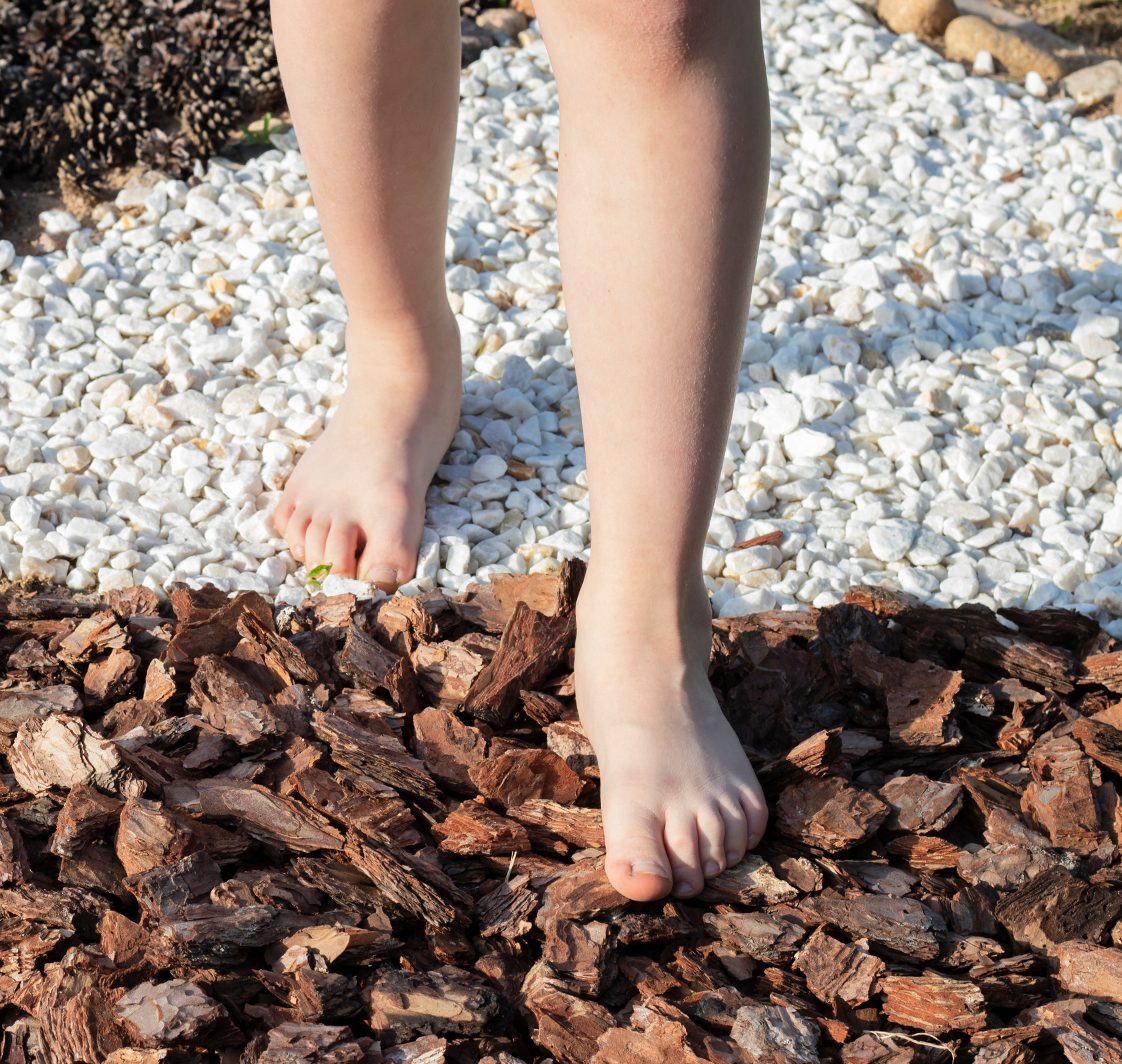
Outdoors, there are lots of different surfaces – and not all of them are equally suitable or equally safe. It helps to know where you’ll make your child’s feet happy, and where you should be more alert.
Where bare feet will be happiest: grass, sand, soil, woodchip, pebbles, paving blocks, and mildly uneven surfaces at playgrounds or in nature. Each one brings a different sensation and gives the foot exactly what it needs. In nature you’ll find pine cones, twigs, moss – a natural sensory path no gym can replace. Many zoos, parks or larger playgrounds even have dedicated sensory trails these days – if you come across one, definitely try it with your children.
Where to be careful: scorching paving slabs, concrete and asphalt in full summer sun can be a real danger for children’s skin. A child’s sole is extremely sensitive and burns happen quickly – a simple rule applies: if it’s too hot for your feet, it’s too hot for your child’s too. Be just as cautious with metal elements at playgrounds – overheated slides or climbing frames can catch you out. And anywhere you can’t clearly see the ground – whether it’s broken glass, sharp stones or thorns – shoes simply belong on little feet.
Practically speaking: a city offers fewer opportunities than a garden or the countryside, but even there you can usually find a patch of grass, a sandpit or perhaps wet paving by a fountain in the park. In short – let children go barefoot as often as possible, but use common sense.
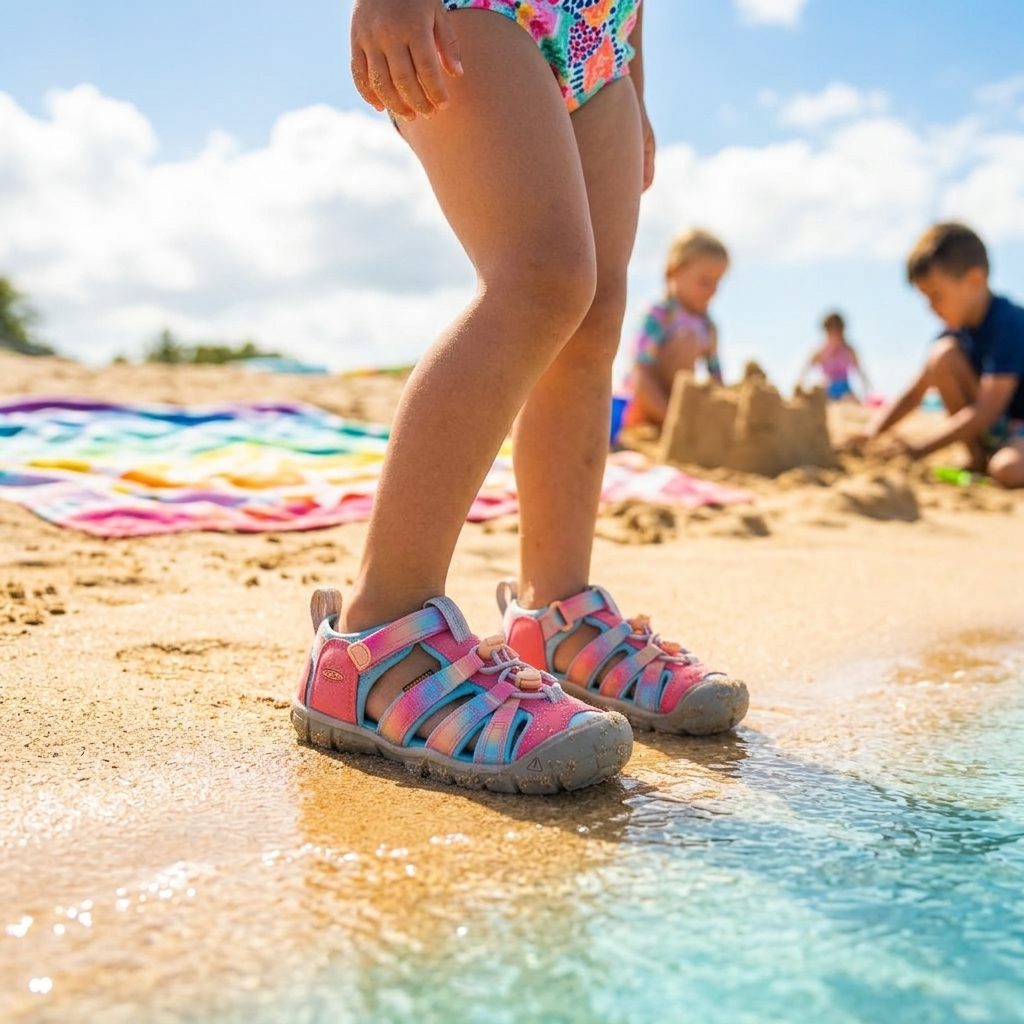
Every child experiences the world a little differently – and that includes their feet. One child will walk over rough gravel without blinking, while another is bothered by seemingly harmless smooth pebbles. This is called sensory sensitivity and it’s completely normal. If your child refuses barefoot walking, don’t give up – it just takes a bit of patience and a gradual approach.
Start at home, on a surface your child knows and where they feel safe. Carpet, wooden floor, smooth vinyl – those are the first steps. Then gradually add new stimuli: grass in the park, damp sand, small pebbles. Sensory play will do more than any persuading – try stepping into a bowl of damp sand together, walking over a towel soaked in cold water, or playing barefoot on the lawn. The more your child associates it with play and fun, the easier they’ll accept new surfaces.
And if you want to take it a step further, make your own sensory path at home – all you need are a few trays or boxes filled with different materials: sand, stones, grass, wooden blocks, moss. Your child can then explore at their own pace and decide what feels pleasant and what doesn’t. For inspiration on how to bring similar tools into your home, see our article Uneven surfaces: A way to liven up your home and strengthen feet.
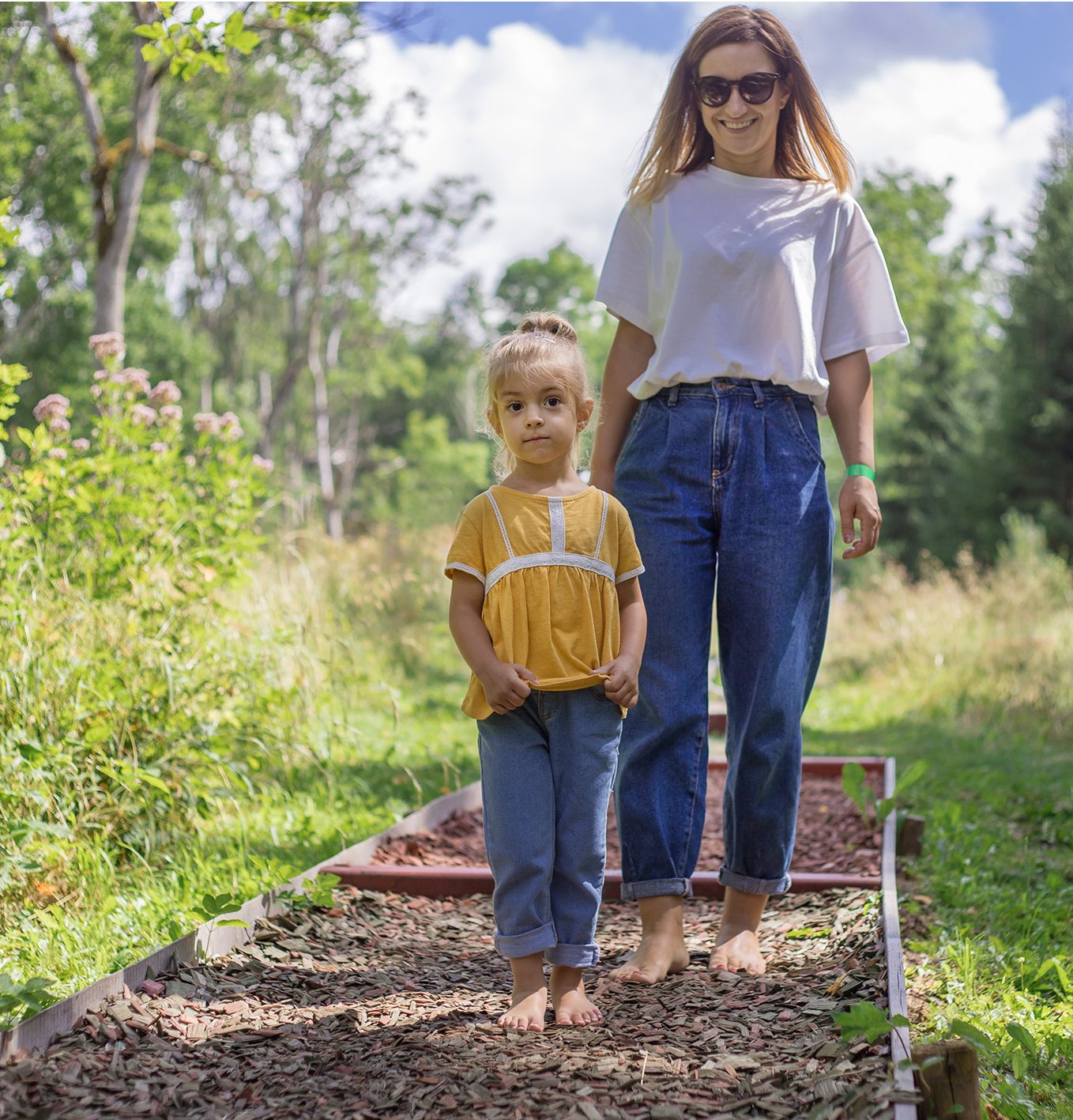
The best shoe is no shoe – that still holds true. But the reality is we do need shoes. And when we put them on children, we want them to feel as close as possible to being barefoot. That’s exactly what barefoot shoes are designed to do.
Barefoot shoes are easy to recognise: they have a thin, flexible sole that can bend and twist all over, they’re roomy enough around the toes so toes can naturally spread and work, and they have no heel. In them, the foot can function as it should: it feels the ground, muscles work, and the foot develops. Nothing squeezes it, nothing props it up unnecessarily. Even in shoes, children still get at least some of those important stimuli.
“A thinner sole and a soft shoe allow a child’s foot to develop even when they’re wearing shoes. The muscles still have to work – unlike in a stiff shoe where the foot feels like it’s in prison,” explains Marie Langová.
A shoe’s main job is to protect the foot from mechanical damage and extreme temperatures. That’s its role. Everything else – support, shaping, stiffening – is unnecessary for a healthy foot, so let the foot do its natural work.
And one more thing that’s often forgotten: the right size is just as important as the right model. Children’s feet grow quickly, and shoes that are too small can do more harm than good. We’ve written a separate guide on how to measure properly and what to watch out for – The complete guide to measuring children’s feet: Tips and mistakes to avoid. We recommend reading it before every purchase of new shoes.
Summer calls for different types of shoes depending on where you’re going with the children. You’ll choose different footwear for a trip into nature than for a seaside holiday. Here are our summer tips:
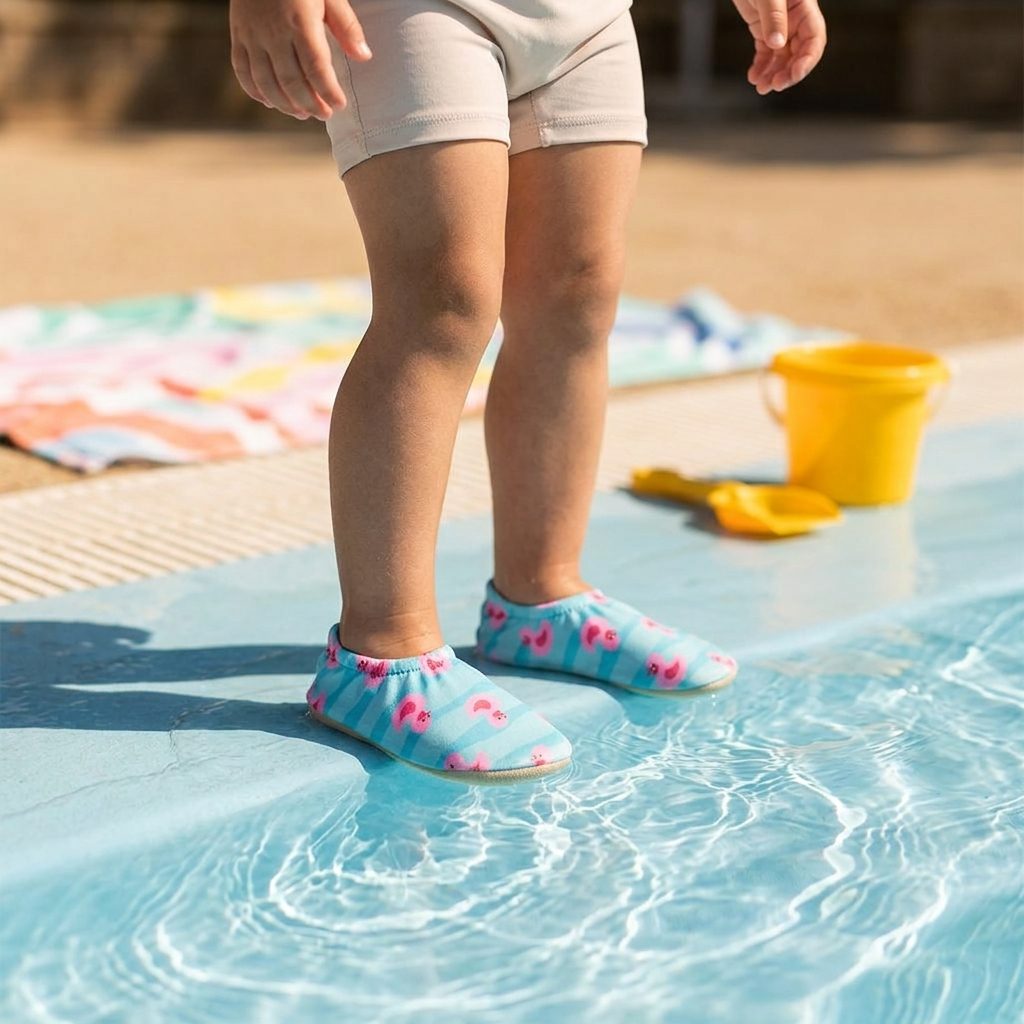
For the swimming pool, the sea or a pond, we recommend RAYVE SPLASHSAFE – this year’s new arrival that we fell in love with straight away. They’re soft, breathable and quick-drying. The upper is made from thin lined fabric secured with elastic so they stay nicely on the foot, and the PVC sole protects against everything you need – sharp stones or hot sand. They’re also great for the sandpit or as lightweight garden slippers if you want feet at least a little protected. There are plenty of colours and patterns to choose from, up to size 35.
Sandals are a summer classic we can’t do without. They’re breathable, quick to put on, and children love them. But when choosing, it matters how confident a walker your child is.
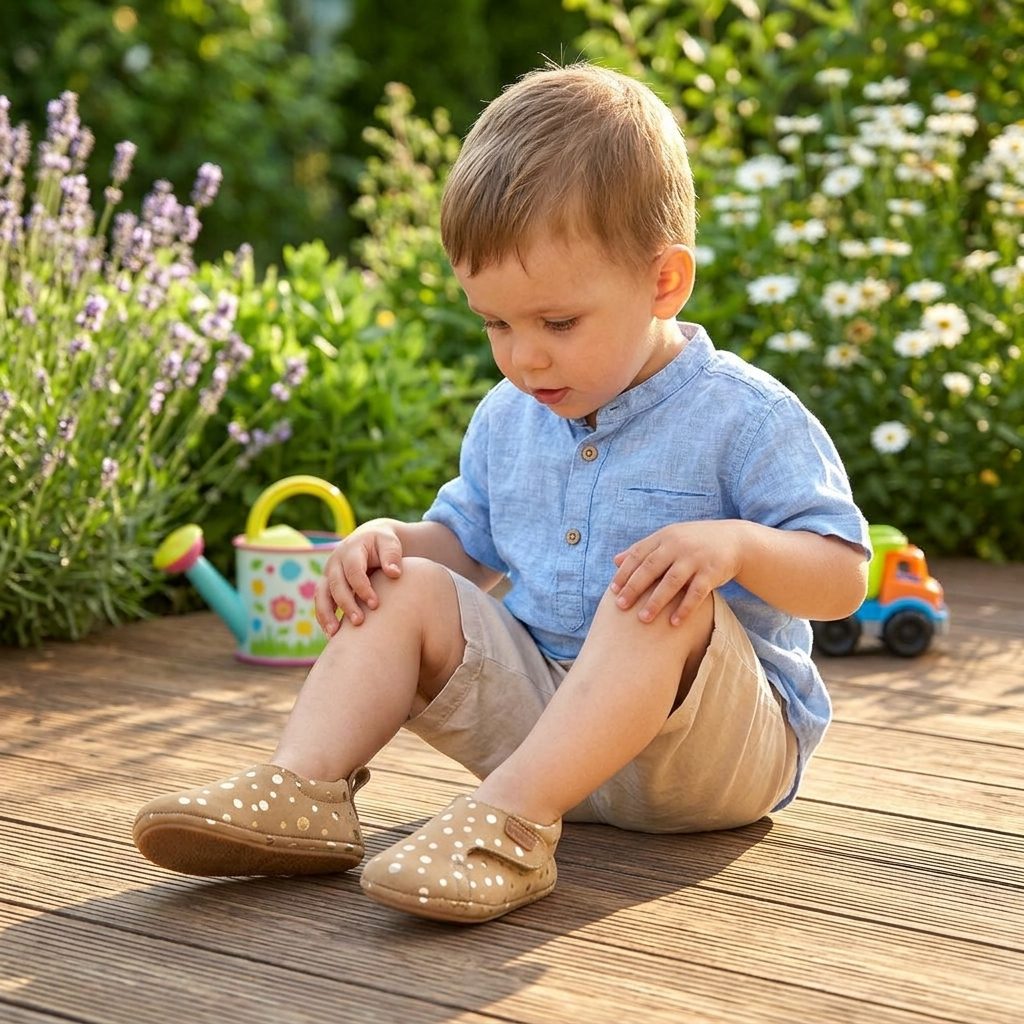
For the youngest and new walkers, we recommend sandals with a closed toe. Children who are only just discovering the world on their own feet naturally trip more – and a closed toe gives them the protection they need without restricting the foot in any way. For these little adventurers, FRODDO PREWALKER SANDAL are ideal – soft, lightweight and adapted to feet that are still learning to walk.
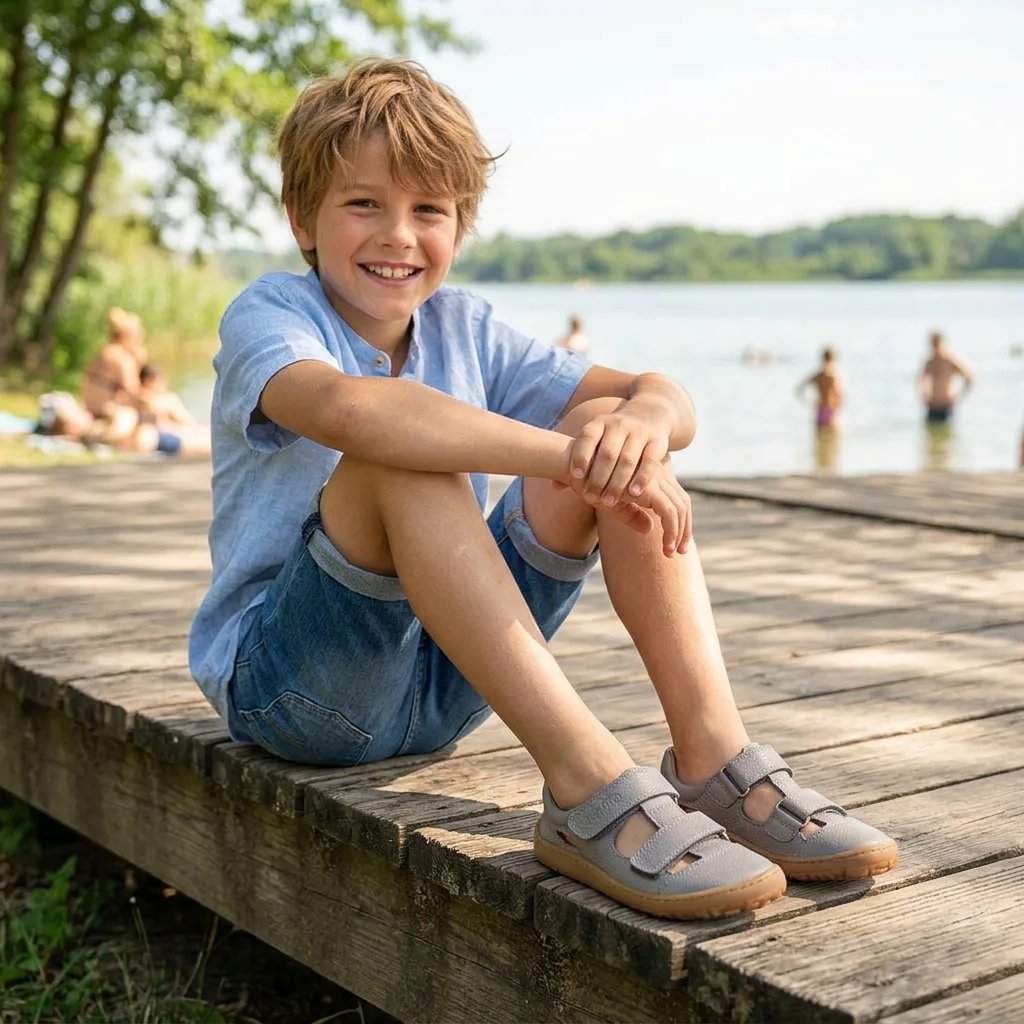
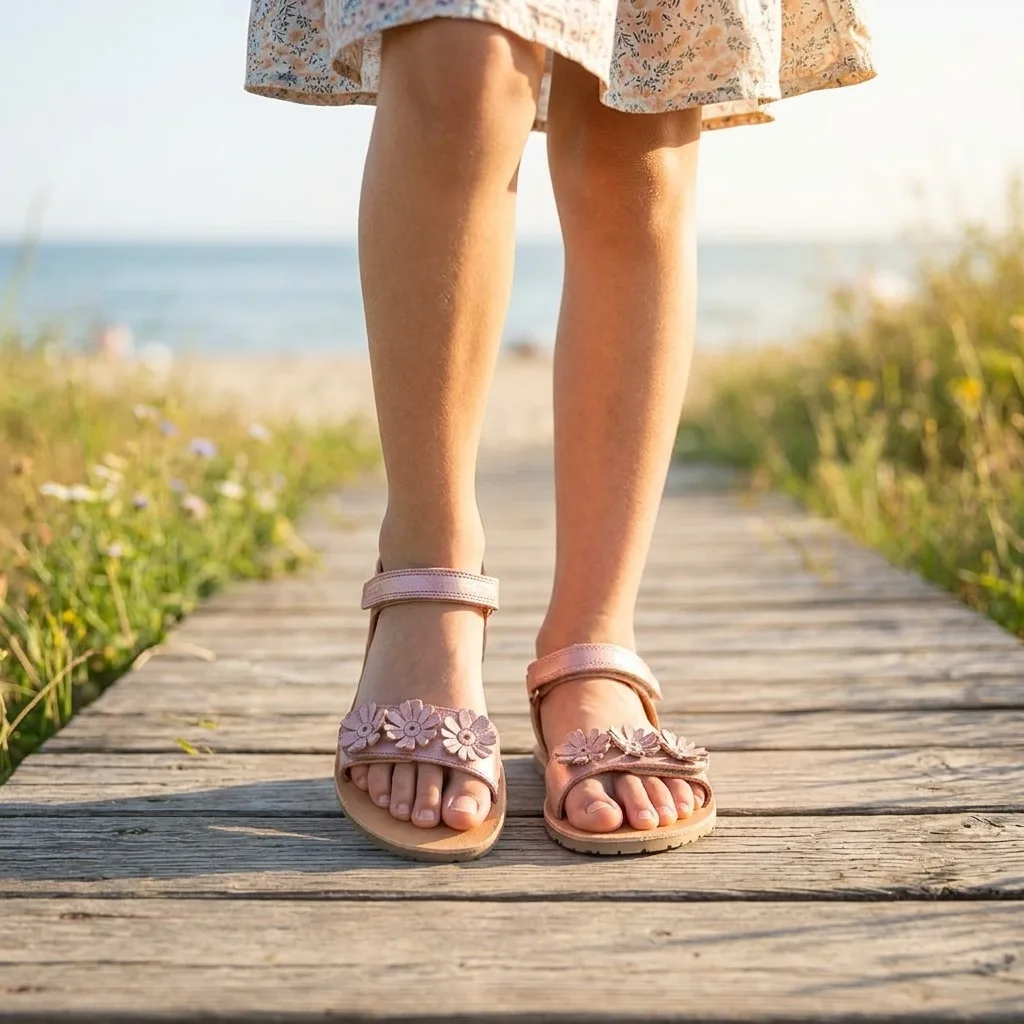
For older children, we have several options. FRODDO SANDAL VELCRO II and FRODDO LOOP SANDAL are available up to size 35, in smooth or suede leather, with Velcro straps for easy fastening. A protected toe is a given with both models.
For town and easy-going walks, there are FRODDO SANDAL FLEXY with an open toe – lightweight, airy, in various designs. Feet can really breathe in them, and children barely notice they’re wearing them.
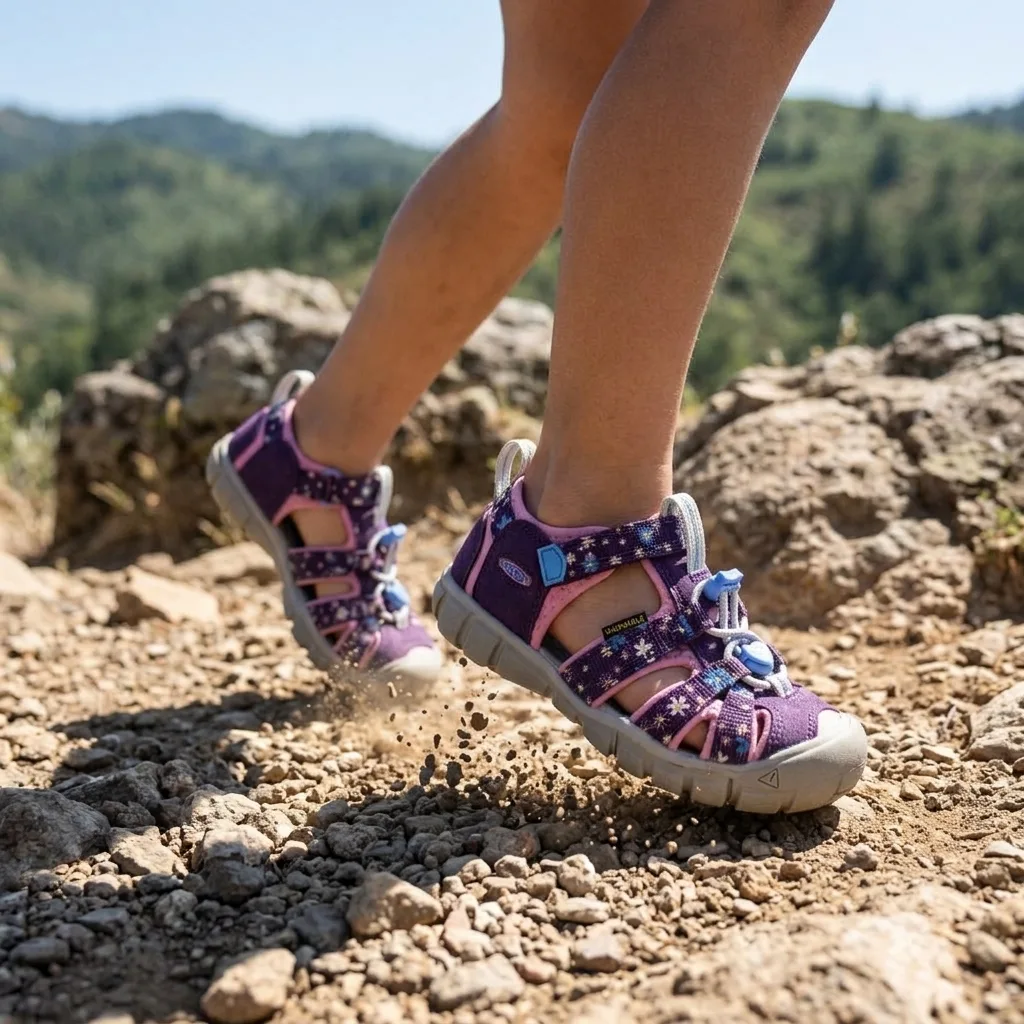
If you’re planning more demanding trips or want extra confidence on less predictable terrain, KEEN SEACAMP II CNX are also worth a mention. They’re not purely barefoot footwear, but their durability and toe protection make them a practical helper for the water or rockier paths.
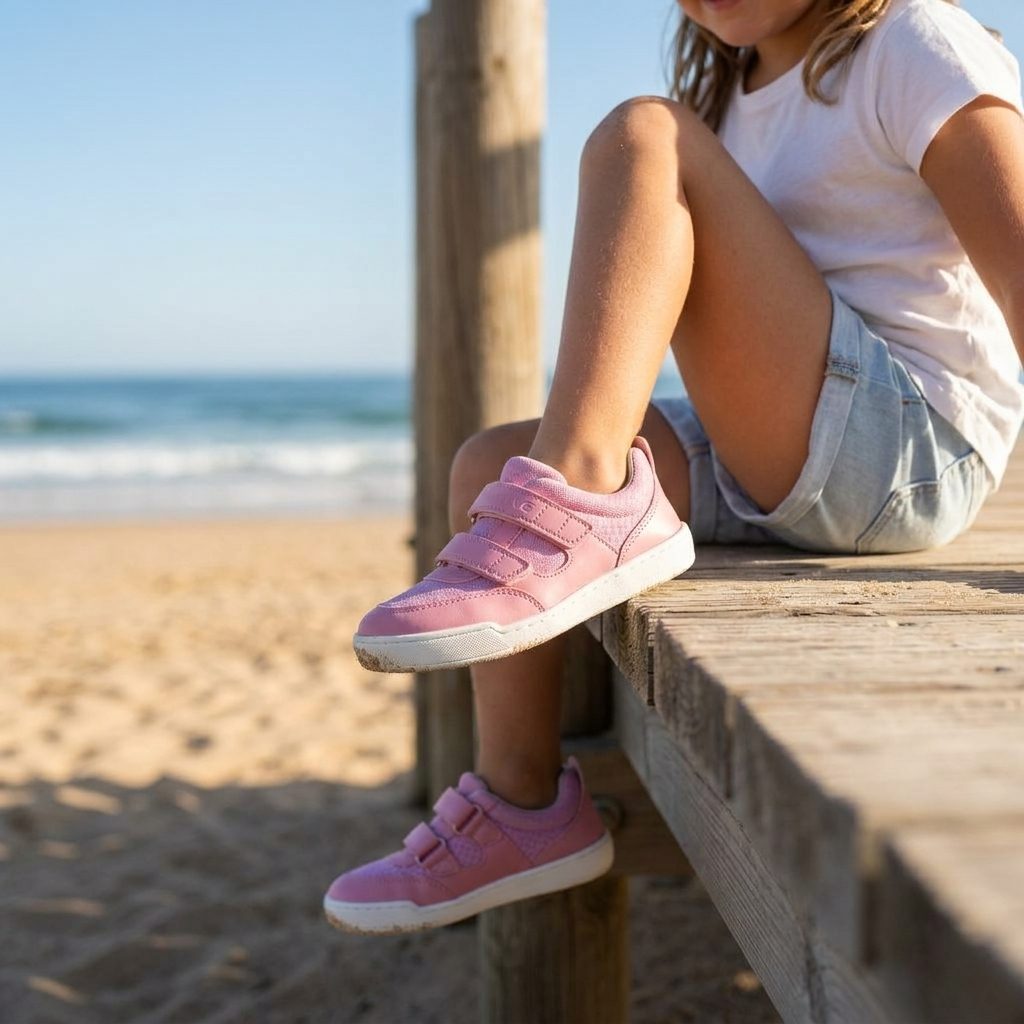
We can’t do without trainers in summer – they’re great for walks around town, trips out and playtime at the playground. Choose airy models made from breathable knit or textile with a flexible sole – the kind children can comfortably wear without socks, so their feet can breathe.
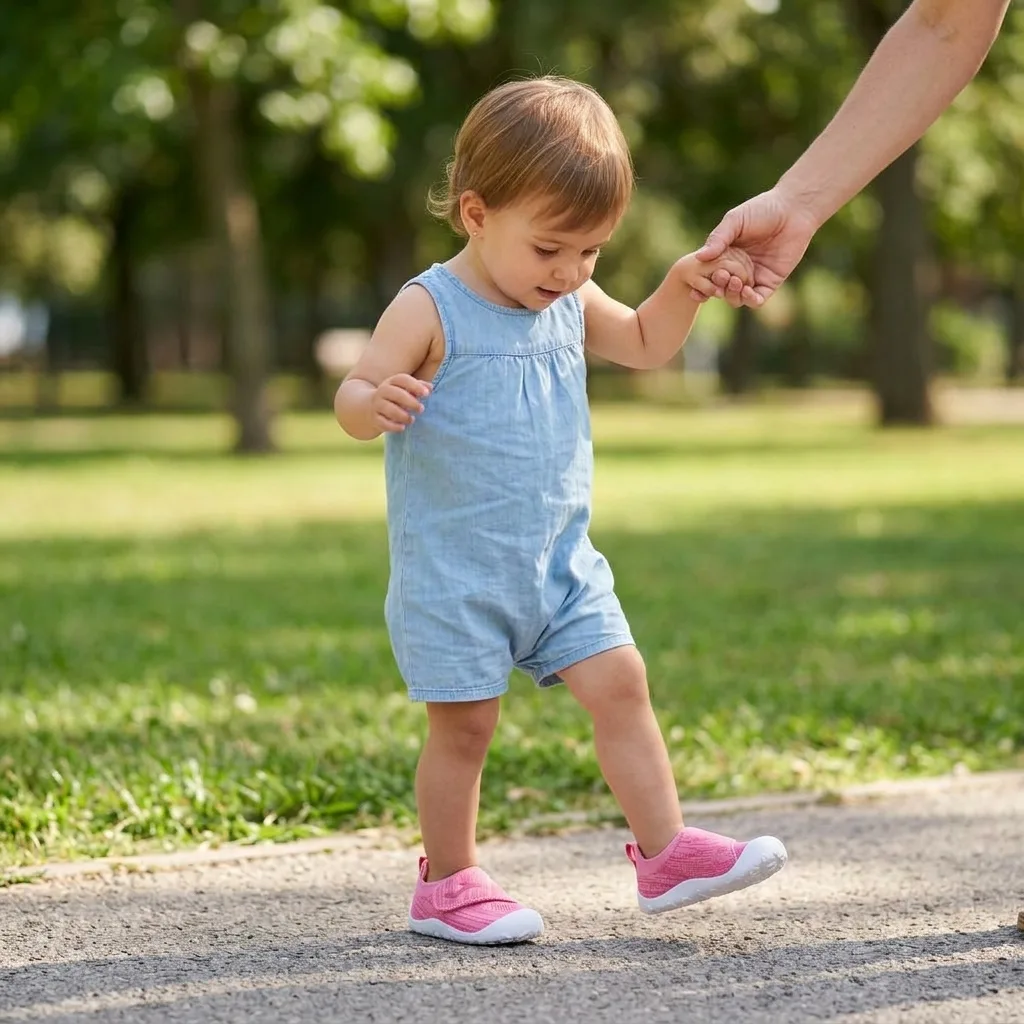
For the youngest walkers, JOMA NINO JR are a brilliant choice, with a flexible, supple sole and a breathable upper. Older children will appreciate the wider range of JOMA trainers in sizes 27–38 – a sporty look, various stylish designs, and fastening with Velcro or a combination of Velcro and laces. Depending on where you spend most of your time, you can choose a model with a smooth sole or a more grippy one for trips into nature.
 If you’re looking for something even airier, go for canvas or knit trainers from FRODDO – available in sizes 23–40, so older children (and even adults) can find a great match too. There are several colour options and fastening with laces or Velcro, depending on what suits best.
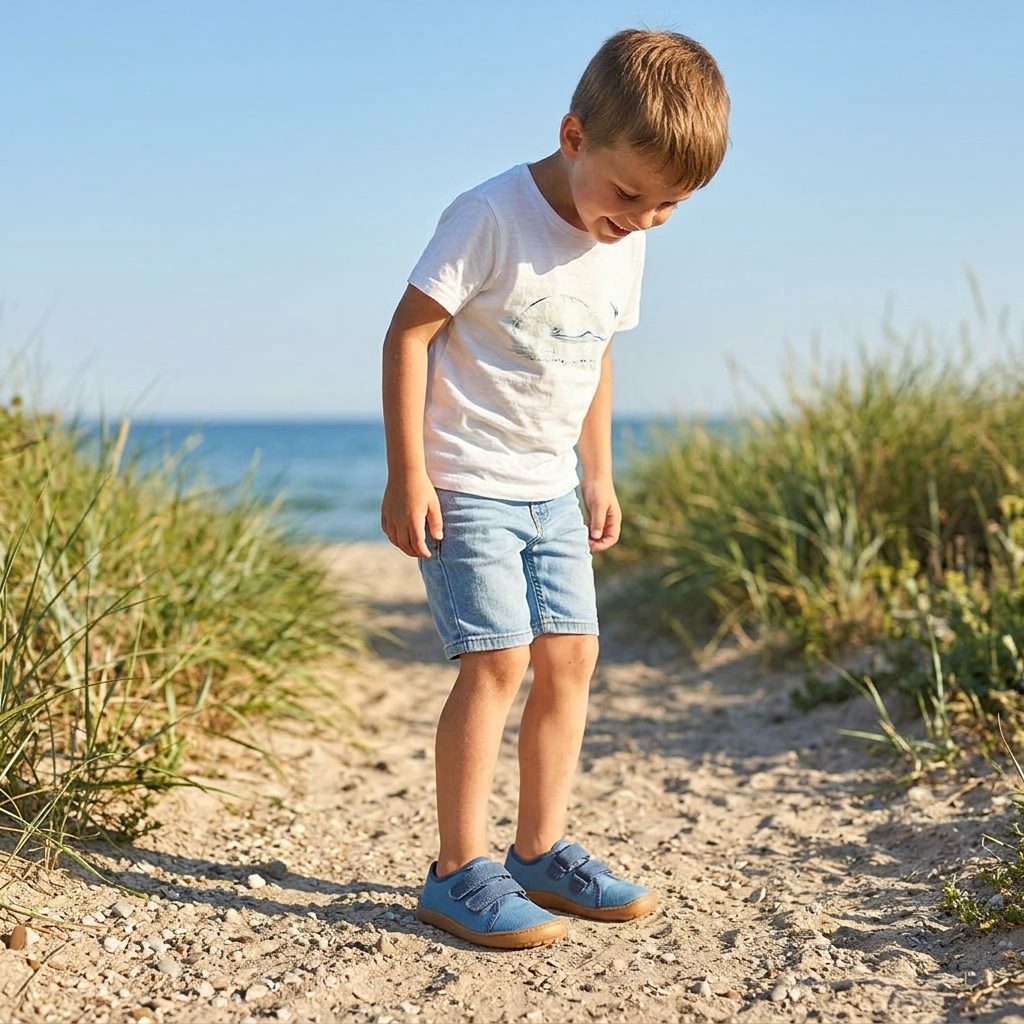
And for anyone looking for a tried-and-tested classic for a wider foot, there are still RAYVE CATBOURNE 2.0 – in several colourways, sizes 23–34, half leather and half textile, and proven through countless children’s adventures.
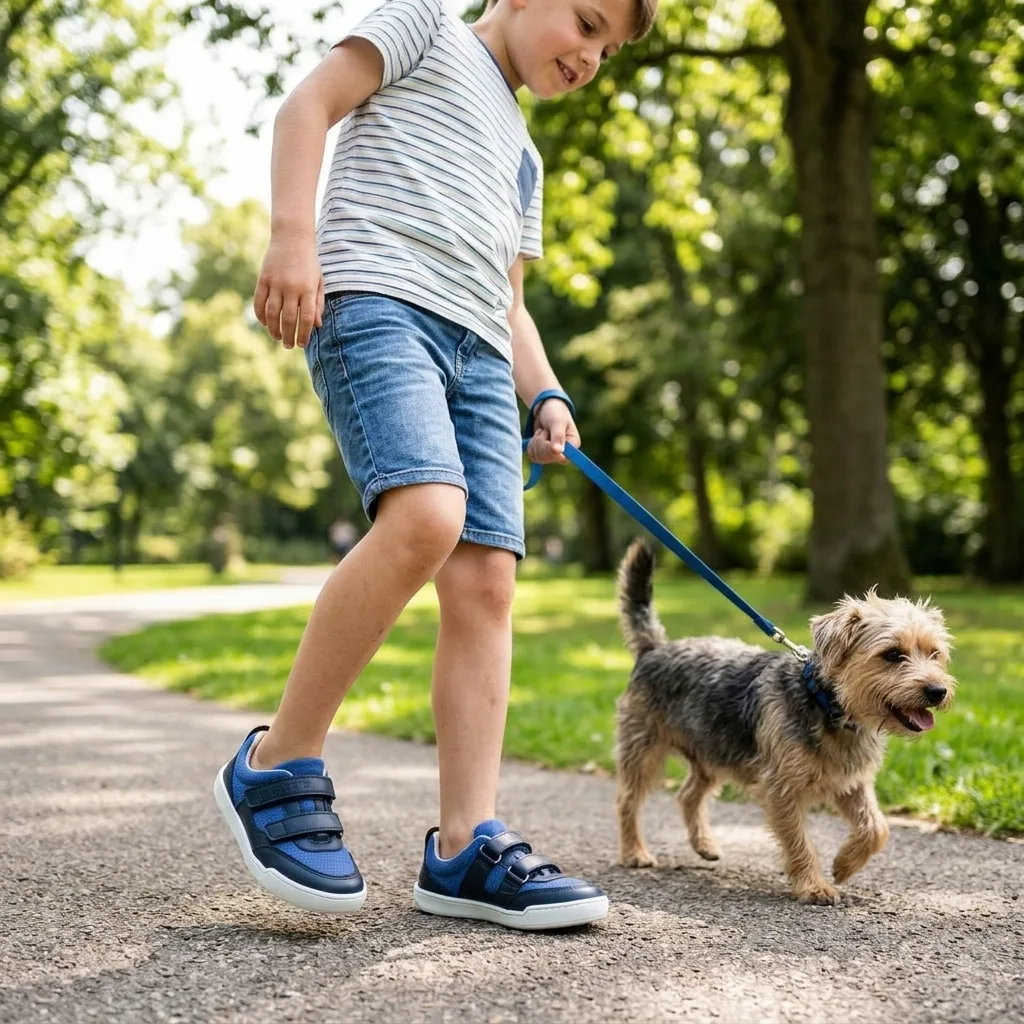
Walking barefoot outdoors is wonderful – but afterwards, feet deserve a little care. When you get home, it’s a good idea to rinse and check their feet to make sure your child hasn’t stepped on anything or grazed the sole. With small children it happens sometimes, and they don’t always notice straight away or tell you. If you spot minor scrapes or redness, simply treat the area.
The skin on soles that regularly go barefoot naturally toughens and strengthens – but at the beginning it can be more sensitive. Walking on dry surfaces can dry the skin out, so after washing and drying it’s worth applying a children’s body cream or oil. A couple of minutes is enough, and feet are ready for the next adventure.
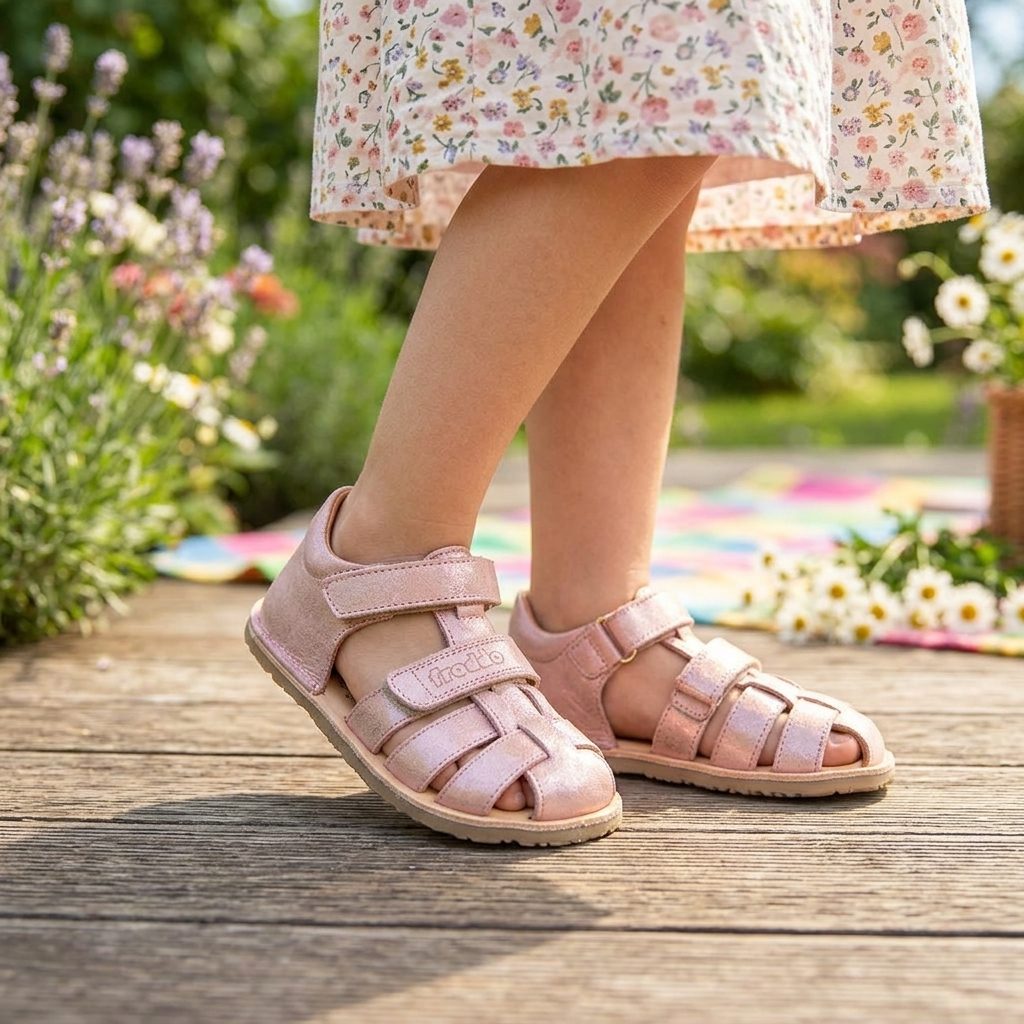
Summer is made for bare feet. Take every opportunity – sand by the water, grass in the park, a sensory trail in the park. And when shoes are needed after all, choose ones that support movement rather than restrict it.
And one more thing: children learn by copying. If they see that we enjoy being barefoot too – playing in the sand, splashing through puddles, or simply sitting on the grass without shoes – they’ll take theirs off on their own, without any coaxing. So perhaps the best way to encourage children to go barefoot is simply to lead by example. Take your shoes off with them, enjoy it together, and let summer do its thing.
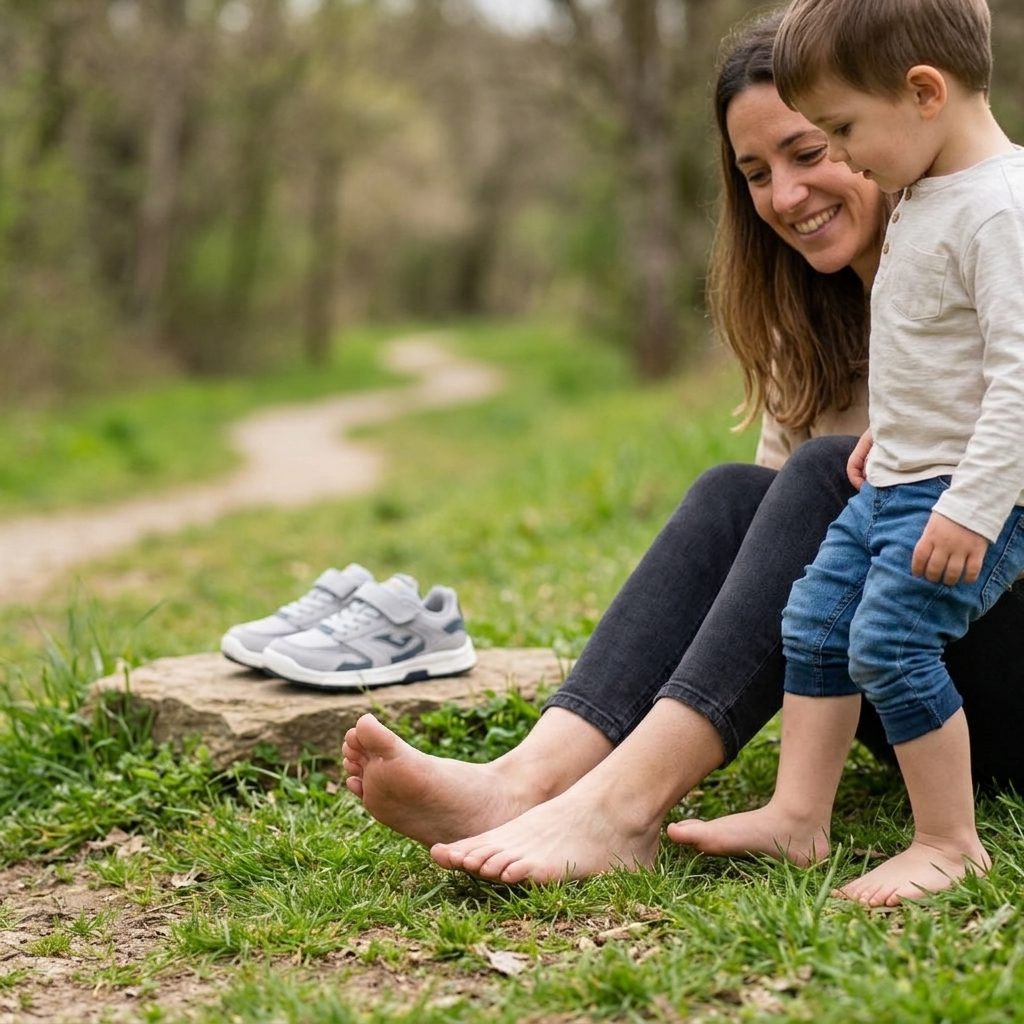
This article was created in collaboration with Bc. Marie Langová. Marie is a children’s physiotherapist specialising in the psychomotor development of the youngest children, the Vojta method and handling. She helps parents see the connections that lead to a better understanding of their child’s development and any potential therapy. In her practice, she focuses on handling babies, choosing aids and equipment for infants, online consultations, and advice on breastfeeding, babywearing and choosing first shoes. You can find out more about Marie at marielangova.cz or on her Instagram @marie_langovaa.


You are currently on www.premiumbarefoot.co.uk


 £ - EN
 Čeština
 English (US)
 Slovenčina
 Magyar
 български
 Polski
 Dansk
Dansk
 Nederlands
 Svenska
 Suomi
Suomi
 Español
 Français
 Slovenščina
 Română
 Português
 Deutsch (DE)
 Deutsch (AT)
 Deutsch (CH)


