We’ll be happy to help via online chat or at: orders@premiumbarefoot.com

Struggling with diastasis recti and not sure how to get rid of it for good? We’ll guide you step by step on the path to tackling diastasis recti once and for all.
Diastasis recti is the term for a separation of the rectus abdominis (the “six-pack” muscles). What this health issue involves, who it most commonly affects, how to do a self-check, when to start addressing it, and whether it’s more of a health or an aesthetic concern, you’ve already read in the article Diastasis recti – separation of the abdominal muscles can affect anyone, not just women after childbirth. Now we’ll focus on the steps that will help you tackle diastasis recti. For good.

The absolute foundation is your all-day posture (standing, sitting, walking, lying down…). The optimal position is what’s often called “upright alignment”. For most of us, unhealthy movement patterns and poor posture have already developed. But it’s never too late to straighten up – you simply need to learn to engage the right core muscles so you can maintain good posture. In this position, your muscles stay active all the time – and that’s exactly what we want.
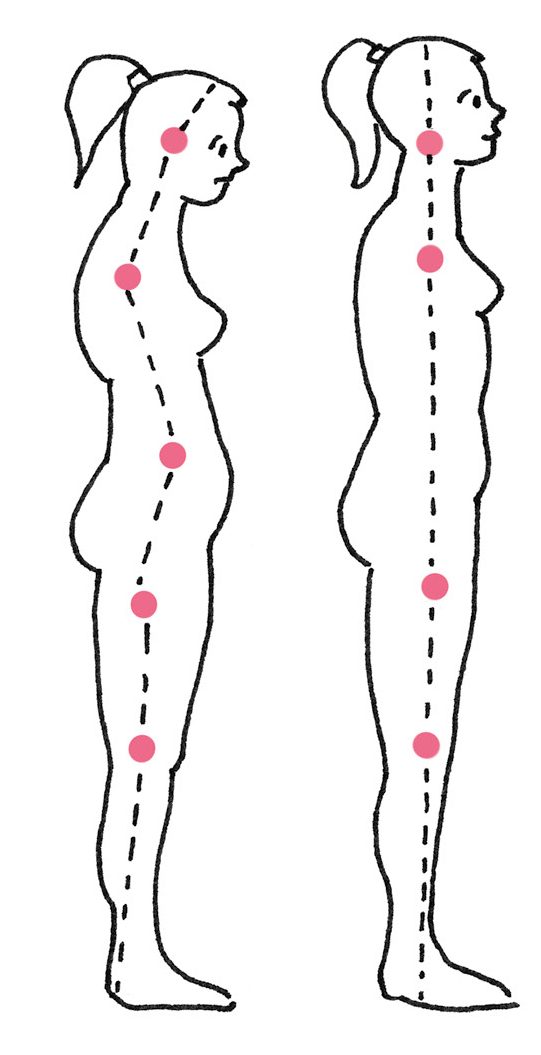
What position are you in as you read these lines? Notice where your back and pelvis are right now, remember that set-up, stand up and try walking. Can you keep it? If you’re sitting with your pelvis tucked under, a rounded back and your head dropped forward, it won’t be easy. Walking is a natural movement in which the muscles place (among other things) the spine into its most optimal position and upright alignment. So if you’re ever unsure about your body alignment, go for a walk.
You can learn it all with the book Diastáza.
Did you know that over a lifetime, a person with healthy feet will walk the equivalent of circling the entire globe? But hand on heart, most of us don’t know what our feet are meant to do, or how to use them properly. We usually only end up at a physio or a podiatrist (a specialist clinic for diagnosing and treating foot conditions) once there’s a problem – most often pain. Flat feet, high arches, heel spurs, bunions, hallux, hammer toes & the rest… that’s just a small selection of the most common issues (sound familiar?).
But what do your feet have to do with flattening your tummy? Foot alignment is at the heart of good posture. Energy transfers through the ankles to the knees and hips. Their position affects the natural curves of the spine and the position of the shoulder blades. Your body simply works as one connected system. And now read carefully... Without stable feet, you can’t properly activate your abdominal muscles, you won’t address diastasis recti, and you won’t flatten your tummy the way you want to! Poor foot alignment is also often behind significant back and head pain that may be bothering you daily.
Do you remember the yoga cue: “Stand on three points of your foot – heel, big toe and little toe”? You probably did it automatically, but why? Those modest approx. 120 cm² can be used to their full potential. Learning the spiral principle and the wedge principle isn’t something we can cover in one post, but we’ll take a look together at the basics for mobilising your feet. Walking barefoot and its variations (with more flexible, roomier footwear) are the foundation for restoring awareness of our most essential support. A solid house needs strong foundations, and if you already have foot issues (see above), you need to start addressing them first and introduce barefoot walking gradually (taking different terrains into account). Let yourself be inspired.
Video
Walking is the foundation for strengthening your core and reducing diastasis recti – there’s no better movement. However, it needs to be mindful walking. Walking with your full attention, focusing on your body, muscles, joints and breathing.
Sound is an excellent indicator of a correct foot strike – we shouldn’t be able to hear our footsteps.
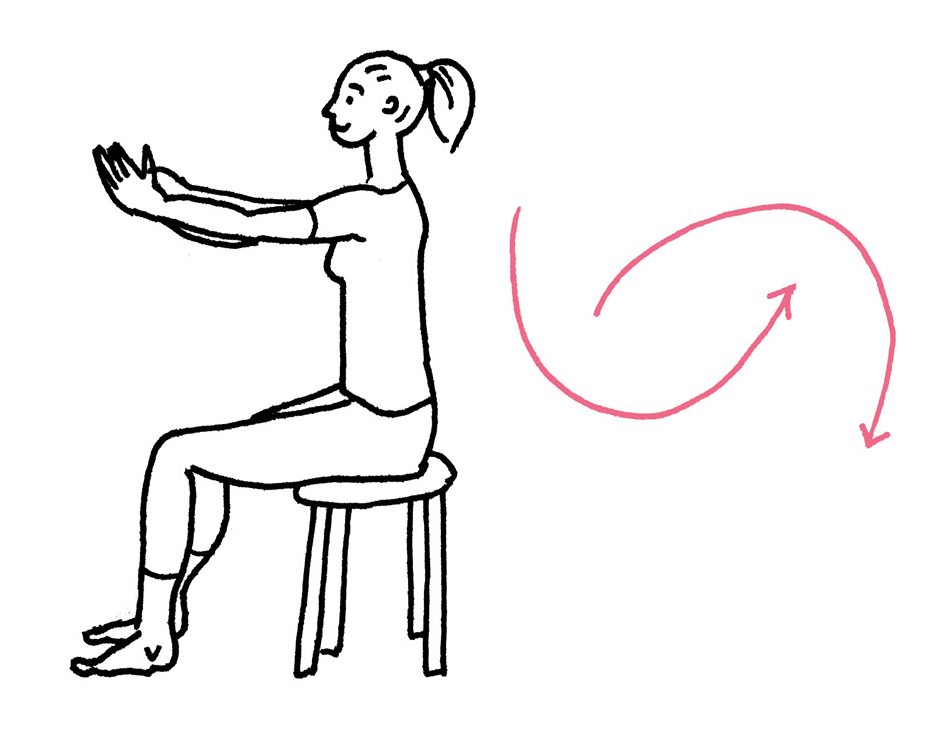
Wake up your hip joints, because if their mobility is limited, the first warning sign will be a protruding belly and an exaggerated arch in the lower back. Use a chair with a flat, firm surface for this exercise.
This truly unique and comprehensive publication on the Czech market will teach you how to work with both body and mind, so diastasis recti starts to close and never widens again. What can you expect in the Diastáza book?
You can find more information about the book on COREyoga.cz.

Even if you’re feeling desperate right now that your body isn’t “right”, that it doesn’t look nice, it’s always wonderful to start something new, try something new, and have hope for a healthy, fully functional body. Diastasis recti isn’t the result of an unavoidable genetic fate – it’s shaped by our lifestyle. Isn’t it amazing that our body signals in this way that something
isn’t quite right? You can find the root of the problem right now, we can start working on improvement today, and live fully for the rest of our lives without health problems.
This article was created in collaboration with Anna Nováková, founder of COREYOGA.CZ.
You might also be interested in:


You are currently on www.premiumbarefoot.co.uk


 £ - EN
 Čeština
 English (US)
 Slovenčina
 Magyar
 български
 Polski
 Dansk
Dansk
 Nederlands
 Svenska
 Suomi
Suomi
 Español
 Français
 Slovenščina
 Română
 Português
 Deutsch (DE)
 Deutsch (AT)
 Deutsch (CH)

