We’ll be happy to help via online chat or at: orders@premiumbarefoot.com

Why did Helmuth Ohlhoff start making barefoot footwear? The history, present and future of leguano – one of Europe’s TOP 100 fastest-growing companies.
It wasn’t all that long ago that Helmuth Ohlhoff, then a journalist, was walking completely barefoot. Conversations with Germany’s first biokinematic specialist and Freiburg doctor Walter Packi led him to the idea of ditching conventional shoes and lightening not only the load on his feet, but life as a whole.
Shortly after 2000, he began to toy with the idea of founding his own barefoot brand – which today ranks among Europe’s TOP 100 fastest-growing companies.
What did the journey upwards look like from the very beginning?
Before we dive into the leguano story, let’s turn back the clock. It’s 5 May 2015. In Prague’s Dejvice district, Andrea Součková opens one of the first barefoot shoe shops in Europe. From early morning, partitions were being drilled in, shelves put up and shoes displayed – for now, only one of each pair, because there simply wasn’t the budget for more. That morning, physiotherapist Jana Exnarová walked into the shop with a bag full of shoes.
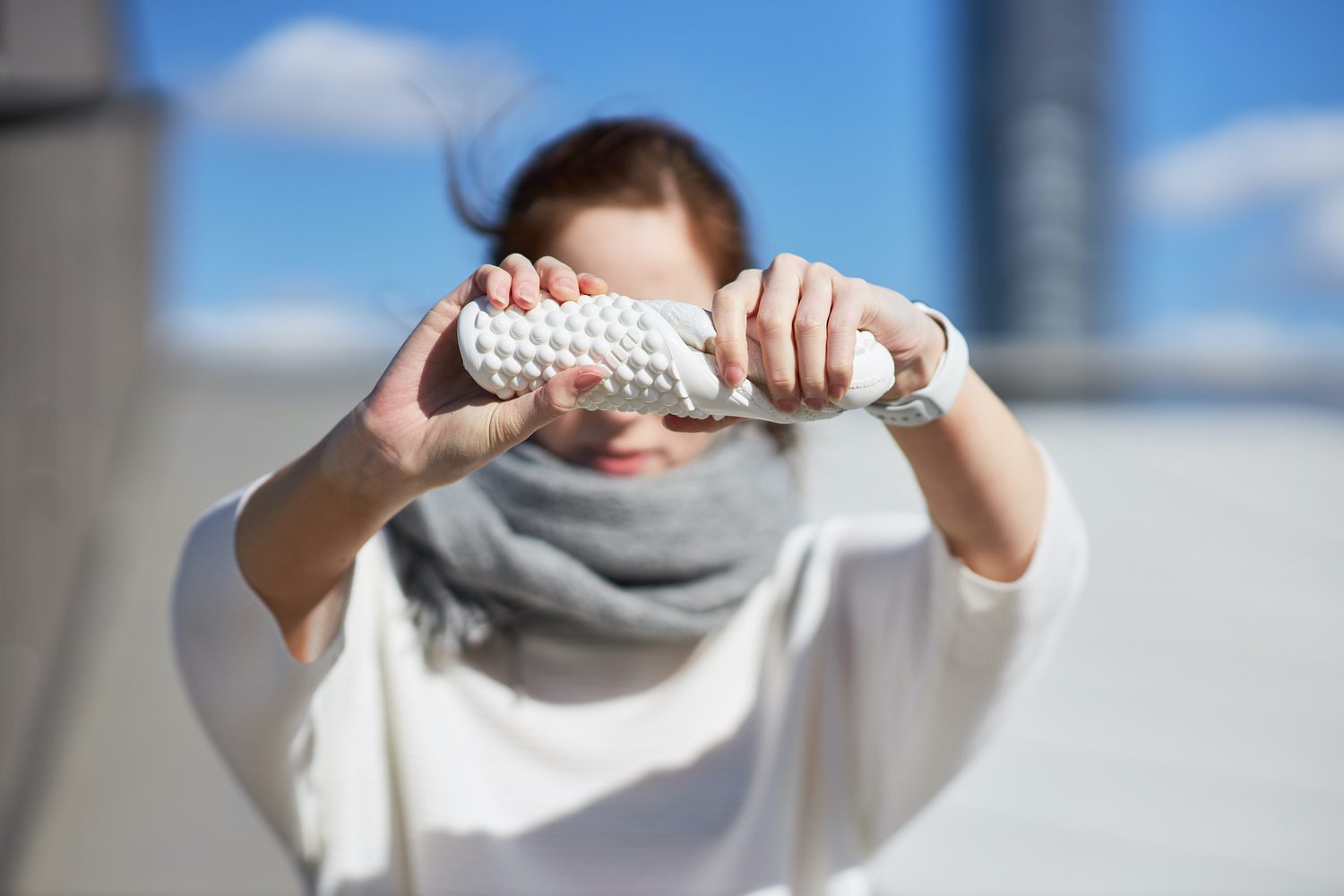
‘Those shoes seemed a bit odd to me. But I thought I’d try them on and see,’ Andrea recalls. Jana brought a total of 20 pairs. She wore them herself and was thrilled with their comfort, the freedom they gave her feet and the positive effect on the whole body. That’s why she still recommends them to her clients today.
She came across the leguano brand at a trade fair in Germany and fell in love with the shoes straight away. Her husband Petr wasn’t convinced at first, but once he tried them himself, they bought loads of pairs. In the beginning, they stored them in the bedroom of their flat – which, not by coincidence, is in Prague 6.
‘As soon as I tried leguano, I was blown away that they were the most comfortable shoes I’d ever had on my feet,’ says Andrea. ‘At the time I spent most of the day standing in a laboratory, where I wore my first model – the black aktiv. And it was absolutely brilliant, as if I’d spent the whole day in slippers.’ The fact that leguano shoes are great was confirmed on the very first day the shop opened – most of the pairs on display sold immediately.
Looking back, we have to smile at how guerrilla our beginnings were.
Now let’s move over to leguano – we asked founder Helmuth Ohlhoff.
My first choice at the moment is leguano scio – you simply slip them on and feel good. A beautiful shoe is gentle, which suits every occasion and which I particularly enjoy wearing. My number one for all other activities remains the aktiv model, which I put on mainly for sport.
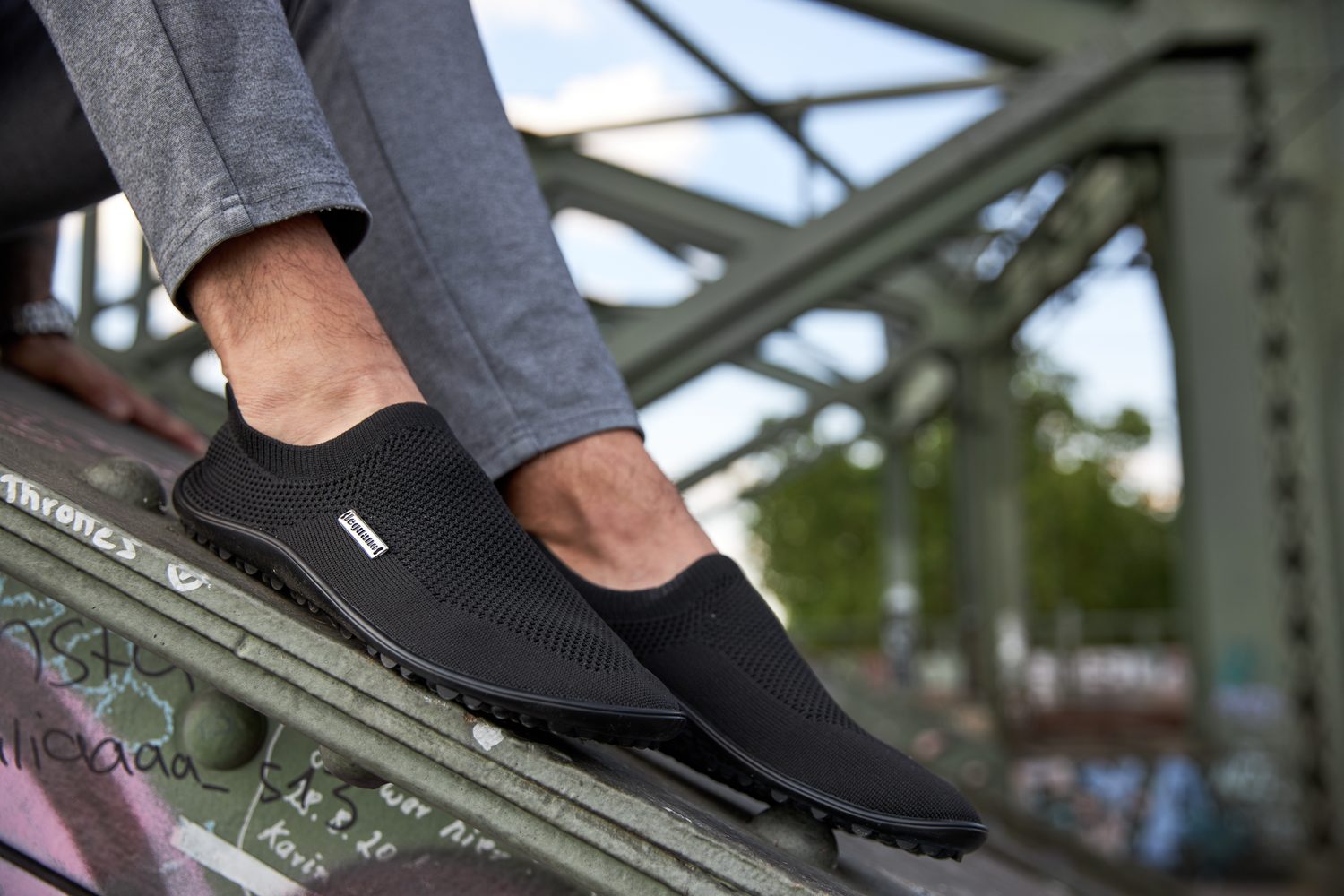
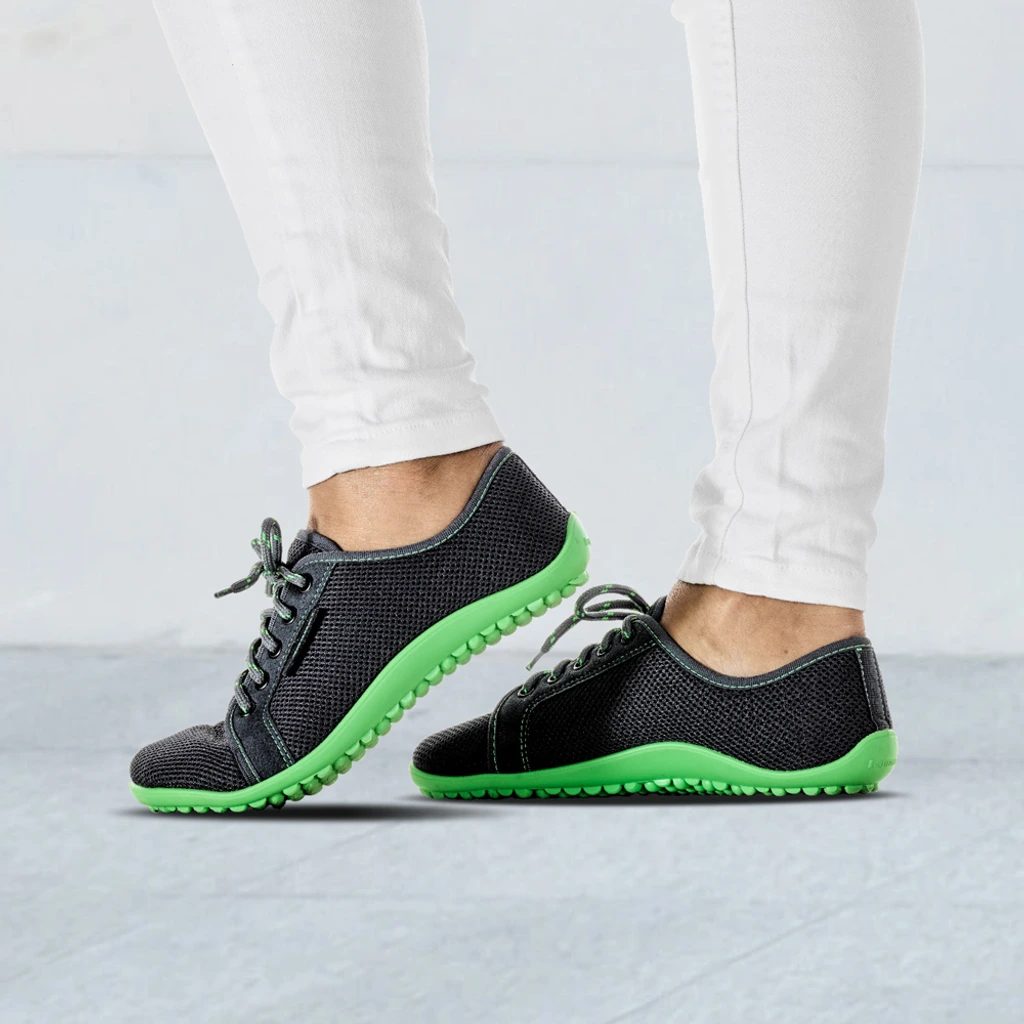
The aktiv model has two ‘firsts’: not only is it our best-seller, it’s also the first ‘real’ shoe that leguano has been producing since 2015. Before that, there were only the ‘sock-like’ classic models.
The aktiv model was created in response to numerous customer requests from people who didn’t want to head out into the street ‘just in socks’ for every occasion and in every season. Meeting that need definitely paid off.
Running a company shouldn’t be based on fear. Behind the creation of the brand was the belief that in the future we’ll be able to walk – and live overall – without pain, and that outweighed any concerns. That conviction was also our main motivation for the following five years, during which we developed leguano.
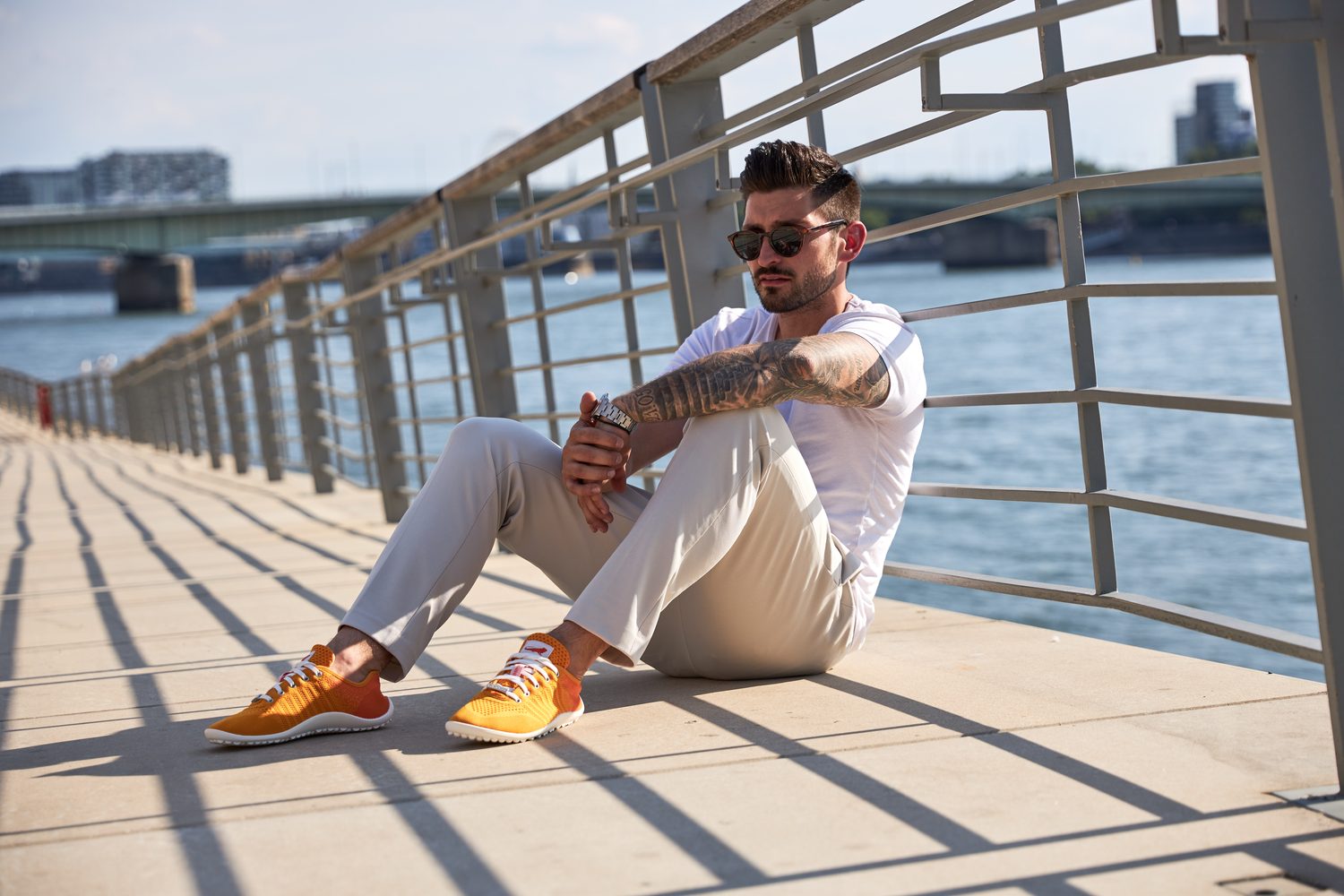
The label ‘made in Germany’ is a guarantee of a high level of craftsmanship. Our shoes are sewn by experienced craftspeople. In contrast, most ‘normal’ shoes are machine-made, and what’s more, in low-wage countries such as China, Vietnam or Brazil.
All leguano barefoot shoes leave our production facilities in Buchholz/Bonn as a finished German product. And the price differences compared to standard footwear aren’t as significant as people often think.
That said, the added value of pain-free, natural movement can’t be measured in money.

Developing barefoot footwear and preparing it for production usually takes around two years. The subsequent manufacturing process includes many individual steps – from cutting the individual parts, stitching them together and attaching the sole, through inspection and finishing, right up to the final completion. That takes a considerable amount of time.
I warmly invite anyone who would like to see barefoot shoe production with their own eyes to visit us in Buchholz.
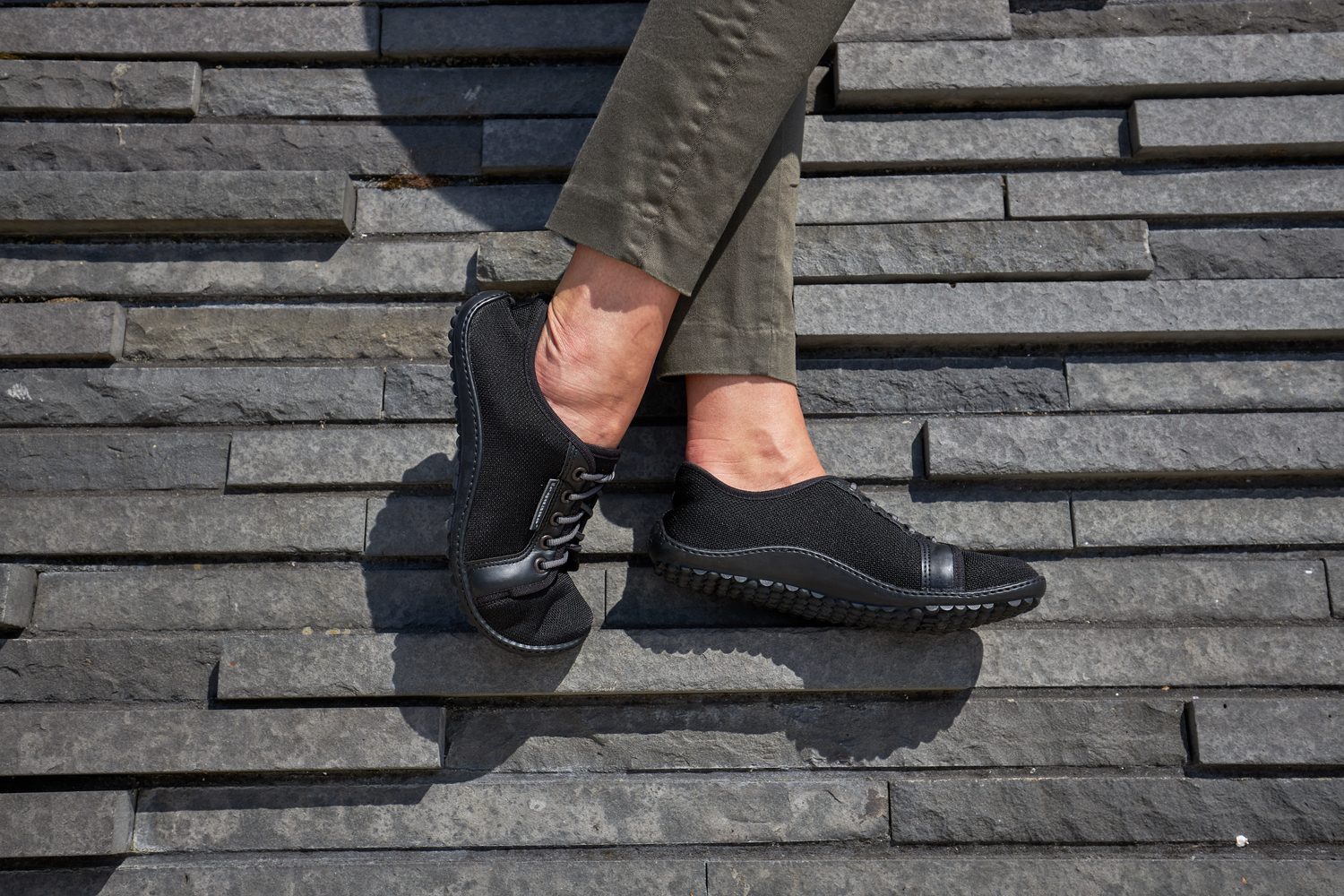
If nature wanted to introduce fashion trends, we humans would have to keep changing all the time. But thankfully that’s not the case. The human body – like everything in nature – is very intelligently designed. And that’s especially true of the feet.
Walking requires a precise design of the entire musculoskeletal system, and in the feet in particular, strength and endurance come together with touch and a sense of balance. If we disrupt this natural order and functionally ‘take the feet out of service’, we have to expect consequences that are well known today. And it’s not only about incorrect foot alignment, but also the knees, hips, spine, and even the shoulders or head.
Yes – one of the advantages of barefoot shoes is precisely that you can wear them absolutely anywhere, on any terrain. They’re a kind of protective layer that helps prevent foot injuries when walking barefoot. That’s why a shoe should be flexible in all three dimensions and should restrict the feet’s natural movement as little as possible.
And if the shoe is elegant, there’s the added bonus that you can wear it for any occasion.
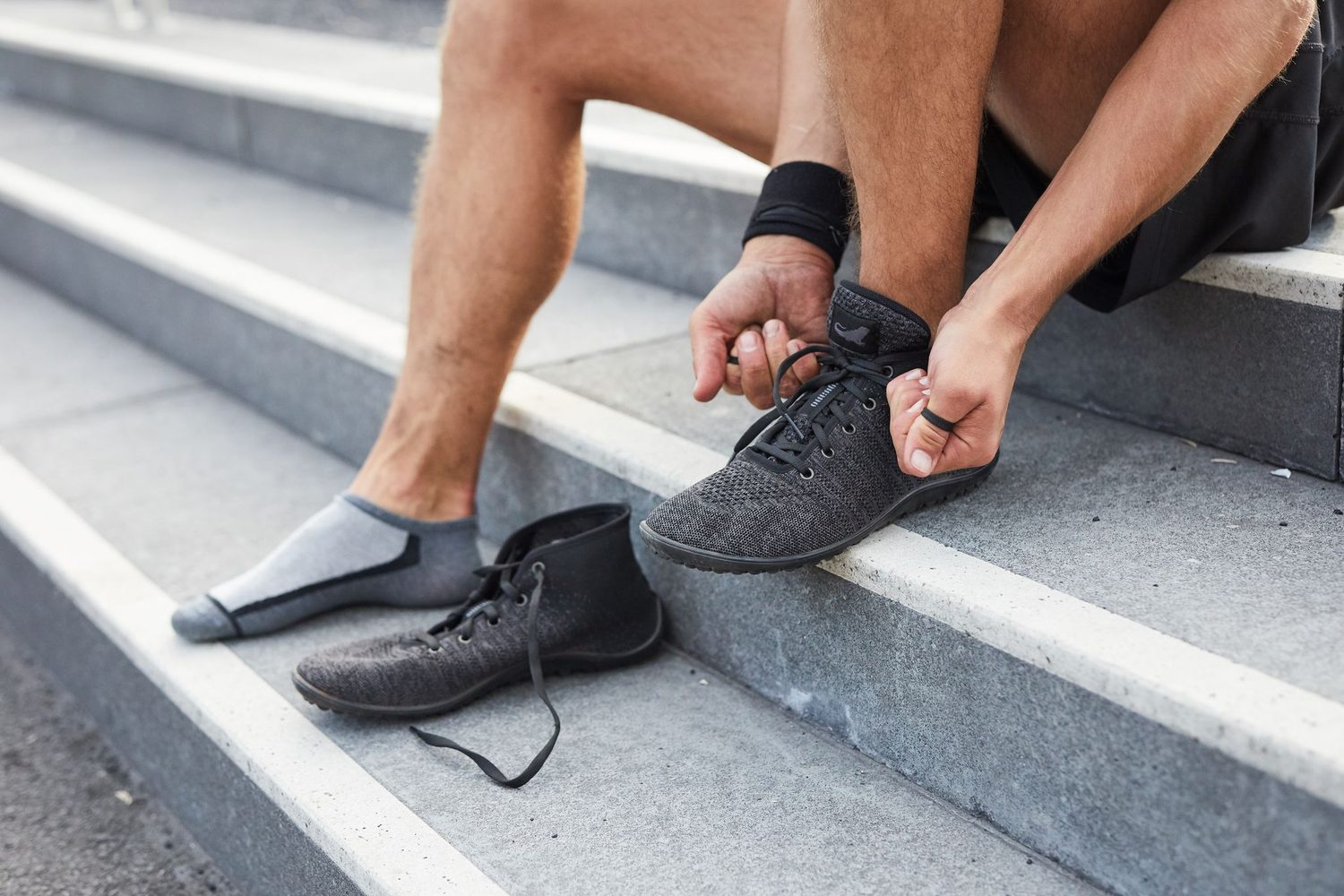
Over its 12 years of existence, leguano GmbH has sold approximately three million pairs of barefoot shoes worldwide.
Demand for leguano shoes is growing not only in Germany, but worldwide. For example, last year we largely managed to maintain turnover at the previous year’s level, despite the general economic downturn. This shows that the trend towards natural movement, combined with joy of life, is reflected in continuous global demand for our barefoot footwear.

For a successful future, it’s now essential to overcome the coronavirus crisis, get back to work and fulfil our customers’ wishes. We’re planning to significantly expand production and continue spreading the idea of walking in barefoot shoes around the world. We’re already working on expansion now, thanks to partners in more than 30 countries.
Ensuring the highest quality for the classic model: flexibility and durability even after many washes, high wearing comfort thanks to warming properties in winter and cooling in summer. Probably the most crucial and most challenging part was finding the right sole material that combines maximum flexibility with high durability.
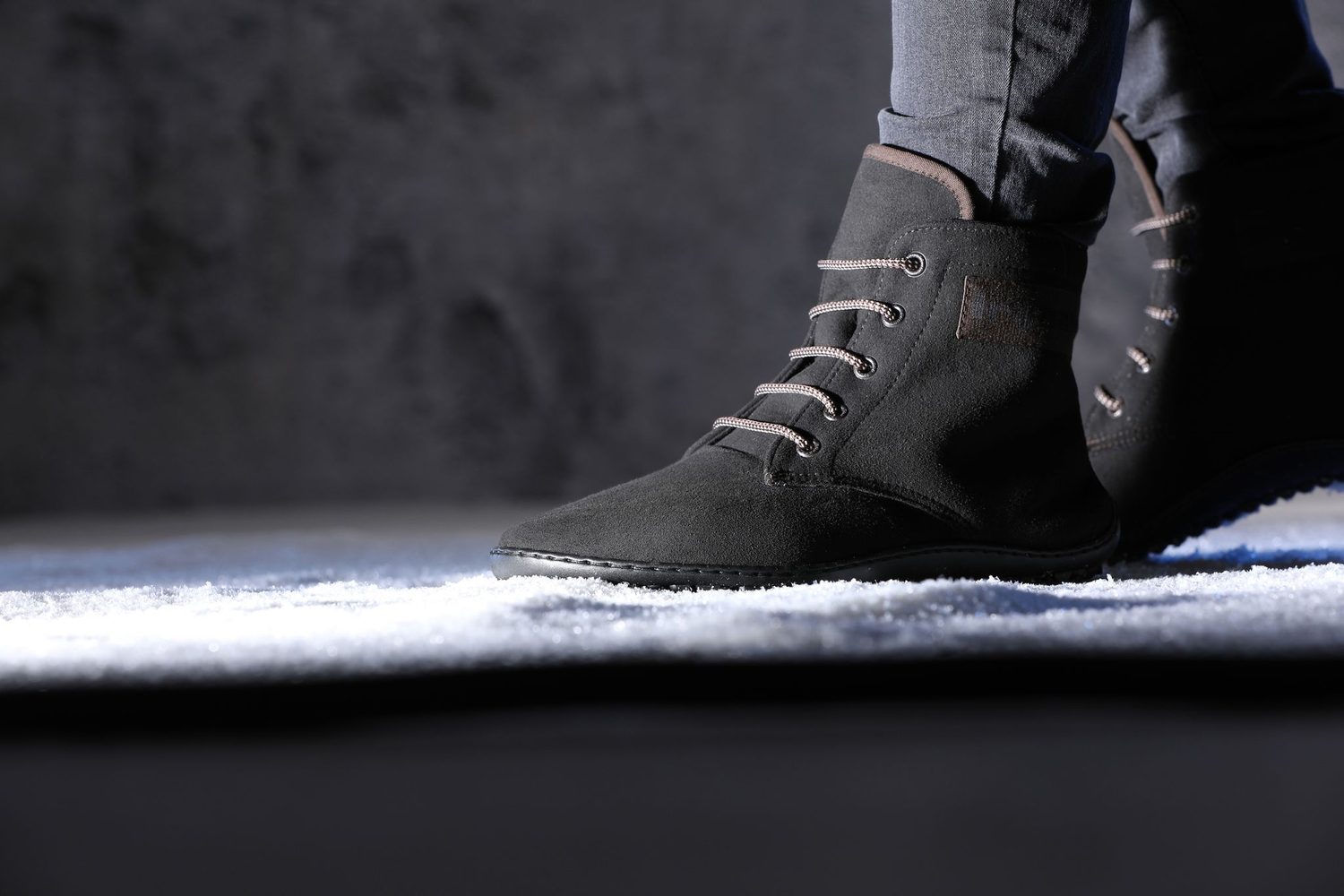
The name leguano is the joint work of the three partners behind the brand’s creation. It’s inspired by the iguana – an animal where naturalness goes hand in hand with speed, endurance and strong grip. And that’s exactly what we want from barefoot shoes – that they don’t restrict us in any way when we walk.
The answer is very simple: I don’t wear competitors’ shoes. Because others copy us, it wouldn’t make sense. If I’m not wearing leguano, then I run completely barefoot whenever I can, on all sorts of occasions.
The interview began in Prague with Andrea – so let’s finish it there too.
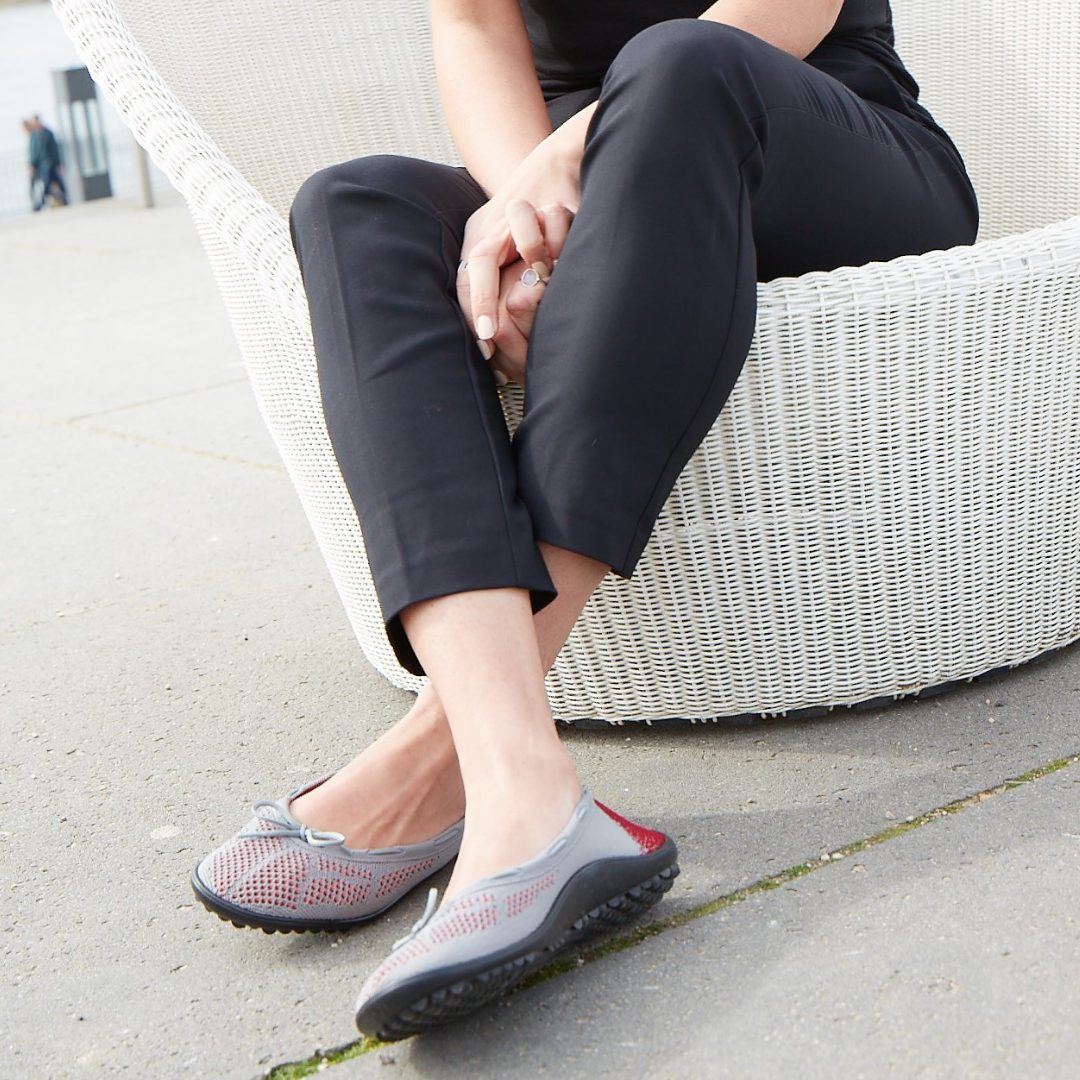
Six years ago, when the naBOSo shop opened, barefoot shoes generally weren’t as widely available. Because of the price, ‘sock shoes’ and ballet flats sold the most. But today it’s a different story: leguano has a fantastic range and keeps expanding it. Nowadays, more specialised shoes sell well – for example the winter waterproof husky or the elegant lady loop ballet flats. Even so, since 2015 we’ve sold the most black aktivs – my first barefoot shoes – and that’s already 710 pairs.
You’ll laugh, but yes. Every day they bring leguano shoes here from their brand shop 350 metres away in IKEA bags, to help the environment. They’re simply big-hearted people who do everything 100% – and, I dare say, they’ve become family friends.
We’ve also had several events together, such as the Czech Championship in barefoot overtaking at Na Kotlářce, or the longest 24-hour relay run in barefoot shoes at Kulaťák, through which we supported the Šestý smysl foundation.
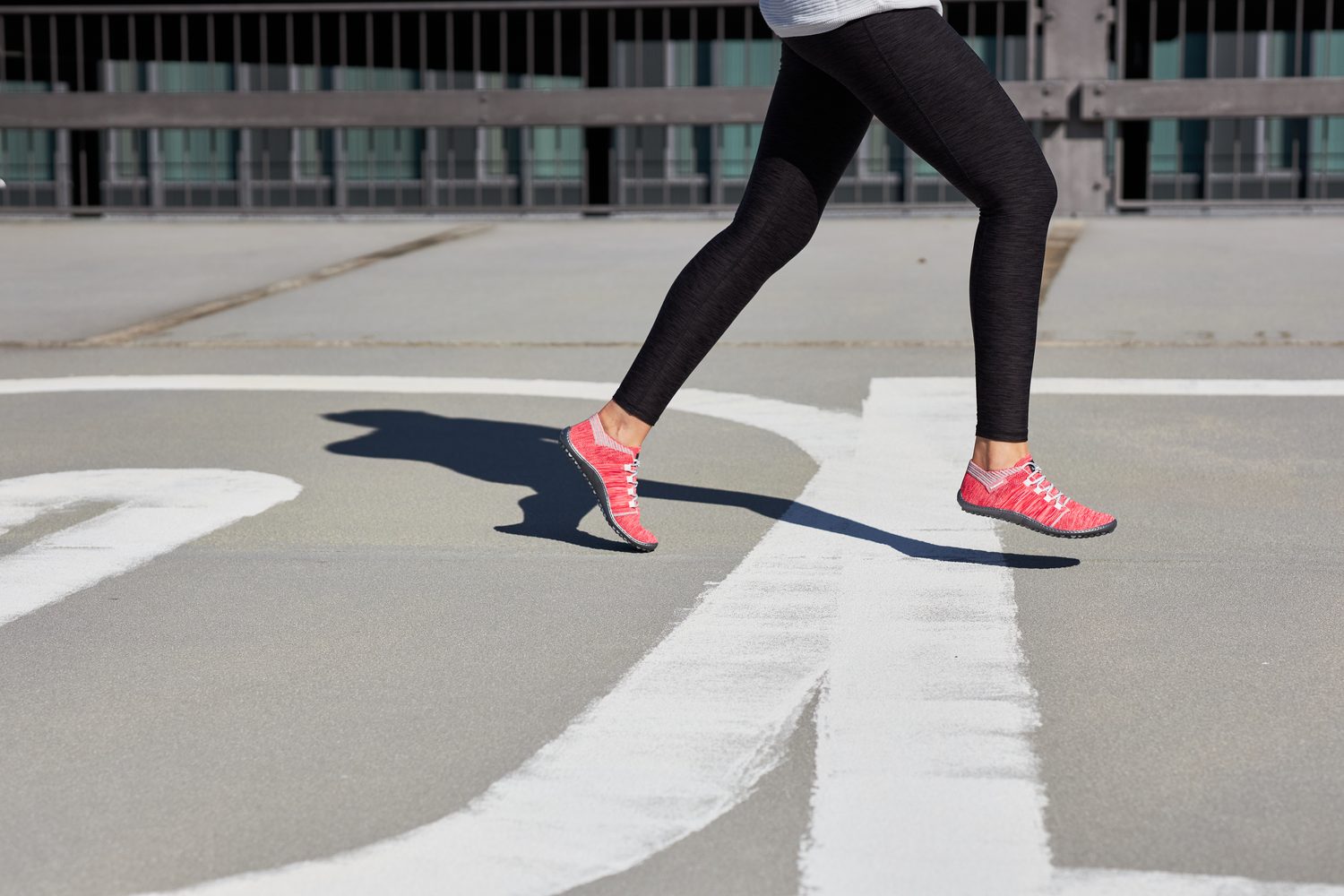
And now it’s out in the open: at naBOSo, running & movement are an integral part of life.
We’d love to invite you to celebrate with us World Barefoot Day 1. 6. 2022 and experience the naBOSo festival for yourself in Max Van der Stoel Park in Prague 6, where our barefoot trail is open all year round for your feet.
What else might interest you about barefoot?


You are currently on www.premiumbarefoot.co.uk


 £ - EN
 Čeština
 Magyar
 Slovenščina
 Română
 български
 English (US)
 Slovenčina
 Polski
 Dansk
 Nederlands
 Svenska
 Suomi
 Español
 Français
 Português
 Deutsch (DE)
 Deutsch (AT)
 Deutsch (CH)

