We’ll be happy to help via online chat or at: orders@premiumbarefoot.com

Selecting and Maintaining Barefoot Shoes Walking, Movement and Health
Discover why barefoot shoes are becoming popular among healthcare professionals too. This article shares tips on suitable models, their benefits during long shifts on your feet, and practical advice on how to get started.
Doctors, nurses, physiotherapists and other healthcare staff spend most of their working day on their feet. Their roles often require them to be on the move for 8, 12 or even more hours a day. Under that kind of load, choosing the right footwear is absolutely crucial—not only for day-to-day comfort, but above all for long-term musculoskeletal health and overall performance at work.
Barefoot footwear is an interesting alternative that respects the natural anatomy of the foot and supports healthy biomechanics when walking and standing, which can significantly ease the strain on an overworked body during demanding shifts. Modern barefoot doesn’t just mean a ‘super-thin sole’—it’s about a wide toe box, zero drop and a flexible sole, which can also be slightly thicker. Many models offer cushioned insoles, and you can also use custom orthotics if needed.
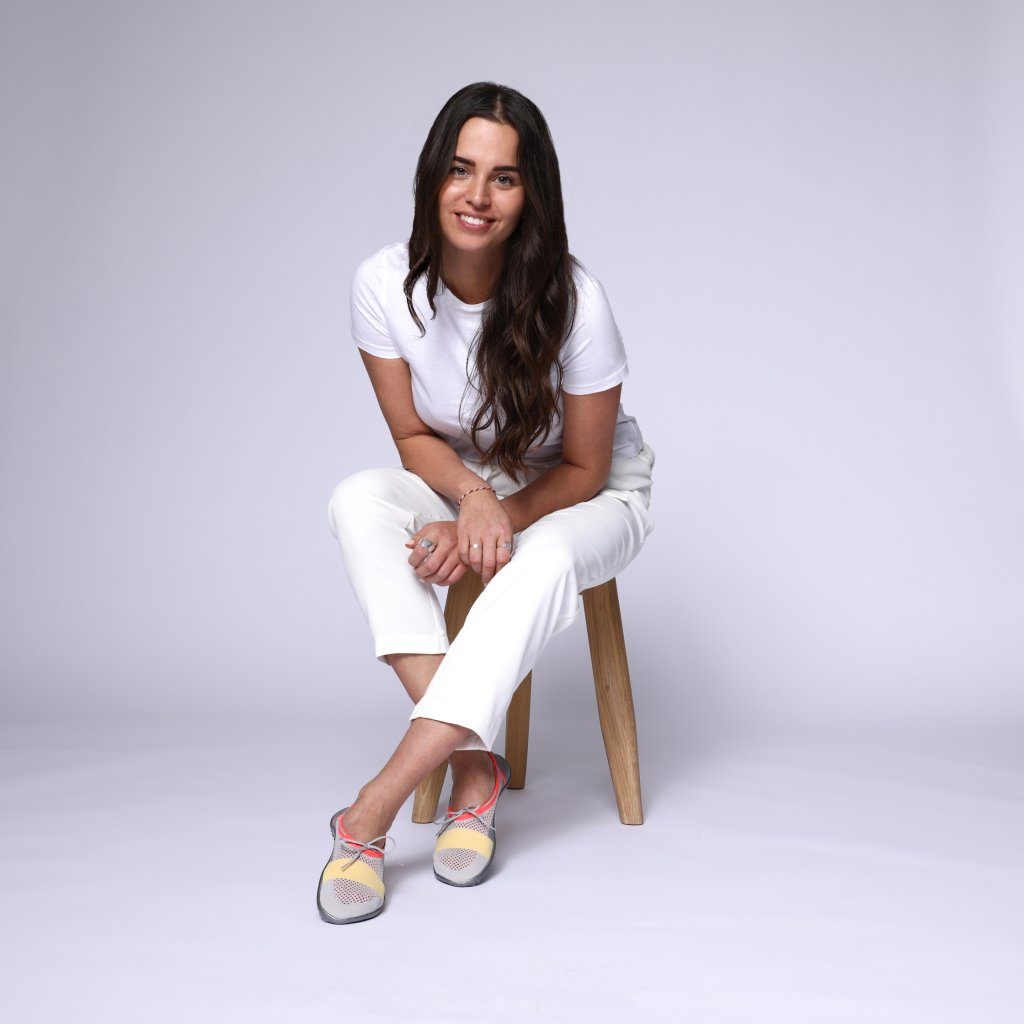
Working in healthcare places specific demands on footwear:
‘I also wear the white LEGUANO AMALFI trainers during hospital placements instead of classic hospital clogs, and I really appreciate that when handling patients I can brace through my feet and toes—my whole body simply works much better overall.’ Lucie Ternová – healthy movement lecturer and physio-fitness trainer (www.mamasport.cz)
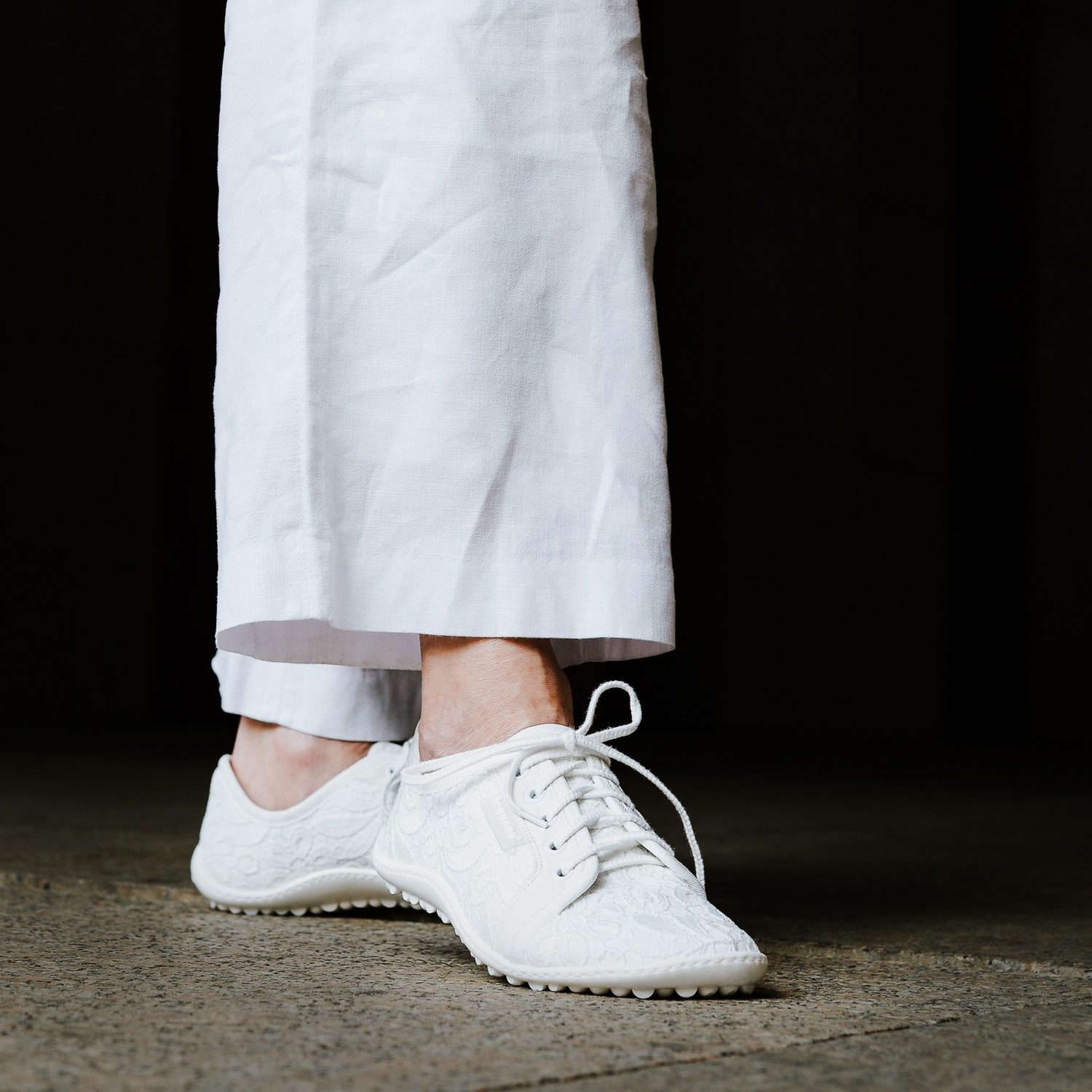
Barefoot shoes offer healthcare professionals a range of advantages that can positively affect both comfort at work and overall wellbeing:
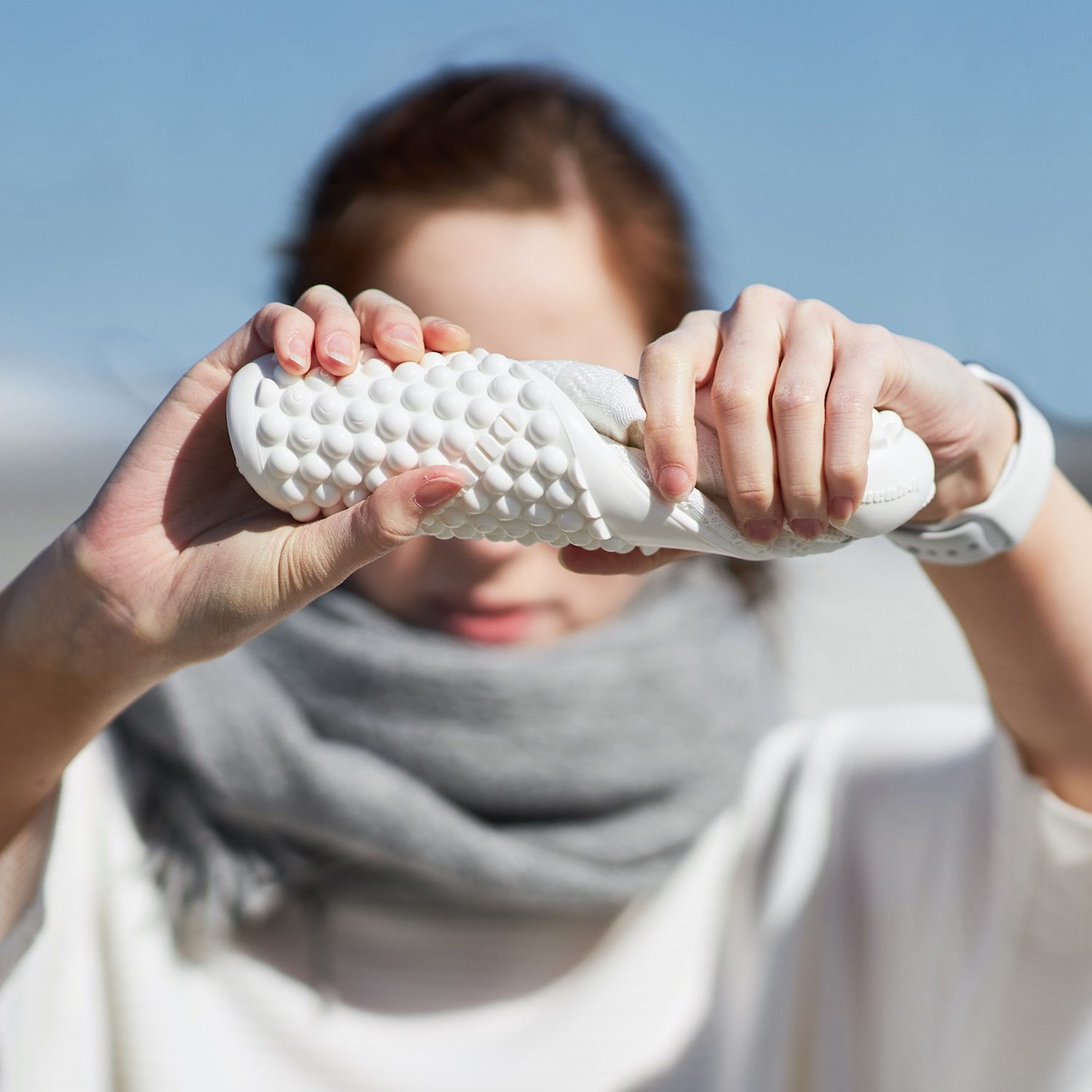
When choosing barefoot shoes for healthcare roles, it’s important to consider a few key factors. Work footwear requirements vary in hospital environments depending on the type of workplace, explains Assoc. Prof. MUDr. Filip Burget, Ph.D., Head of the Trauma Surgery Department at 1st Faculty of Medicine, Charles University and General University Hospital in Prague, adding:
‘In general, on wards and in outpatient clinics, medical footwear is prescribed under the ČSN EN ISO 20347 OB standard—meaning footwear with a slip-resistant sole and a closed heel, so the foot can’t slip out freely. In theatres and laboratories there are specific requirements for antistatic treatment or chemical resistance. White footwear is important. The key point, however, is that it depends on the openness and tolerance of the line manager. The vast majority of doctors in our trauma group wear barefoot shoes at work, and occasionally physiotherapists and some nurses too.’
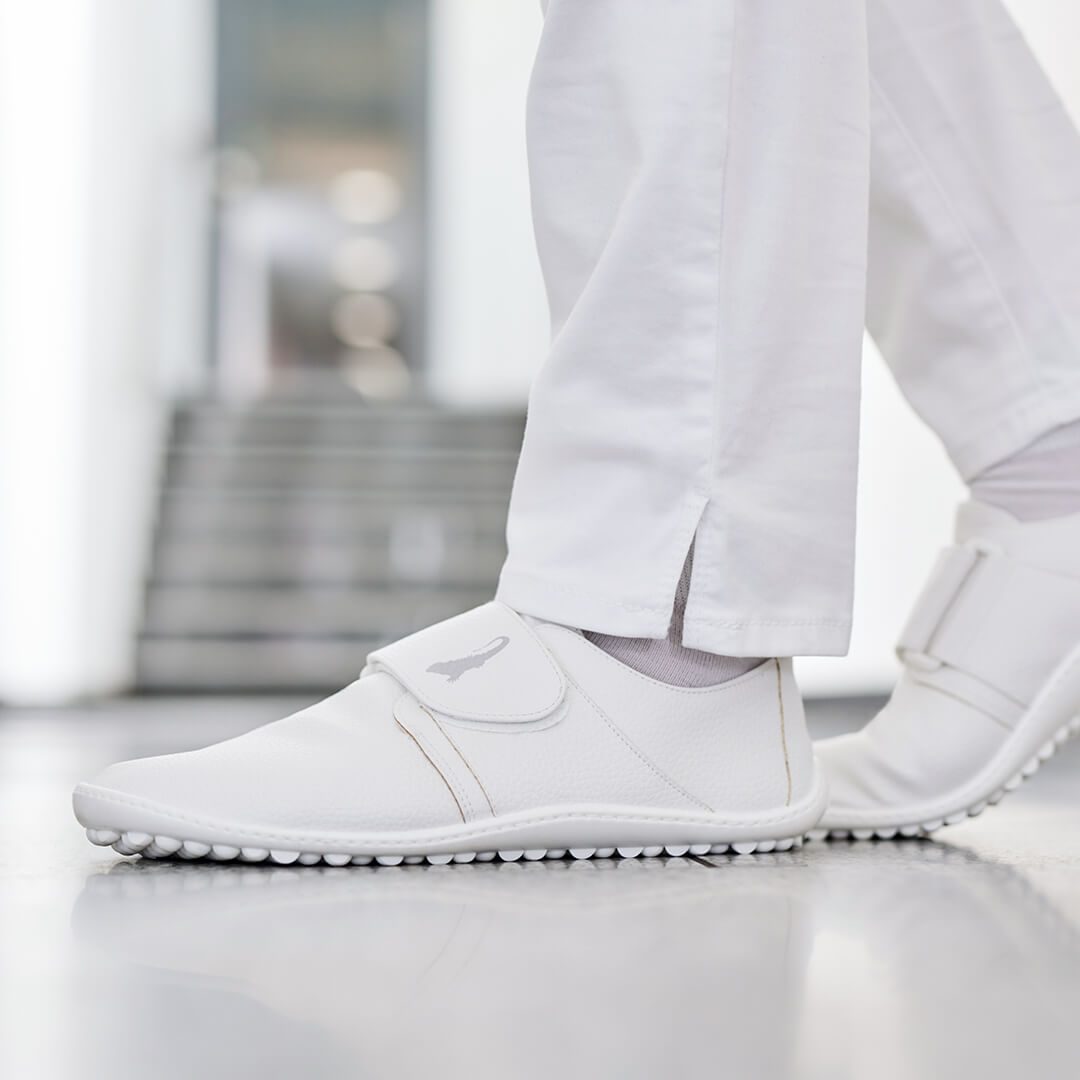
Ideally, choose a material that is easy to wipe clean, durable and breathable. Some models offer water-resistant surfaces that are easy to keep clean.
In healthcare, neutral, professional-looking models are often preferred. White is the most common choice—it doesn’t draw too much attention and looks clean and professional.
A slip-resistant sole is essential for safe movement across different surfaces. With barefoot shoes, a flexible yet sufficiently durable sole is a given.
If you’re new to barefoot footwear, it’s best to transition gradually. Ideally, start wearing them outside of shifts—preferably outdoors on natural surfaces—then gradually increase the time you wear them and try harder, flatter surfaces. At first, it’s also a good idea to alternate barefoot shoes with your usual footwear until the muscles and ligaments in your feet adapt to the different load and way of working.
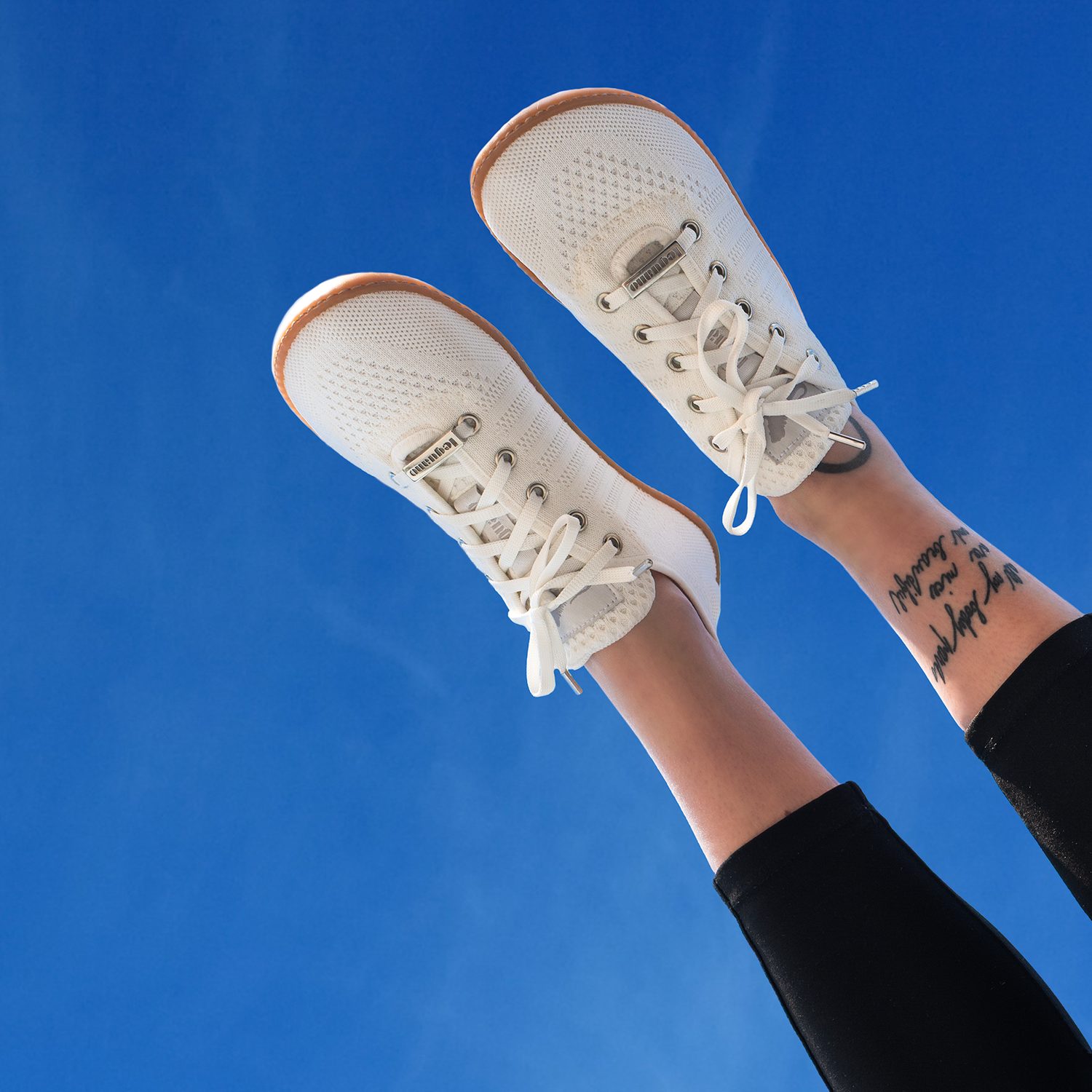
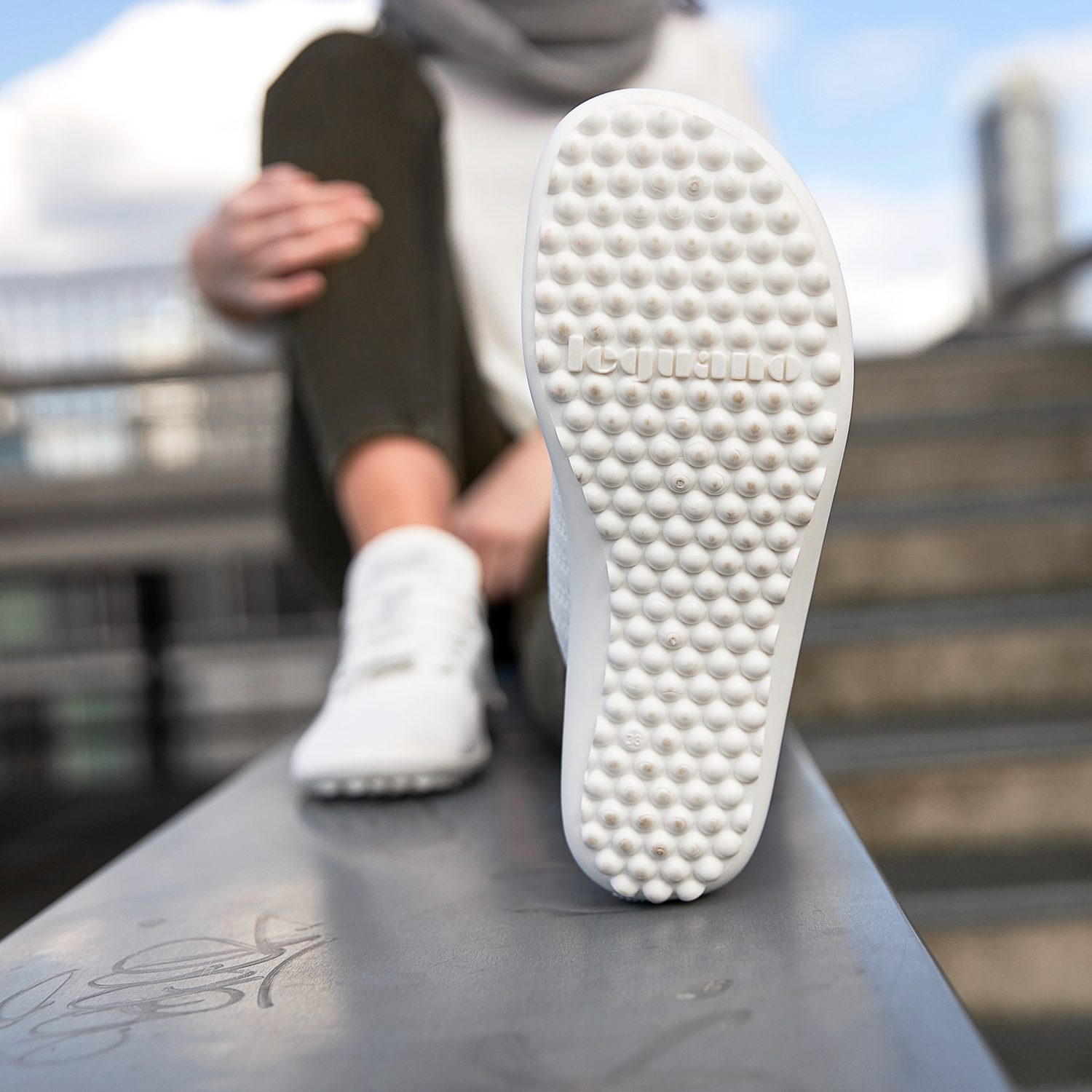
LEGUANO GO – An absolute favourite among many healthcare professionals. Ideal for narrow to medium feet, a low to medium instep and a narrower heel. The adaptable material hugs the foot perfectly. It offers excellent breathability and comfort throughout the entire shift. A big advantage is the option to machine wash, which every healthcare professional will appreciate after a tough day!
‘When working with clients and patients, I used to wear clogs and felt the need to take them off for every assessment and exercise—even when it wasn’t me exercising but the client. At work I need to feel the ground so I can tune in to the client, and by the treatment couch I also need to brace through my feet and toes. LEGUANO GO elegantly solved my problem of constantly slipping clogs on and off. I can wear them all day and it feels as if I’m barefoot. I can sense the surface beautifully and brace through my feet. I even wear them during hospital placements instead of classic hospital clogs, where I really appreciate being able to brace when handling or exercising with patients and work with my whole body. Plus, the soft leguano sole pleasantly cushions a full day of moving on hard floors.’ Lucie Ternová – healthy movement lecturer and physio-fitness trainer (www.mamasport.cz)
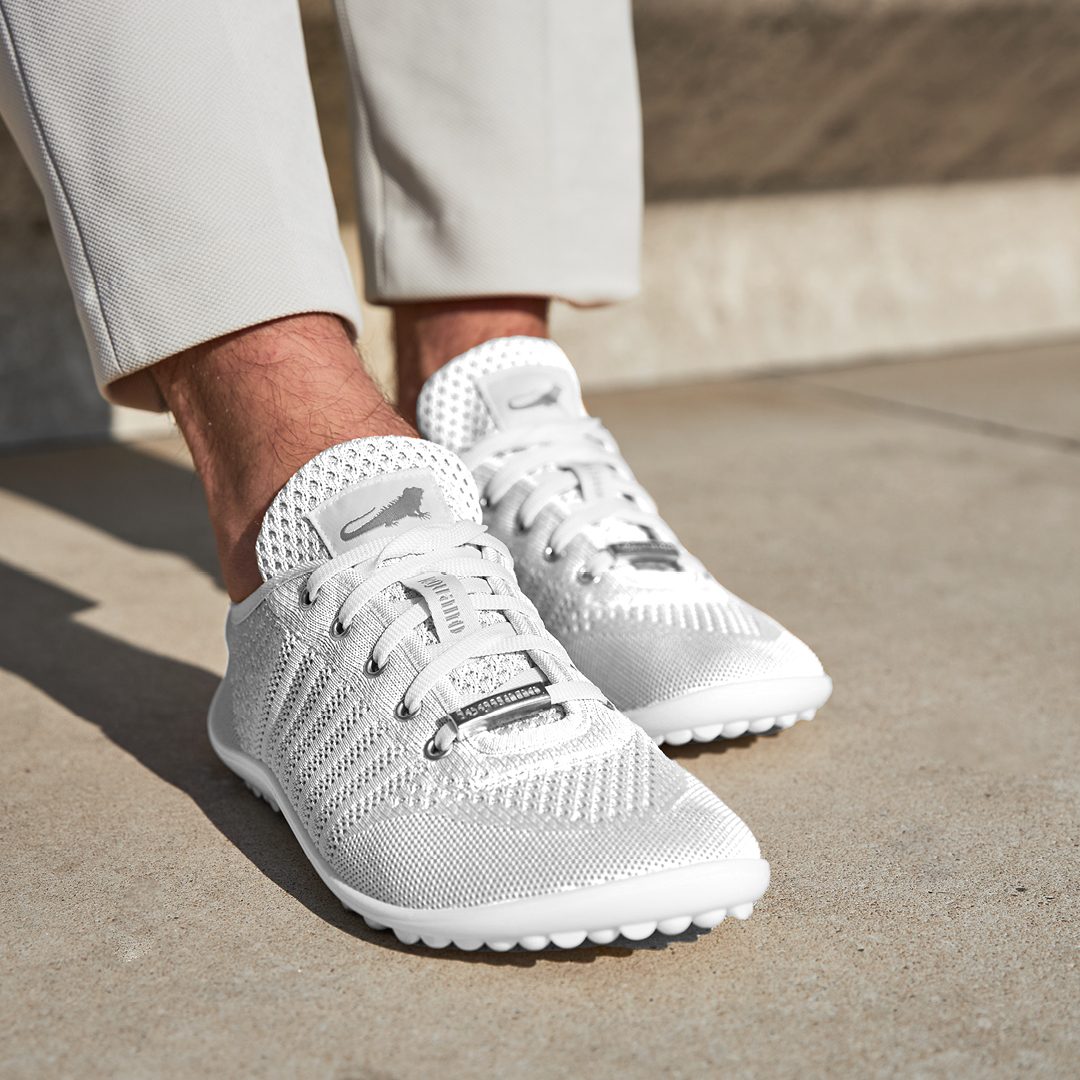
GROUNDIES ACTIVE KNIT – A great choice for feet with a dominant big toe and a tapered little-toe edge. The cushioned sole provides extra comfort when your feet are really put through their paces during long shifts.
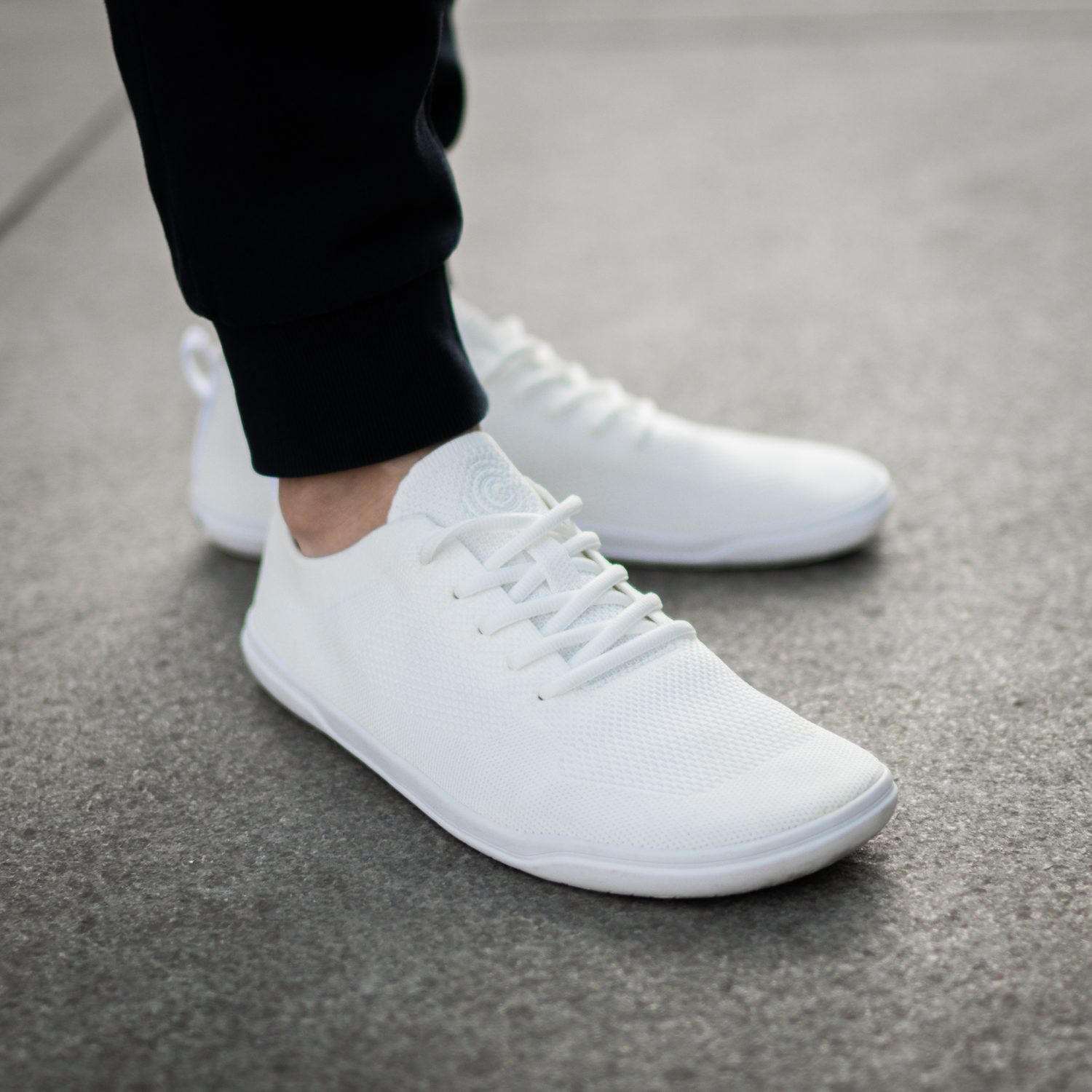
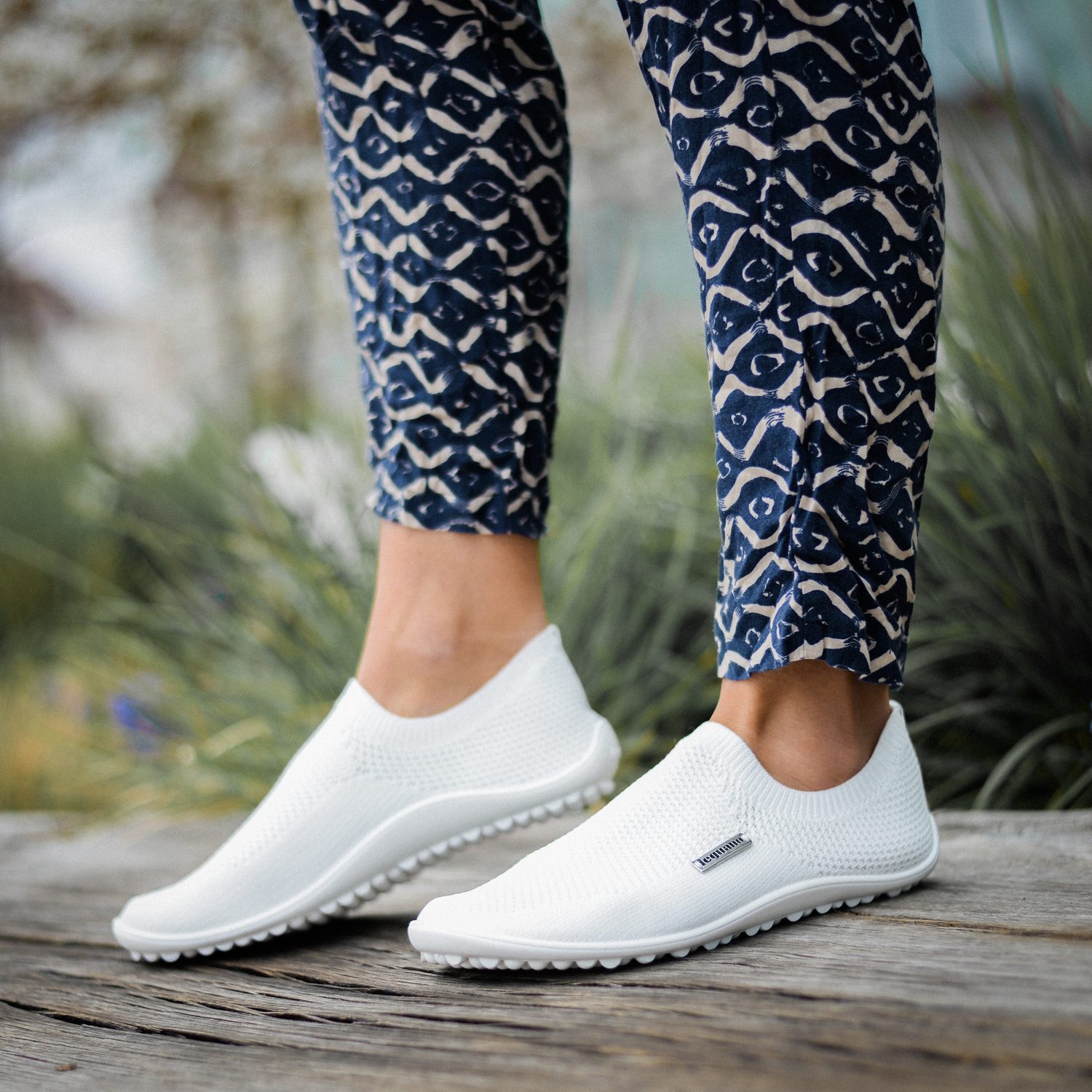
LEGUANO SCIO – Slip-on trainers made from breathable material are an excellent option for narrower feet with a medium to higher instep. Putting them on is quick and easy, which you’ll appreciate if you change shoes often. Your feet can breathe freely throughout the day. This model is also easy to machine wash! The adaptable material ensures maximum comfort all day long.
‘For the last three years I’ve been wearing white LEGUANO SCIO. They’re very comfortable for all-day wear; the polyester version is airy, so feet sweat only minimally, they can be worn without socks, and they’re easy to wash. A big advantage is how easy they are to slip on without any extra tightening, yet they stay securely on the foot and you can even run in them without any issues. Thanks to the bubble sole typical of leguano, they don’t slip even on wet surfaces.’
Assoc. Prof. MUDr. Filip Burget, Ph.D. – Head of the Trauma Surgery Department at 1st Faculty of Medicine, Charles University and General University Hospital in Prague
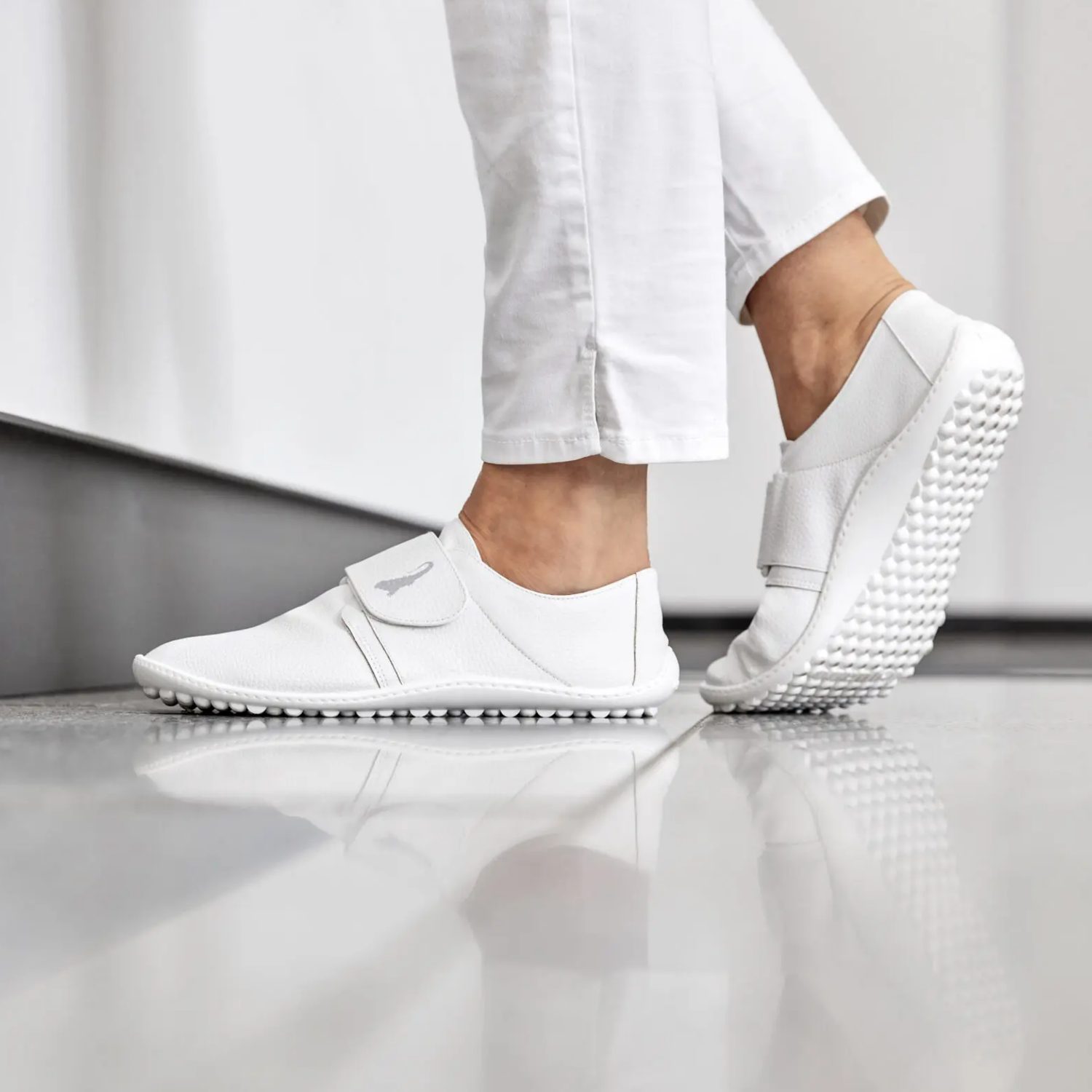
LEGUANO CARE – The perfect option for stricter settings. Suitable for a medium instep, with quick on/off and adjustment via a strap across the instep. They’re extremely flexible and comfortable. Made from a liquid-repellent material—so they can be wiped clean and are easy to clean and disinfect, which is a key feature in healthcare.
‘As a paediatric physiotherapist specialising in feet, LEGUANO CARE shoes impressed me with their extreme lightness and flexibility. Thanks to them, I can move completely naturally when working with clients—staying active and stable at the same time. The footwear allows the foot to move freely and supports all its functions, which I consider essential. I recommend them to healthcare colleagues whose working conditions allow barefoot footwear. Another big advantage is easy maintenance, which I really appreciate in a healthcare setting.’ Mgr. Veronika Kristková, Lead Physiotherapist, Fyzio Beskyd s.r.o.
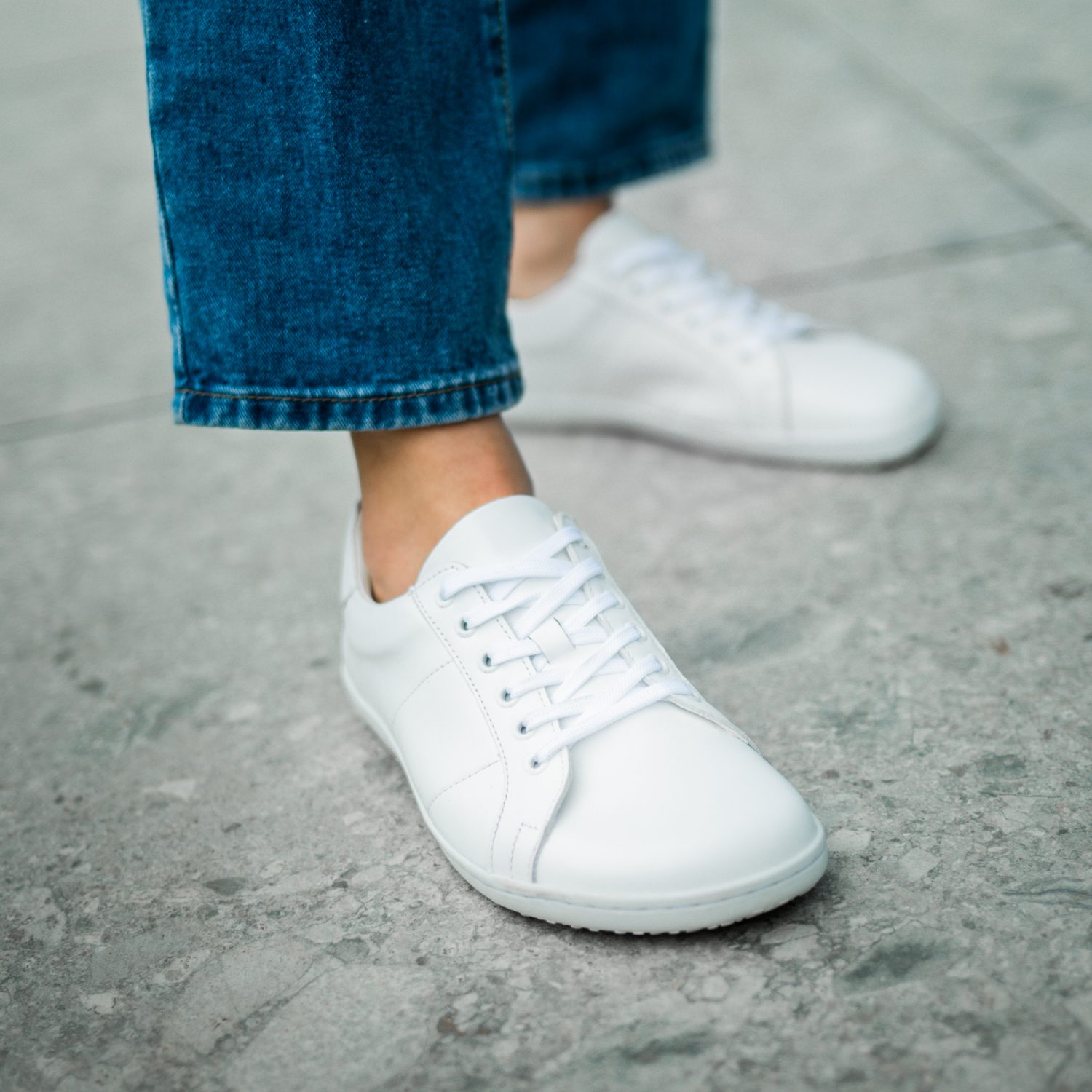
ANGLES LINOS – The sweet spot for average-width feet. These minimalist unisex trainers are made from high-quality smooth leather that’s easy to clean and maintain, which you’ll appreciate in environments with higher hygiene requirements.
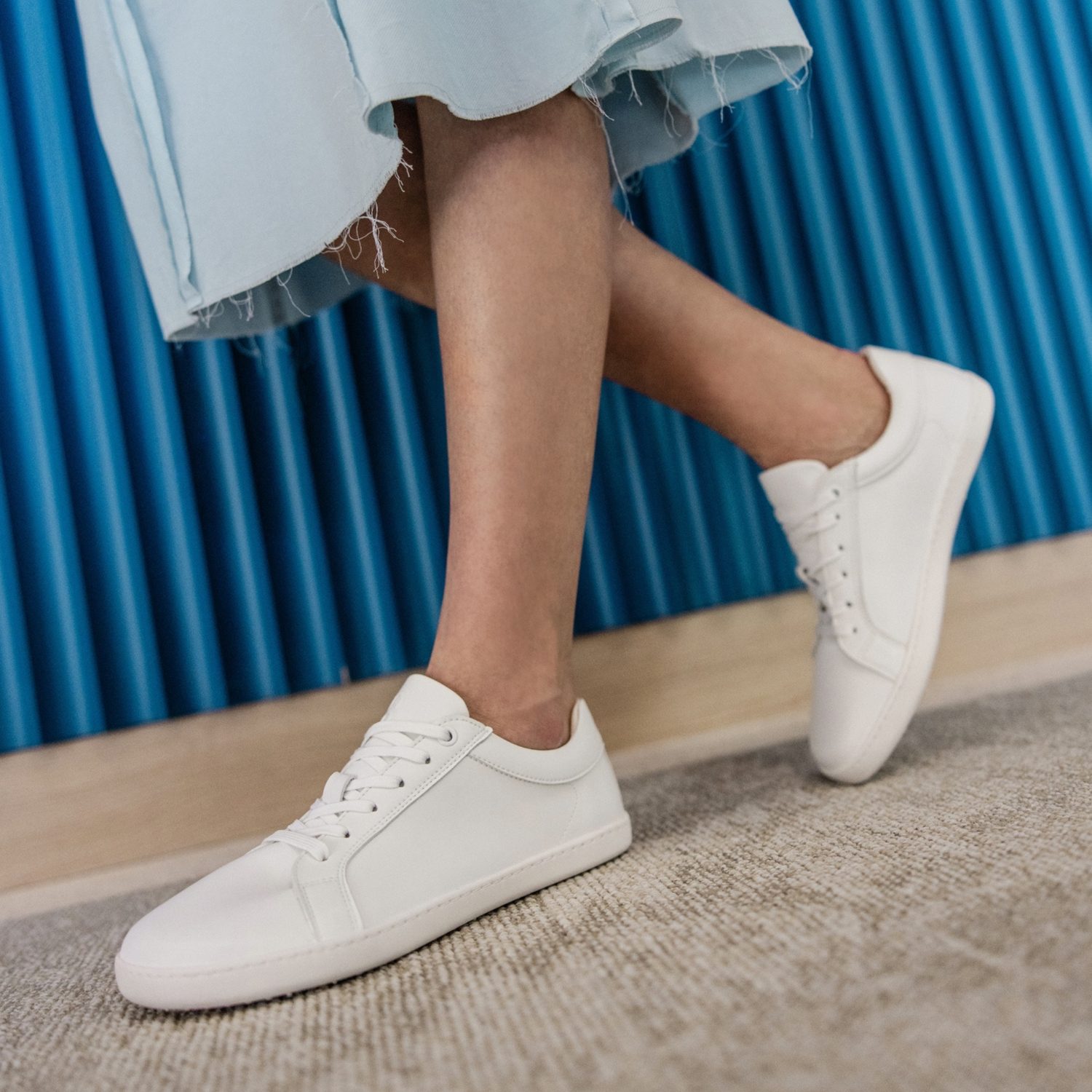
SHAPEN FEELIN– An excellent choice for noticeably wider feet. Elegant trainers in smooth leather offer easy care. Extra comfort comes from the cushioned insole, ankle and heel. The unisex design suits all healthcare professionals.
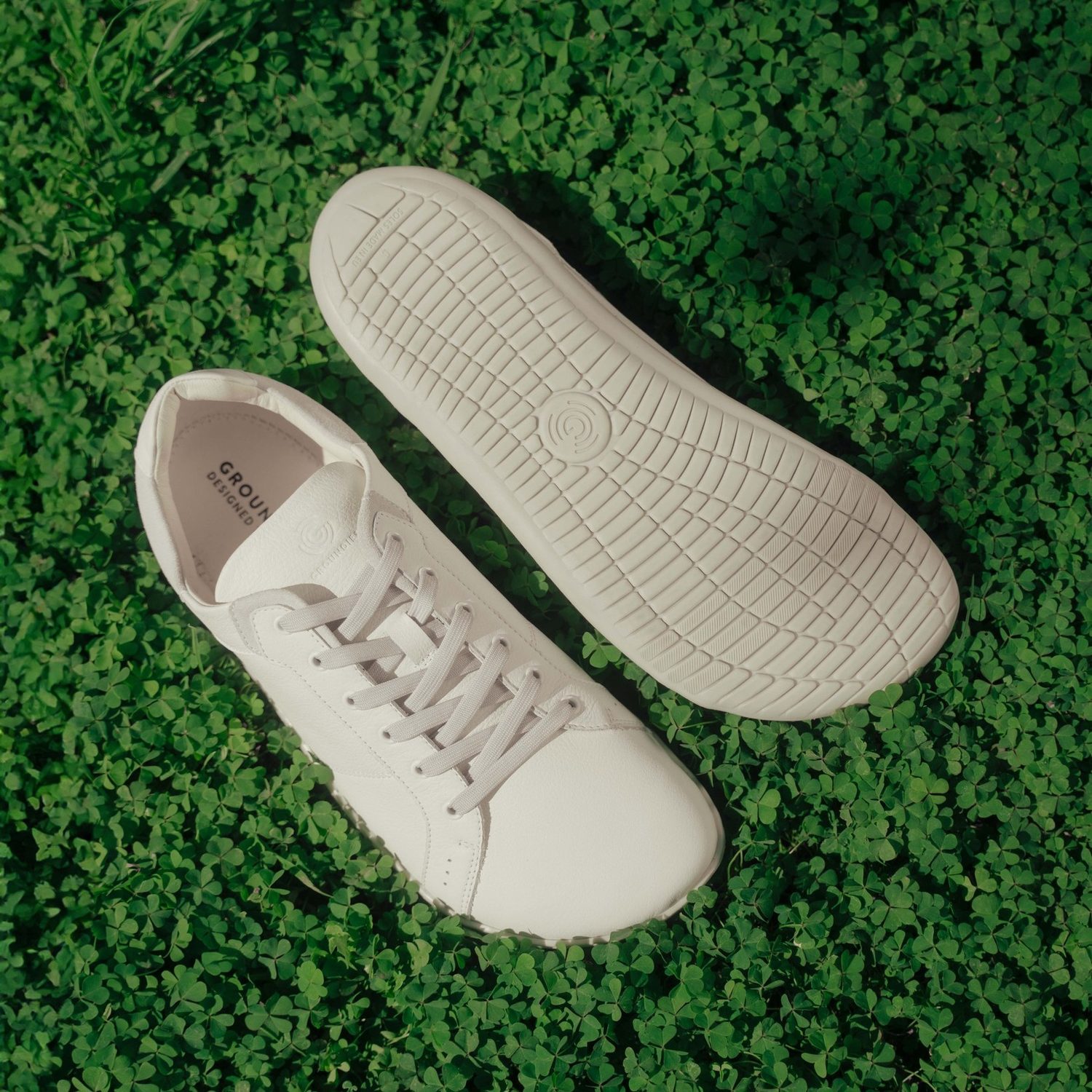
GROUNDIES BLAZE – White smooth-leather trainers in the Barefoot+ fit are ideal for wider feet. With the flexible GO1 sole, they provide great support and allow natural movement. The breathable microfibre lining ensures comfort even during long shifts.
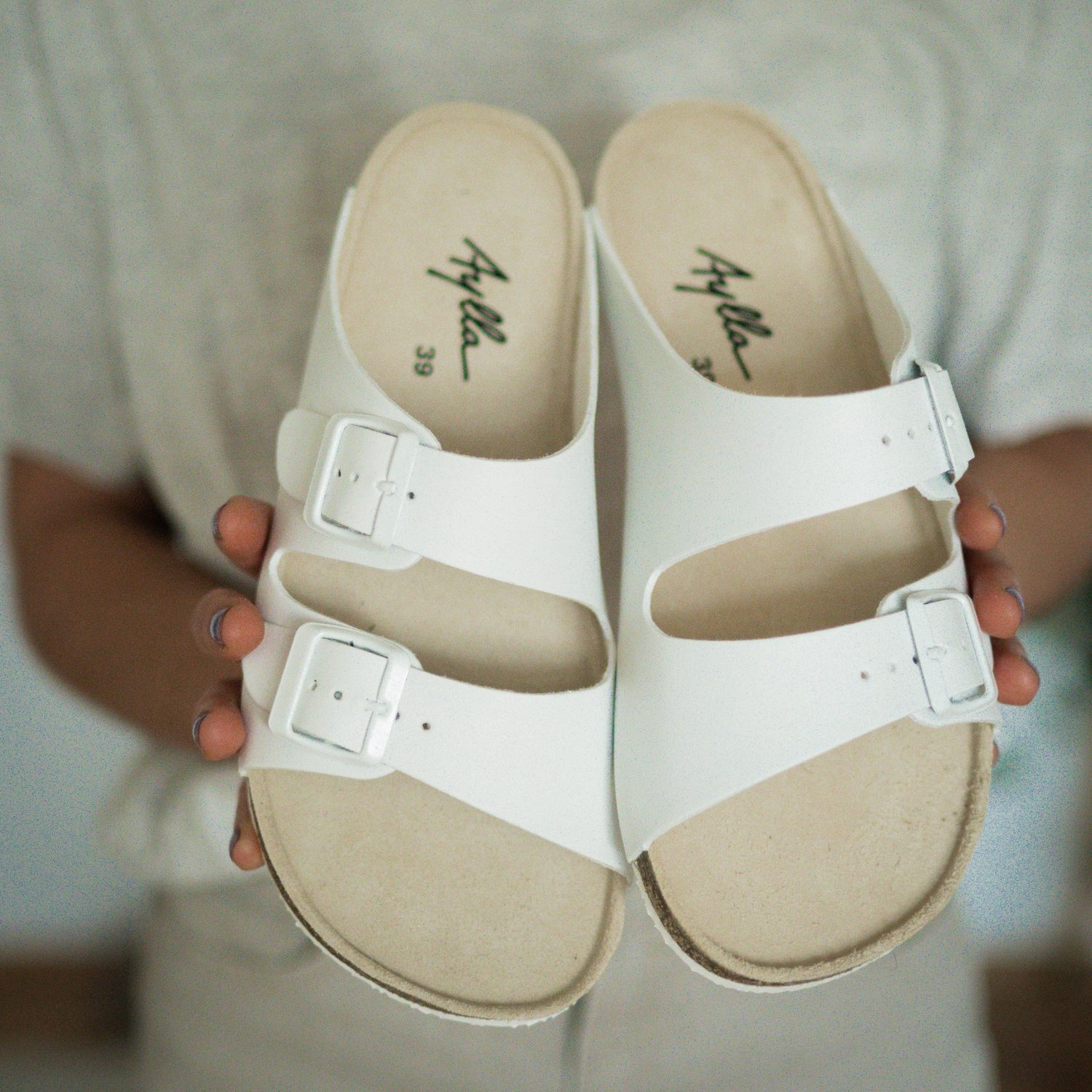
AYLLA THAK – A barefoot take on classic clogs with a flexible sole and plenty of space even for wider feet. These clogs are especially appreciated in outpatient settings, where you want a combination of a professional look and comfort, with less emphasis on a closed heel.
‘With slippers it might look like there’s nothing to think about. An open shoe—easy, right? But… even that has a width! And sole flexibility. Here, though, width is key: it’s genuinely much more comfortable and healthier to give your foot the space it needs than to try to squeeze it into a shape it would never choose on its own. The leather footbed is super comfortable even barefoot.’ Zuzana Novotná aka Medička mudruje, medical student
Give your feet freedom – take off your shoes and socks and enjoy varied natural surfaces such as grass or pebbles.
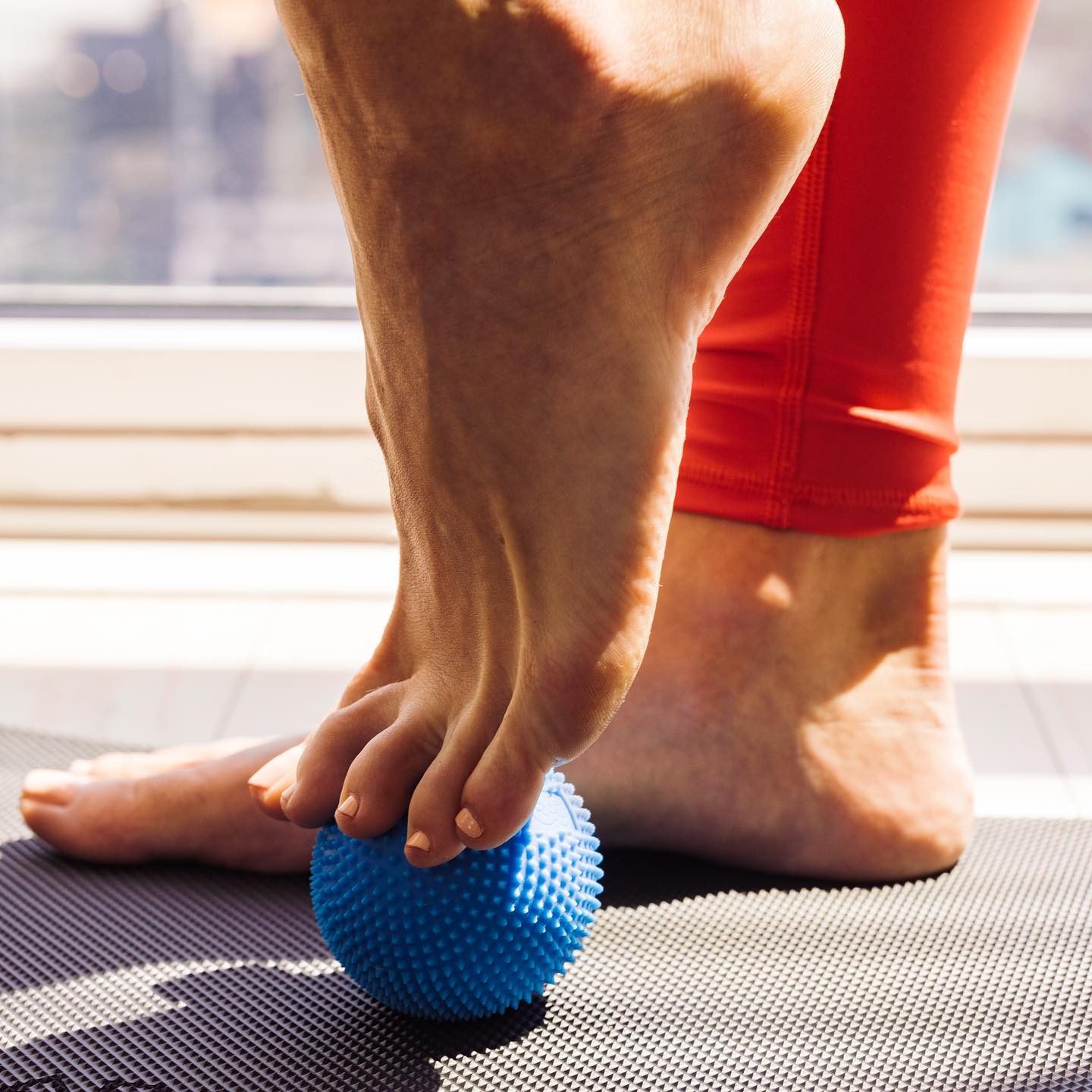
Massage your feet – use a tennis ball, a wooden ball or NABOSO NEUROBALL. Massage along both the longitudinal and transverse arches; linger longer on tight spots. Ideally after exertion or in the evening.
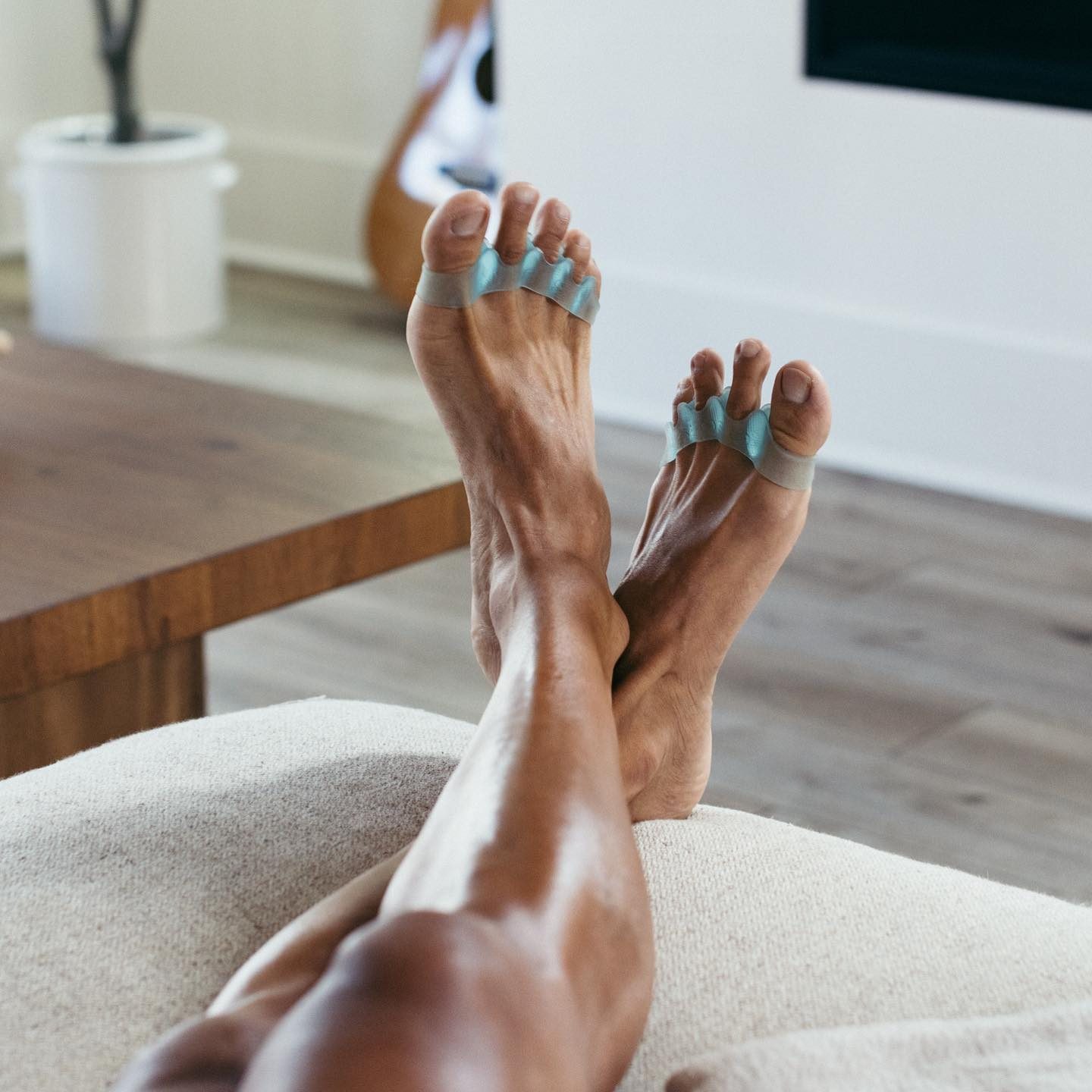
Support recovery – try alternating hot and cold foot showers, alignment socks or toe correctors NABOSO SPLAY. Don’t forget adequate magnesium intake.
Strengthen your foot muscles – practise spreading your toes apart and try to ‘stick’ all five toes to the ground.
Improve your push-off when walking – throughout the entire time your foot is in contact with the ground, press through all five toes; the push-off should come from the toes, with the greatest force through the big toe.
Healthcare professionals help others, but often forget about themselves. They forget to eat, drink, go to the toilet—and also to pay attention to their feet, which carry them for hours on end.
Although some healthcare workplaces have strict footwear rules as part of health and safety requirements, healthy footwear has moved on significantly, and today there are plenty of barefoot models that can meet these criteria.
Investing in quality barefoot footwear can be a crucial step towards feeling better at work and supporting long-term musculoskeletal health. Your feet are the foundation of your body—give them the care they deserve for the demanding work you do.
 This article was created in collaboration with Míša Píšková from FLOW Rehab Care. Míša Píšková is a doctor, physiotherapist and former elite dancer. She focuses mainly on healthy walking, neurological topics and physiotherapy for dancers. She founded the comprehensive centre FLOW Rehab Care, whose team provides rehabilitation for babies, children and adults with a wide range of needs. Míša also educates the general public, especially on healthy walking and footwear, women’s health and body awareness.


 £ - EN
 Čeština
 English (US)
 Slovenčina
 Magyar
 български
 Polski
 Dansk
Dansk
 Nederlands
 Svenska
 Suomi
Suomi
 Español
 Français
 Slovenščina
 Română
 Português
 Deutsch (DE)
 Deutsch (AT)
 Deutsch (CH)


