We’ll be happy to help via online chat or at: orders@premiumbarefoot.com

Selecting and Maintaining Barefoot Shoes Walking, Movement and Health
Barefoot shoes for a ball? Yes — but choose wisely. Physiotherapist and former dancer MUDr. Bc. Michaela Píšková shares how to pick the right pair and dance all night.
When ball season approaches, a familiar dilemma starts for many of us. On one side, the desire to look elegant and dressed up; on the other, memories of sore feet, blisters and fatigue from balls in years gone by. What if we told you there’s a way to enjoy an entire evening of dancing without sacrificing your feet’s comfort?
Together with MUDr. Bc. Michaela Píšková — a doctor and physiotherapist who also spent years dancing at a competitive level — we’ve put together a guide to ball season in barefoot shoes. Michaela knows first-hand what it’s like to spend long hours moving on a hard dance floor, which is exactly why she can give such practical, smart advice on how to approach it.
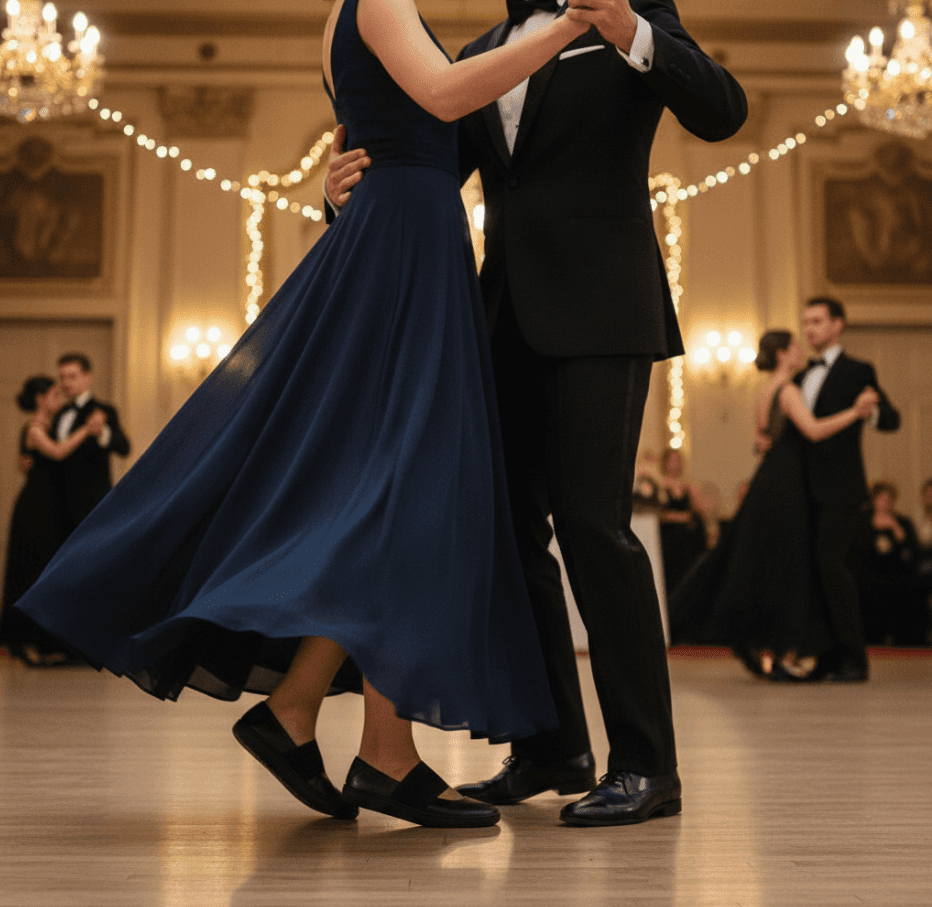
The idea of dancing all evening in shoes that respect the natural shape of your feet sounds tempting. And it’s true: barefoot footwear at a ball comes with plenty of benefits. Your toes have enough room and aren’t squeezed into a narrow toe box, which helps you feel more stable. A thin sole gives you excellent contact with the floor and allows your feet to move in all the ways they naturally can. Your centre of gravity stays where it should, because a heel isn’t artificially tipping you forwards.
But as Michaela Píšková points out, it’s not as simple as slipping on barefoot shoes and heading straight to the ball. A hard dance floor combined with a thin sole can be surprisingly demanding for feet that aren’t used to that kind of load. A ball often lasts five to eight hours — and if you don’t dance much in everyday life and you’re not used to standing for long periods, your feet may start complaining long before the final waltz.
The key is knowing yourself and realistically judging what’s ahead. Will you be dancing to every song? Or are you more likely to spend the evening chatting with friends at the bar and only take the occasional turn on the dance floor? If you know you’re not used to barefoot footwear or longer stretches of dancing, it’s better to choose a compromise — for example, barefoot shoes with a thicker sole, a cushioned insole, or simply bringing a back-up pair to change into.
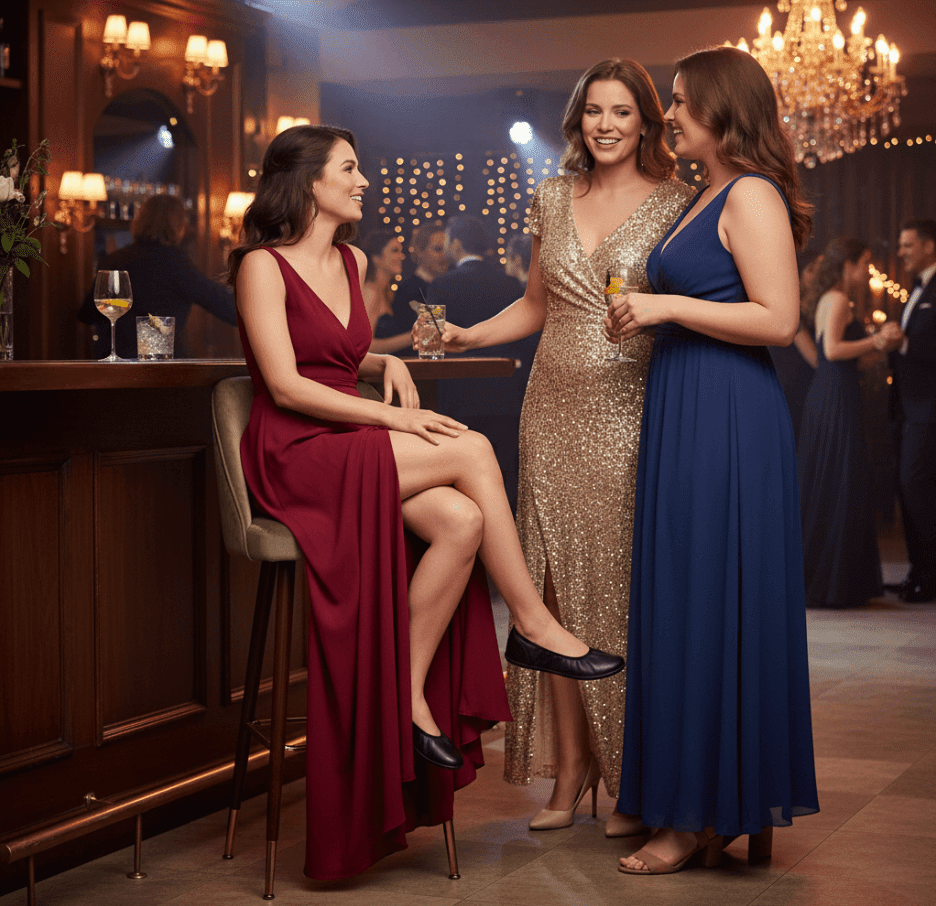
Whatever footwear you decide on, Michaela Píšková highlights one essential thing: your shoes must stay securely on your feet. It may sound obvious, but this is exactly the detail many people underestimate. Ballet flats or delicate strappy sandals can look beautiful — but if your foot slides back and forth inside them, you’ll feel it sooner or later. Shoes that don’t hold your foot properly make your toes subconsciously “grip” to keep the shoe on, which can overload not only the foot, but also the calf.
If you know you’ll be dancing a lot, choose shoes with an ankle strap or a strap across the instep, and a heel that stays in place. A slightly thicker sole or an insole can also help soften the hardness of the dance floor. If you’re planning a calmer evening with just occasional dancing, lighter sandals or ballet flats may be fine too — but again, they need to fit securely.
And then there’s the golden rule of seasoned ball-goers: always bring a spare pair to change into. Trainers like LEGUANO AMALFI or GO look elegant enough not to raise eyebrows, while giving your feet so much comfort you’ll be able to dance until morning.
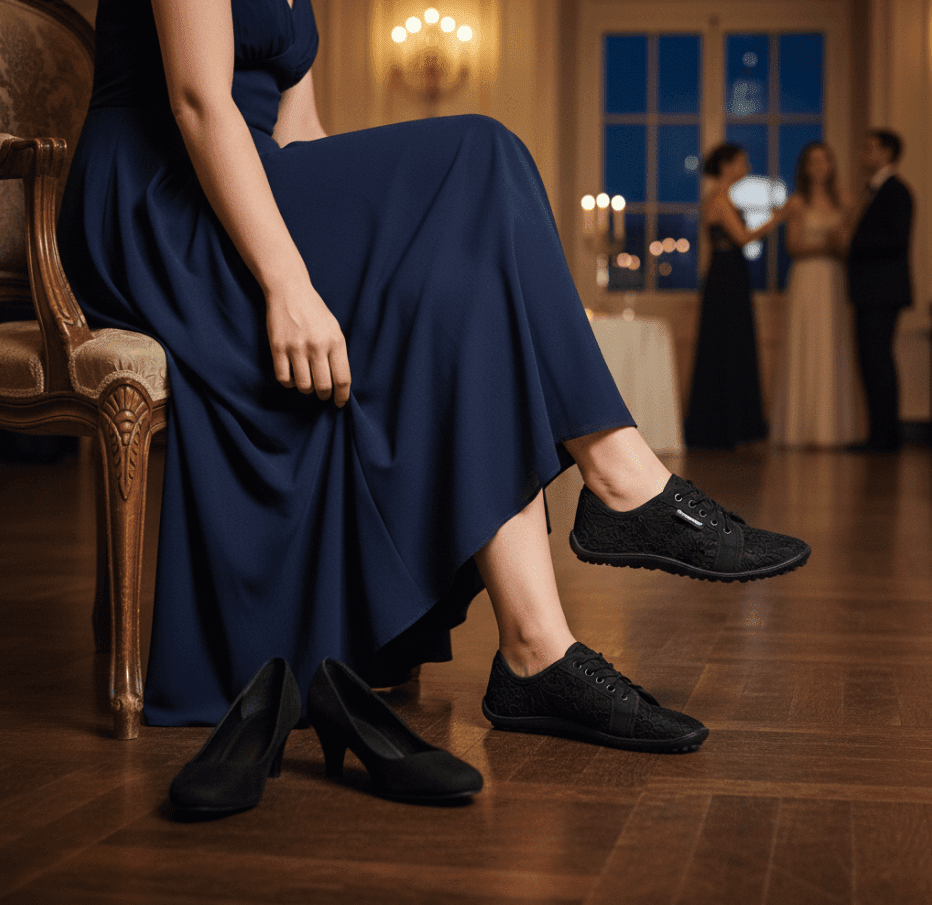
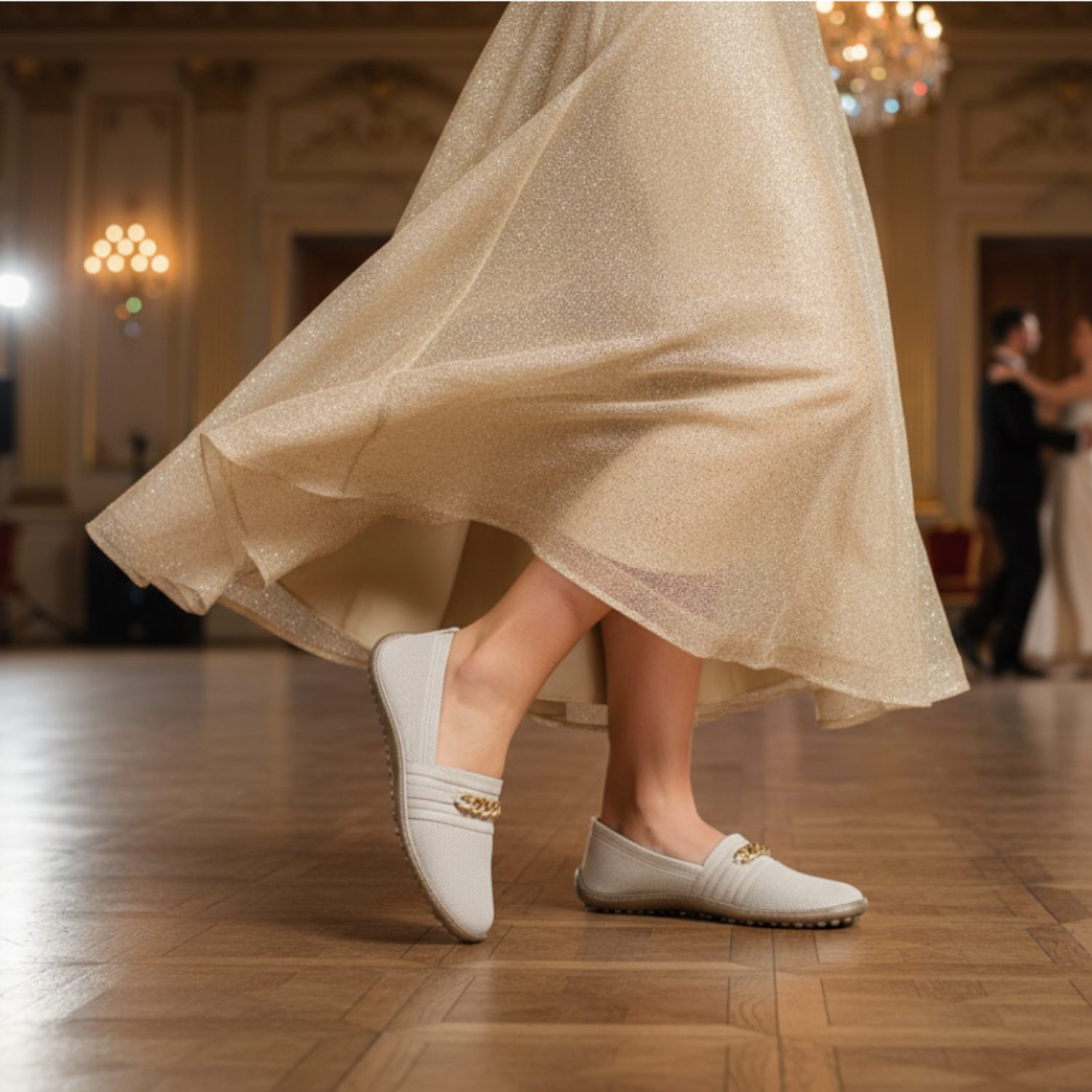
In our ball footwear category, you’ll find a wide range of elegant barefoot shoes — from ballet flats and dress shoes to sandals. For extra comfort, choose ballet flats from BAŤA with a strap across the instep and a removable cork insole, or soft LEGUANO ballet flats that stay securely on the foot. The biggest statement comes from elegant SHAPEN sandals and ballet flats in patent or metallic leather. Each of these shoes respects the natural shape of your foot and gives your toes the space they need. It’s simply down to you which pair you fall for — and which fits you best.
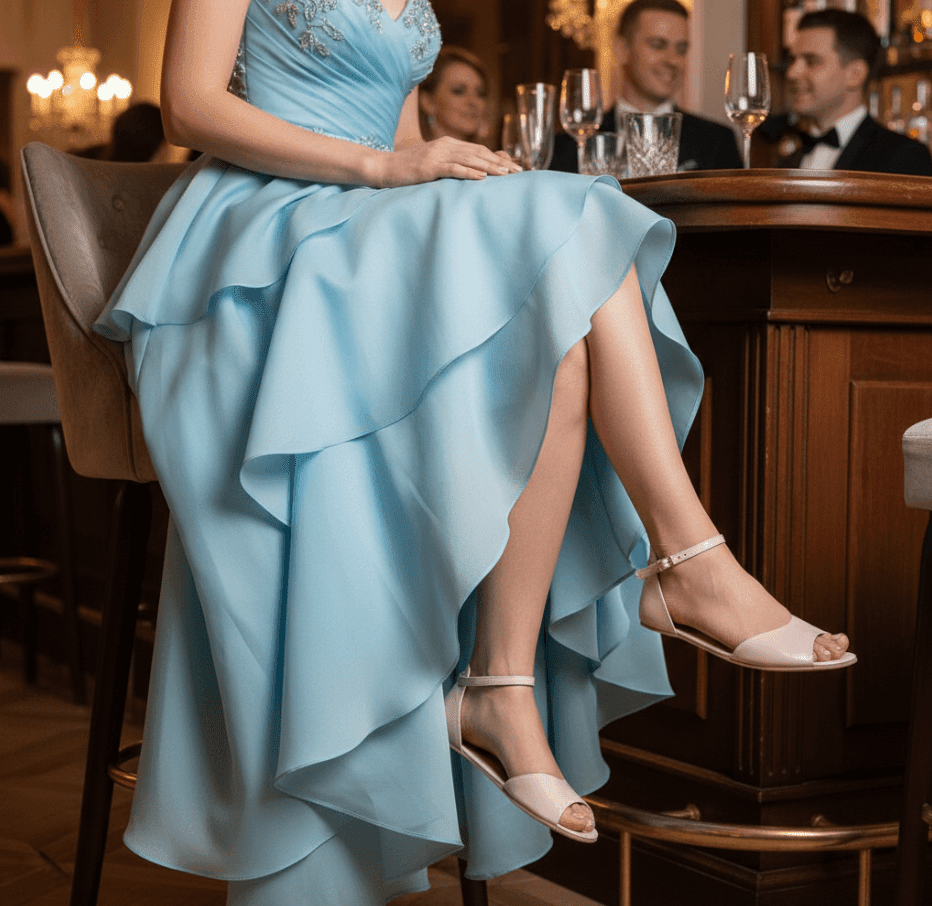
Another interesting option is lace trainers like LEGUANO AMALFI or GO, available in silver, gold, white and black. You might be surprised how elegant trainers can look when they’re well designed. And the comfort they offer is simply in a different league.
Men often have it easier — most aren’t as fussed as women and are happy with comfortable smart shoes. Leather lace-ups from BAŤA or GROUNDIES in black look great and are easy to match with any outfit. For a more luxurious feel, LEGUANO lace-ups in soft nubuck leather are wonderfully comfortable. And if you prefer trainers, some models can look very stylish while keeping you comfortable all evening.
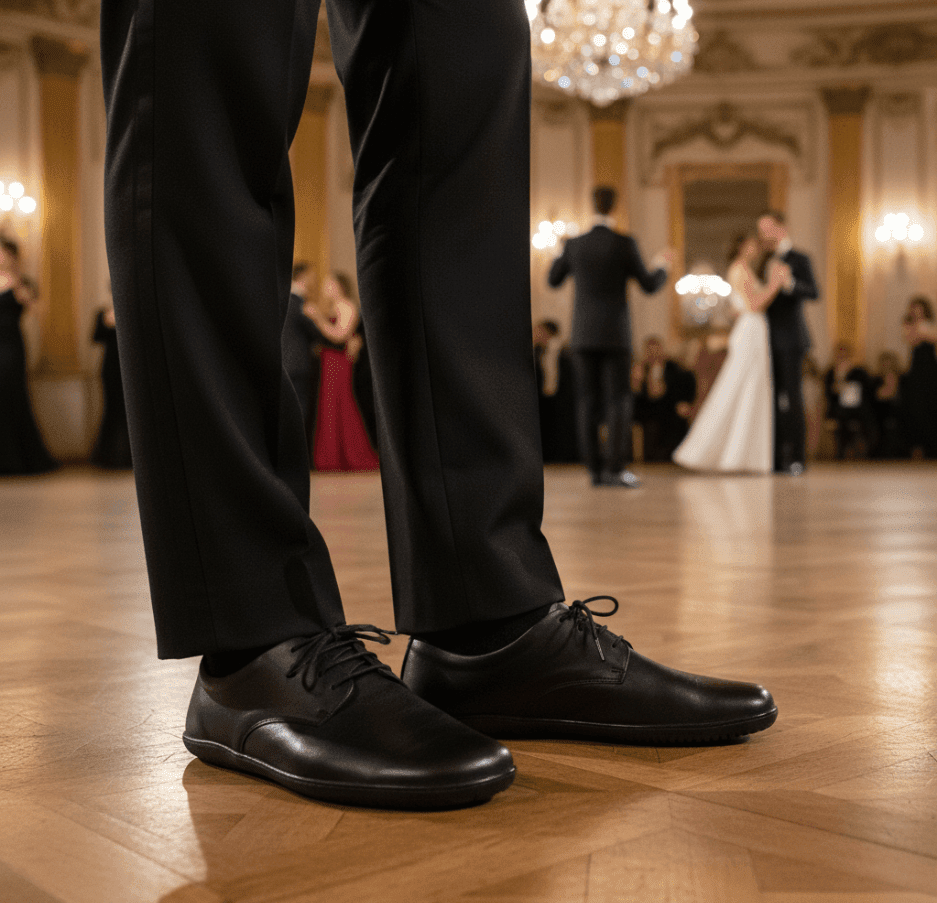
Sometimes you just can’t avoid heels. Maybe it’s the dress code, maybe it’s your own idea of the perfect ball night. Even then, you can still help your feet a great deal by choosing wisely.
Forget sky-high stilettos and narrow pointed toes. Did you know that dancing well in very high stilettos isn’t easy anyway? Go for a lower heel height and pay attention to the shape. A wider, stable heel that sits straight down under the centre of the heel will support you far better than a thin stiletto. And the toe box? At least slightly rounded will feel much kinder to your toes than a sharply pointed shape.
Even with heels, the basic rule still applies — the shoe must fit perfectly and stay on. Straps around the ankle or across the instep are essential; otherwise you’ll spend the whole evening fighting to stop your shoes slipping off.
And here’s a smart compromise many women use: wear heels for only part of the evening. For the start, for photos, for the first dances — and then simply change into a more comfortable barefoot option and enjoy the rest of the ball without pain. Around midnight, most dance floors are full of women dancing barefoot anyway — so why not join them in comfortable barefoot shoes?
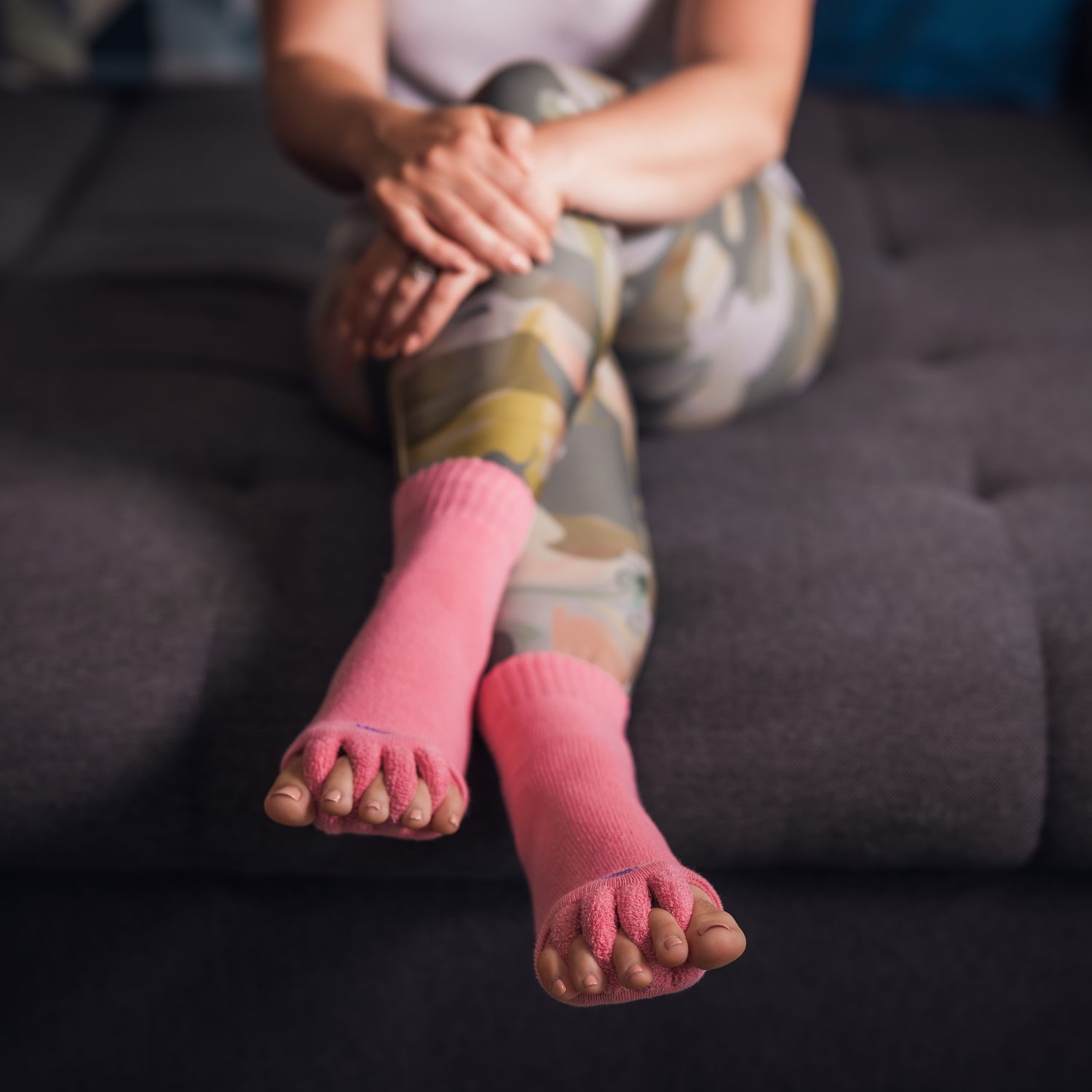
Even if you chose the most comfortable footwear, your feet deserve a bit of care after a night on the dance floor. Michaela Píšková recommends starting with a massage — you can use a special massage ball like the NABOSO NEURO BALL or a simple tennis ball. Massage your soles, calves, and even your glutes, which work during dancing too. Mobilising your toes is also brilliant — weave your fingers between your toes and gently move them, making small circles. Add a stretch for your calves and hamstrings.
If you have ADJUSTAČNÍ PONOŽKY, now is the perfect time to get them out. Over the next few days, wear shoes with plenty of room for your toes; foam insoles can also feel comfortable for a softer step. And of course — feet up, rest, enough sleep and hydration. Your body, including your feet, needs time to recover.
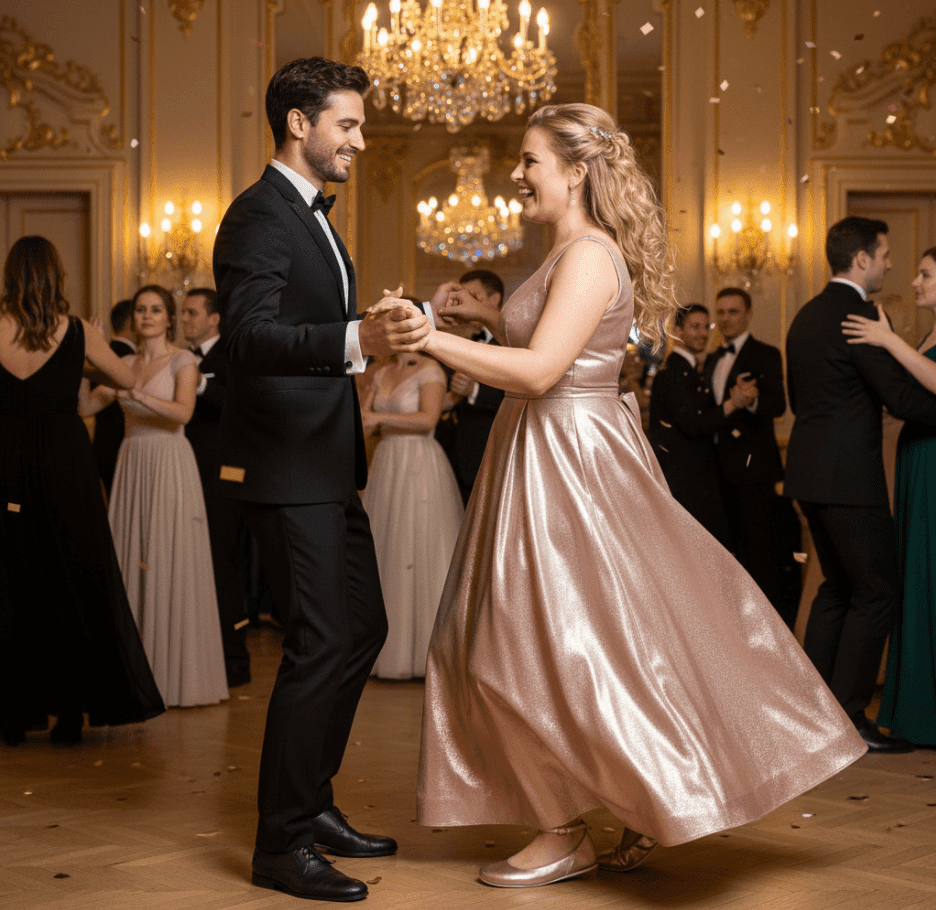
Ball season doesn’t have to mean sore feet and exhaustion. With a sensible choice of footwear that respects your body — and a little planning — you can enjoy every minute of dancing. Whether you choose barefoot ballet flats, elegant trainers, or a compromise with heels for part of the evening, your feet will thank you. And that’s the foundation of a truly lovely ball night: feeling good from head to toe.
This article was created in collaboration with MUDr. Bc. Michaela Píšková from FLOW Rehab Care. Michaela Píšková is a doctor, physiotherapist and former competitive dancer. She focuses mainly on correct walking technique, neurological topics and physiotherapy for dancers. She founded the comprehensive centre FLOW Rehab Care, whose team provides rehabilitation for babies, children and adults with a wide range of needs. Michaela also dedicates herself to educating the general public — especially on healthy walking and footwear, women’s health and body awareness.


You are currently on www.premiumbarefoot.co.uk


 £ - EN
 Čeština
 English (US)
 Slovenčina
 Magyar
 български
 Polski
 Dansk
Dansk
 Nederlands
 Svenska
 Suomi
Suomi
 Español
 Français
 Slovenščina
 Română
 Português
 Deutsch (DE)
 Deutsch (AT)
 Deutsch (CH)

