We’ll be happy to help via online chat or at: orders@premiumbarefoot.com

Children Barefoot Selection and Care of Barefoot Shoes Walking, Movement and Health
The wrong shoes can ruin even the best camp programme – in collaboration with physiotherapist Lucie Kinclová, we’ll advise what footwear to pack, what to watch out for, and why barefoot shoes for camp are a better choice than you might think.
Packing for camp has its own rhythm. Mess tin, sleeping mat, insect repellent, spare bedding… and then comes that moment when you’re standing by the shoe rack thinking: what on earth should they wear on their feet? The wrong shoes can ruin even the best camp programme. All it takes is one blister from stiff new shoes, or soaked trainers on day one, and the fun is over.
At the same time, summer camp is a brilliant environment for children’s feet. Forest paths, grass, moss, stones – it’s a natural gym for the feet like no other. And that’s exactly where barefoot shoes make the most sense. In this article, we’ll show you how to choose shoes that give feet freedom while still protecting them, so your child comes home full of memories – not sore spots.
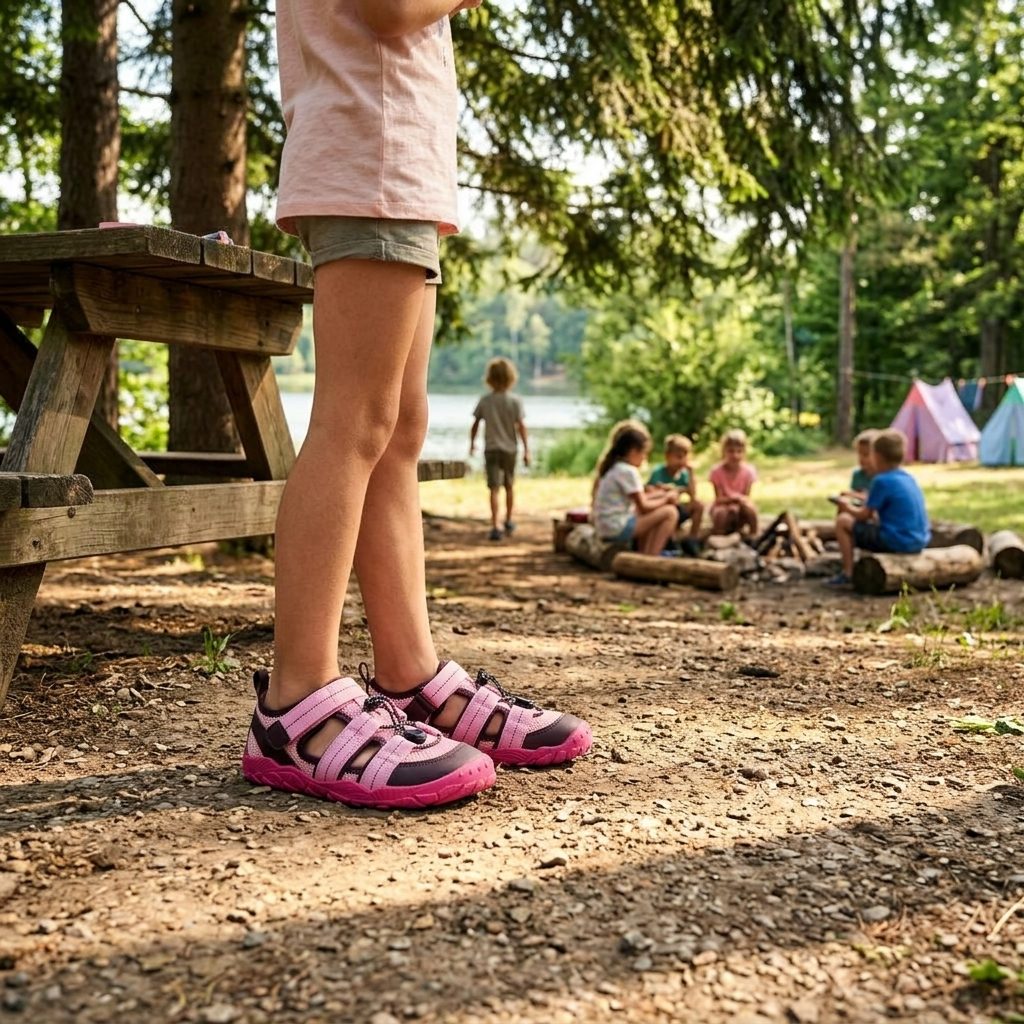
You might think proper, sturdy hiking boots are best for the woods. From a physiotherapy point of view, it’s actually the opposite – and Lucie Kinclová, a physiotherapist specialising in children’s feet, confirms it.
Natural terrain is the most natural environment for the feet. Barefoot shoes allow the foot to work exactly as it should. Thanks to a wide toe box, the toes have space to splay, which stabilises the whole body even on uneven ground. Zero drop – meaning heel and forefoot are at the same height – keeps your centre of gravity in the right position and is kinder to joints and the spine. And a thin, flexible sole lets the foot feel what’s underneath – the brain gets quick feedback and the foot can adapt instantly to the surface. Paradoxically, barefoot shoes can therefore reduce the risk of ankle sprains.
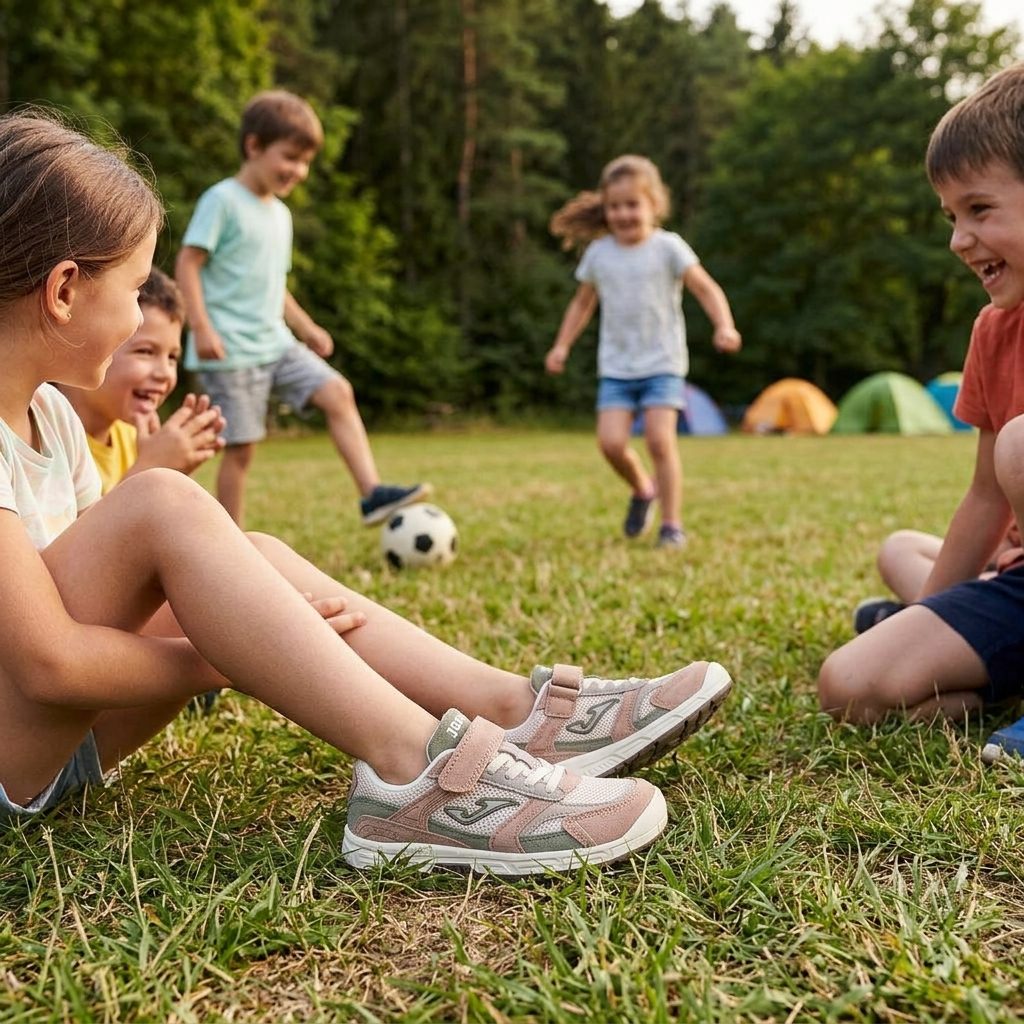
Before you start shopping, find out what conditions your child will face at camp. A Scout sleeping in a canvas tent in Vysočina will need different shoes from a child at a sports camp in a sports hall, and different again from a day camp where children will be walking mostly on the pavement.
In the woods, children deal with morning dew, mud, moss and roots. Shoes should have a more pronounced tread, ideally a membrane or at least a good waterproofing treatment, and of course a flexible sole.
In town, you don’t need deep tread, but shoes should have a more durable sole. Also pay attention if your child is hypermobile – flat surfaces don’t stimulate the foot muscles as much as natural terrain, and a hypermobile foot can then be unstable. For these children, we don’t recommend an extremely soft sole.
Luckily, your child doesn’t need ten pairs that fill the whole suitcase. But one rule always applies: they must have a dry alternative. If one pair gets soaked, your child needs something to slip into while the first pair dries by the stove.
Camp organisers usually send a recommended packing list. Most of them agree on this set-up – and we’re adding tips for specific barefoot models that can handle camp life with ease.
The foundation of the whole kit. Shoes for all-day trips, forest games, cooler days and those moments when sandals just won’t do. They need to be durable, breathable and have a grippy tread – but still be 100% flexible and lightweight.
If your child has a narrower foot, go for the JOMA CR111 JUNIOR trainers. The breathable upper with a ventilation system helps keep feet dry even with all-day activity, while the Velcro fastening and elastic laces allow a precise fit. They’re a little more structured than some other barefoot shoes, so they’re also suitable for children who are just starting their transition to barefoot footwear.
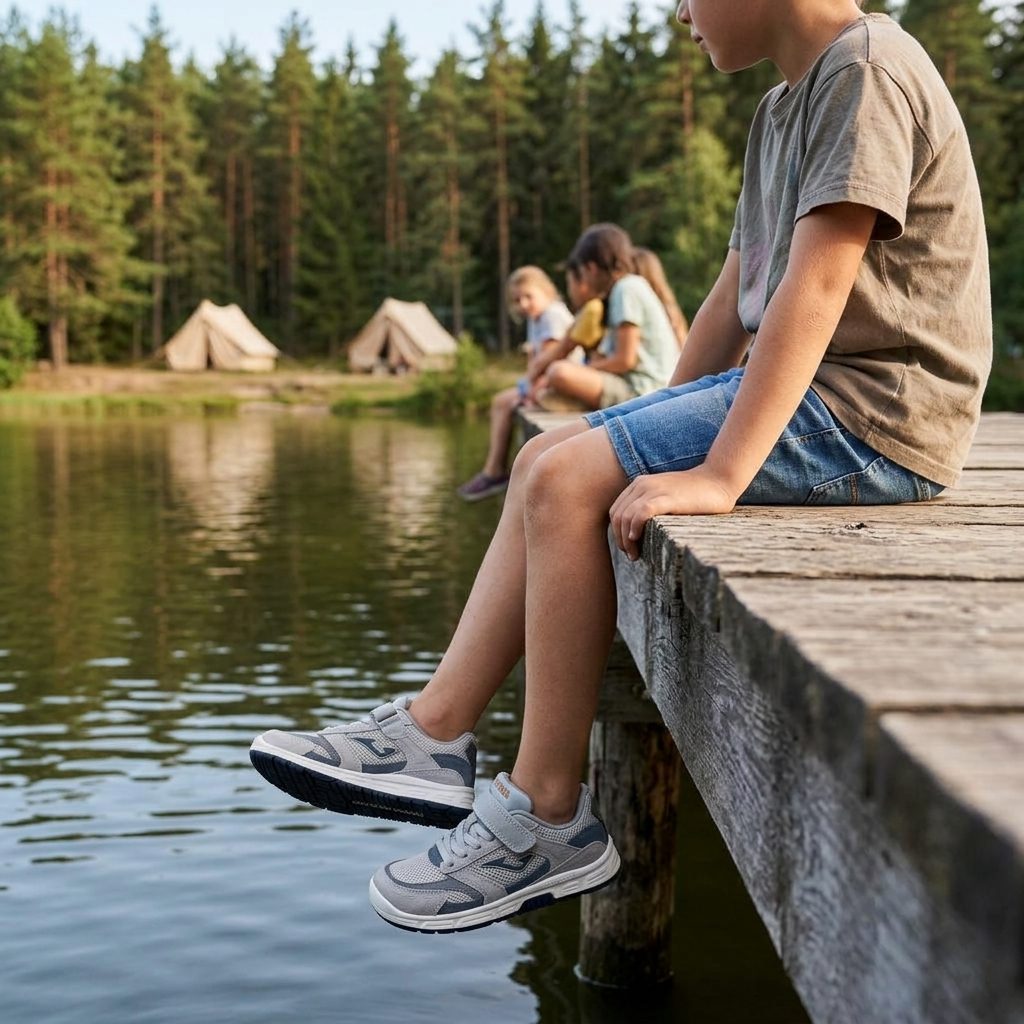
For average-width feet, DOCKERS BY GERLI trainers are a great choice. The breathable upper and flexible sole support natural foot function, the anatomically shaped toe box gives toes plenty of room, and the practical fastening means children can get them on quickly by themselves. They work well for the playground and the woods, and with waterproofing they’ll cope with morning dew too.
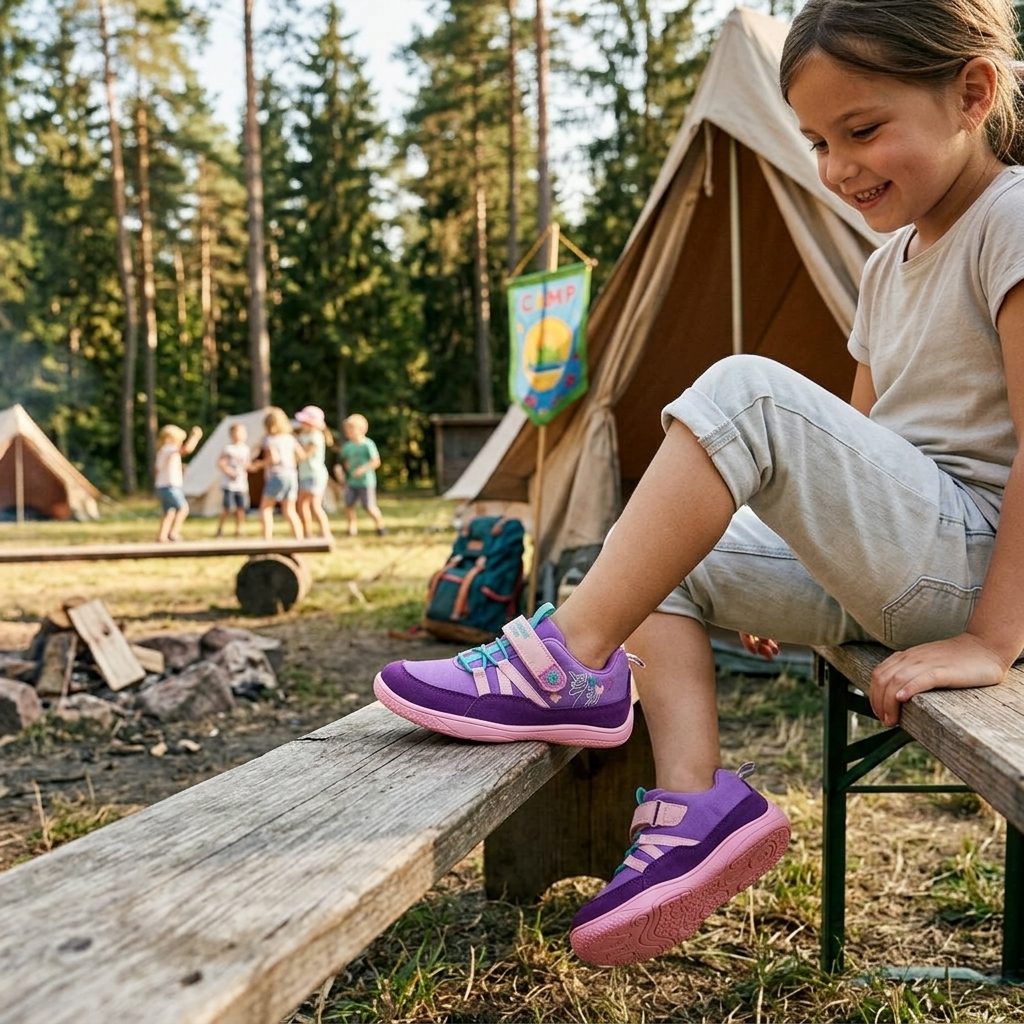
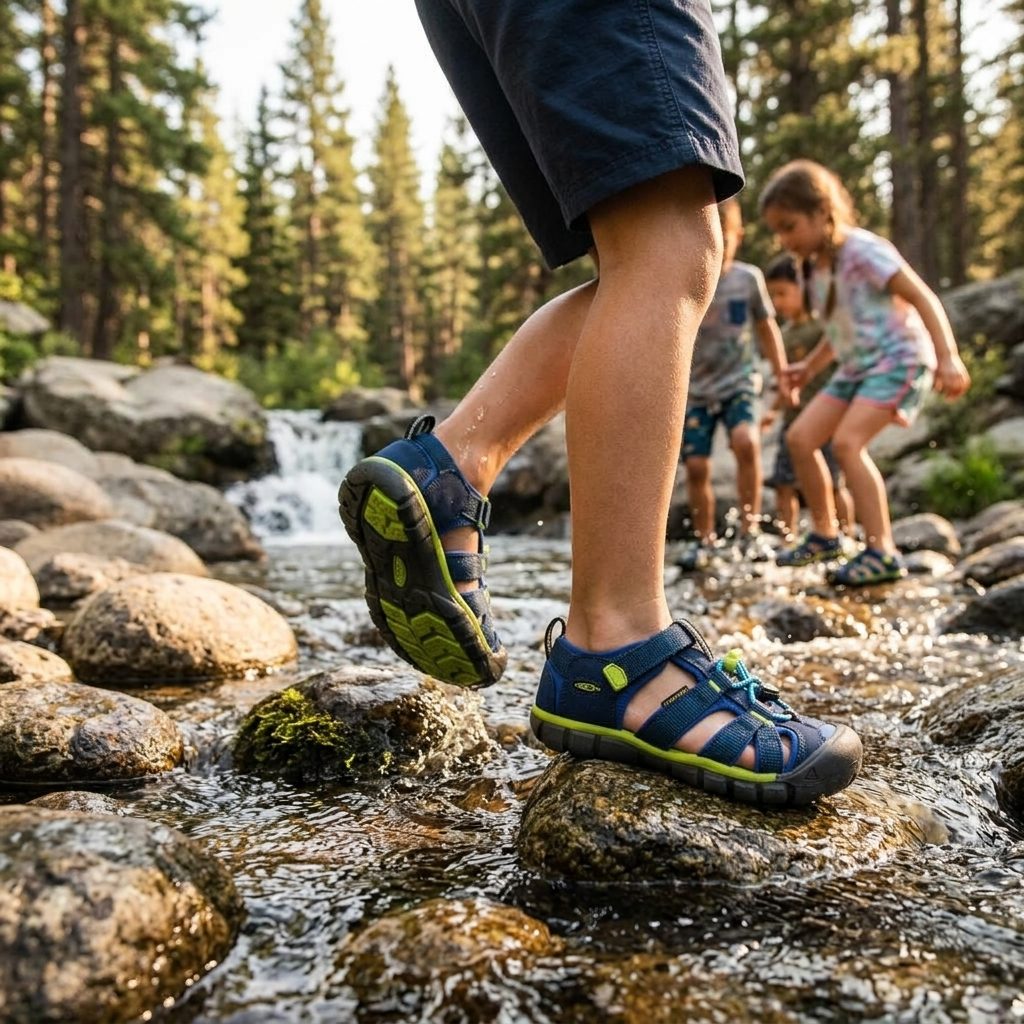
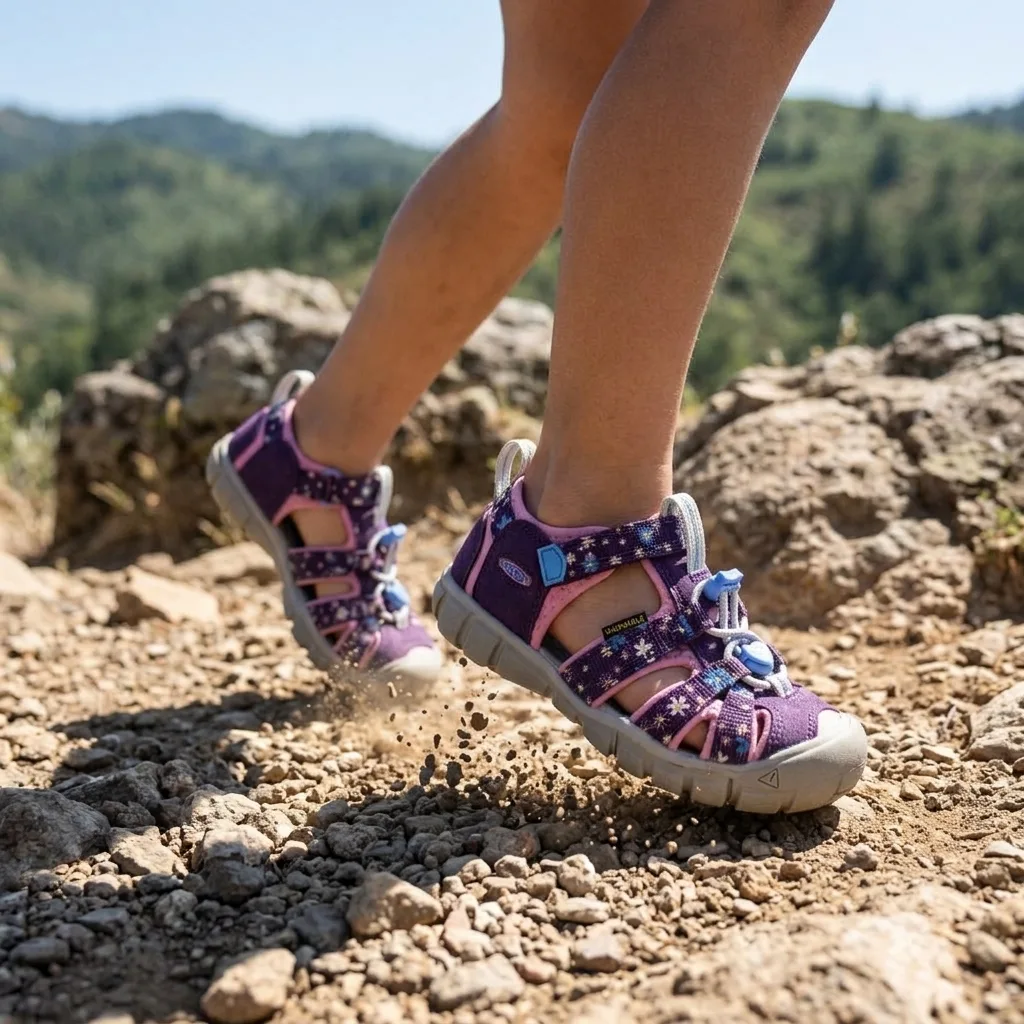
For hot summer days. But for camp, choose sandals that stay securely on the heel and ideally have a protected toe – not flip-flops or sliders that your child will trip in when jumping over a puddle.
JOMA DRUA JUNIOR are lightweight, sporty barefoot sandals that children tend to love from the first wear. The flexible sole and zero drop support natural foot development. An elastic toggle and Velcro fastening make them easy to adjust – an ideal choice for the playground, trips and everyday summer wear.
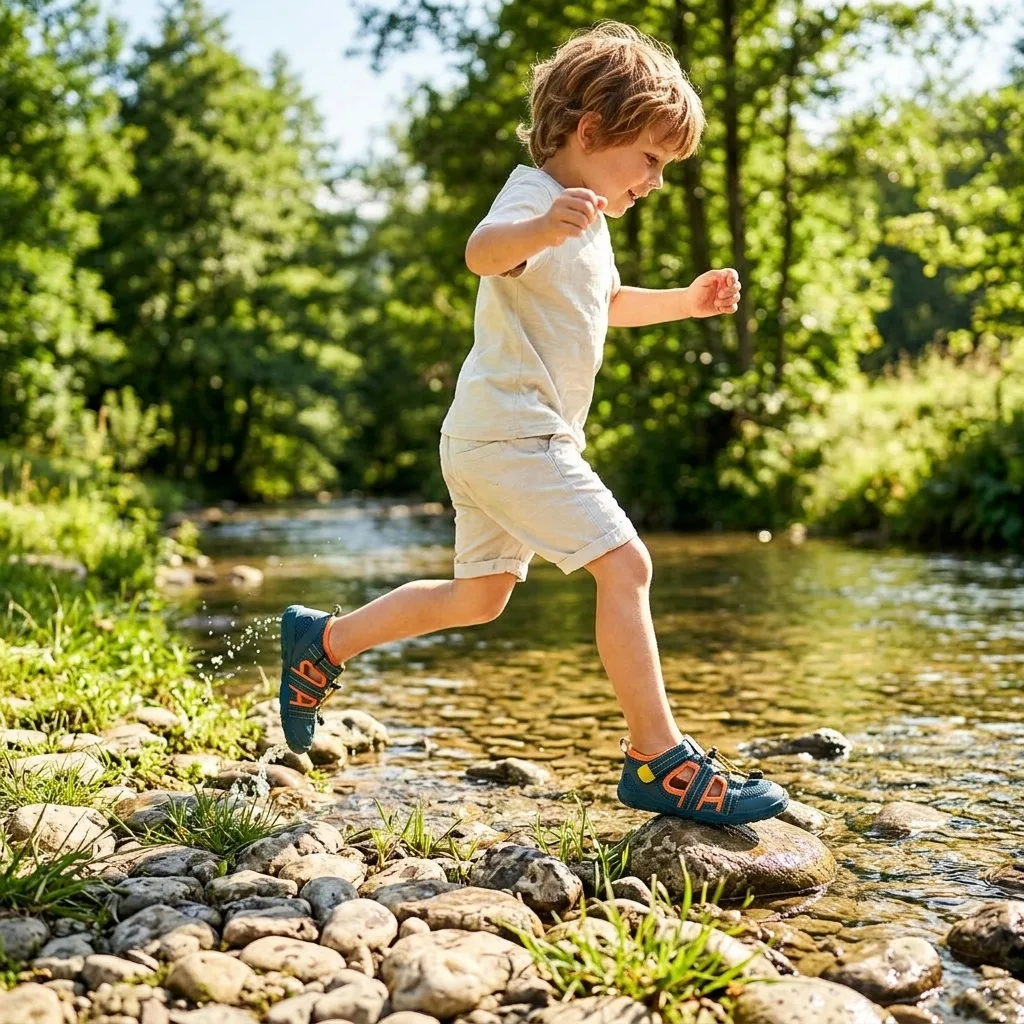
FRODDO LOOP SANDAL are an ideal choice for summer camp adventures. These leather barefoot sandals combine natural movement, comfort and quality craftsmanship – the soft leather, free from harmful chemicals, is safe and pleasant to wear. The flexible sole and zero drop support healthy foot development, and the roomy anatomical toe box is suitable even for a dominant big toe.
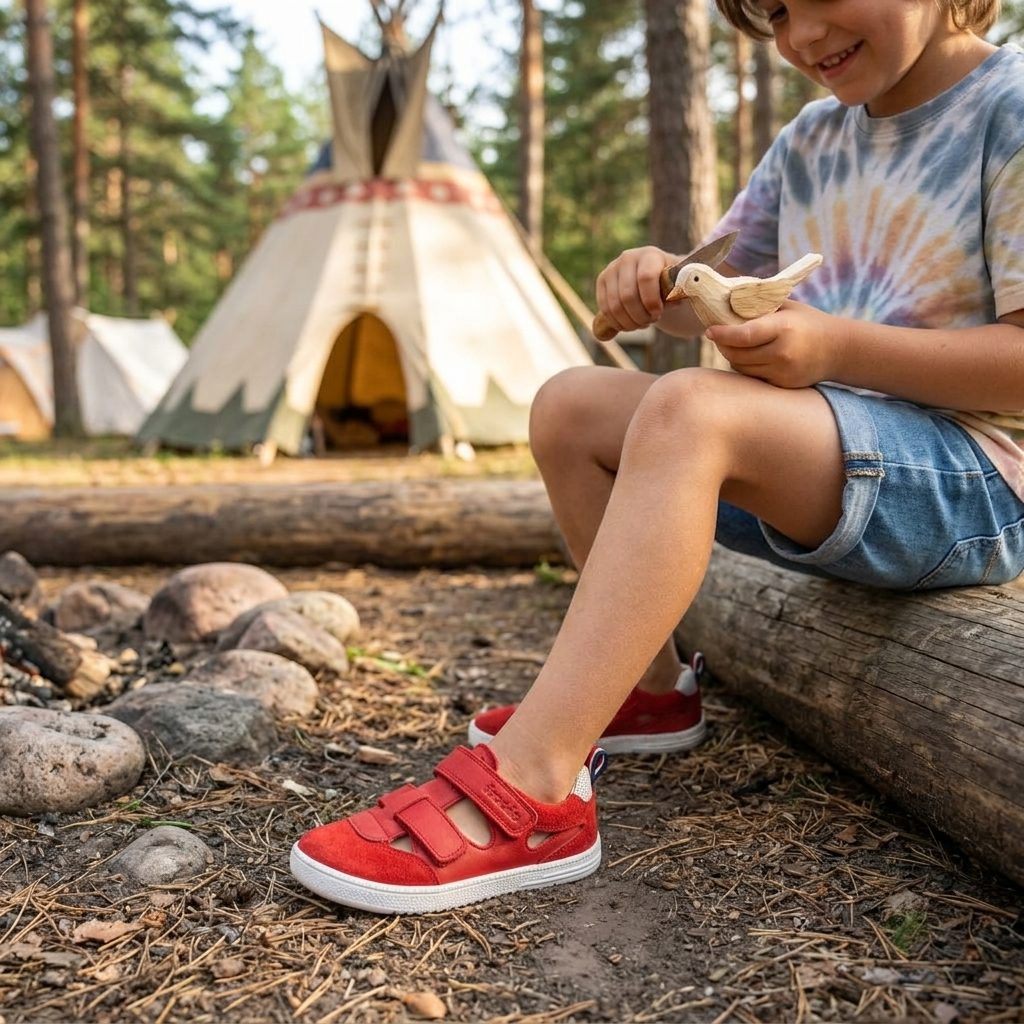
An alternative is KEEN SEACAMP II CNX – they’re not purely barefoot footwear, but thanks to their durability, toe protection and quick fastening, they can be a practical option for water activities or more demanding terrain.
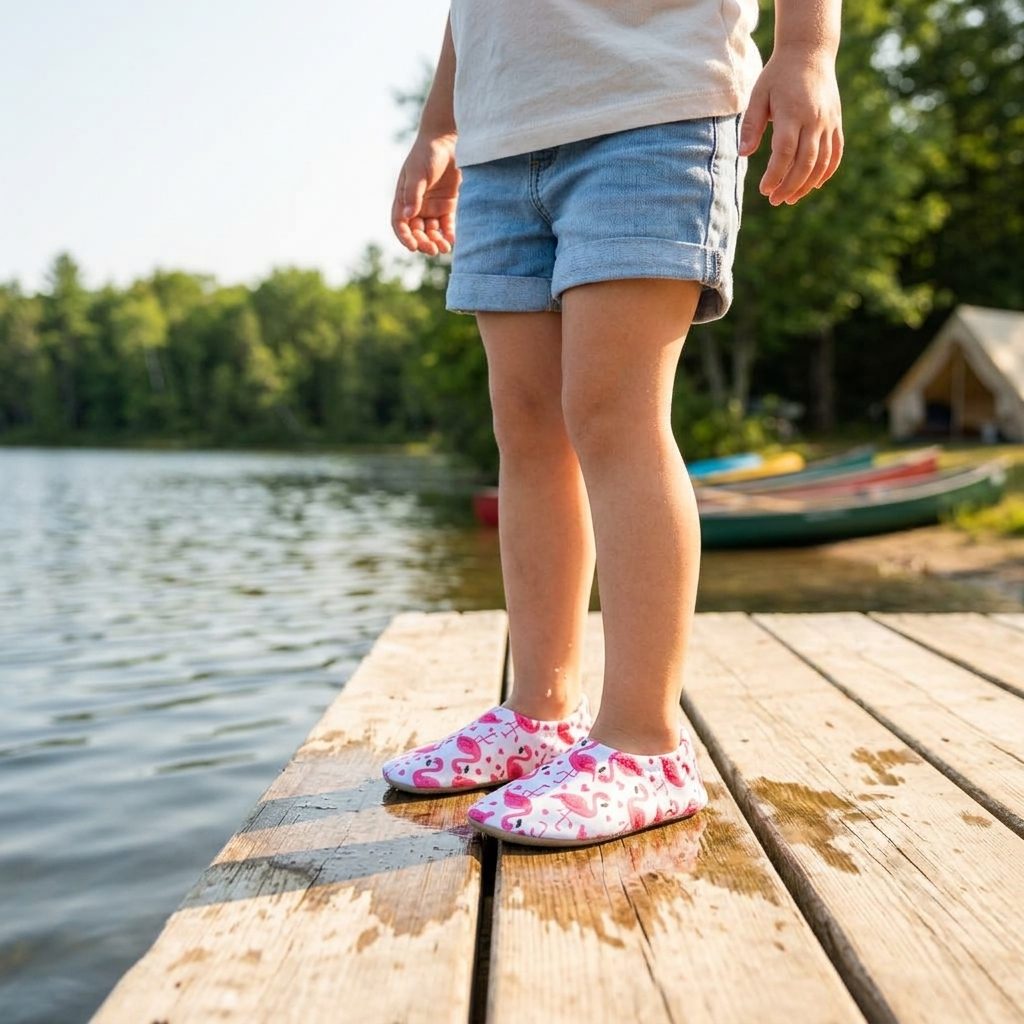
A must for two reasons: hygiene in shared showers and safe entry into a pond, stream or swimming pool. Look for something lightweight and quick-drying.
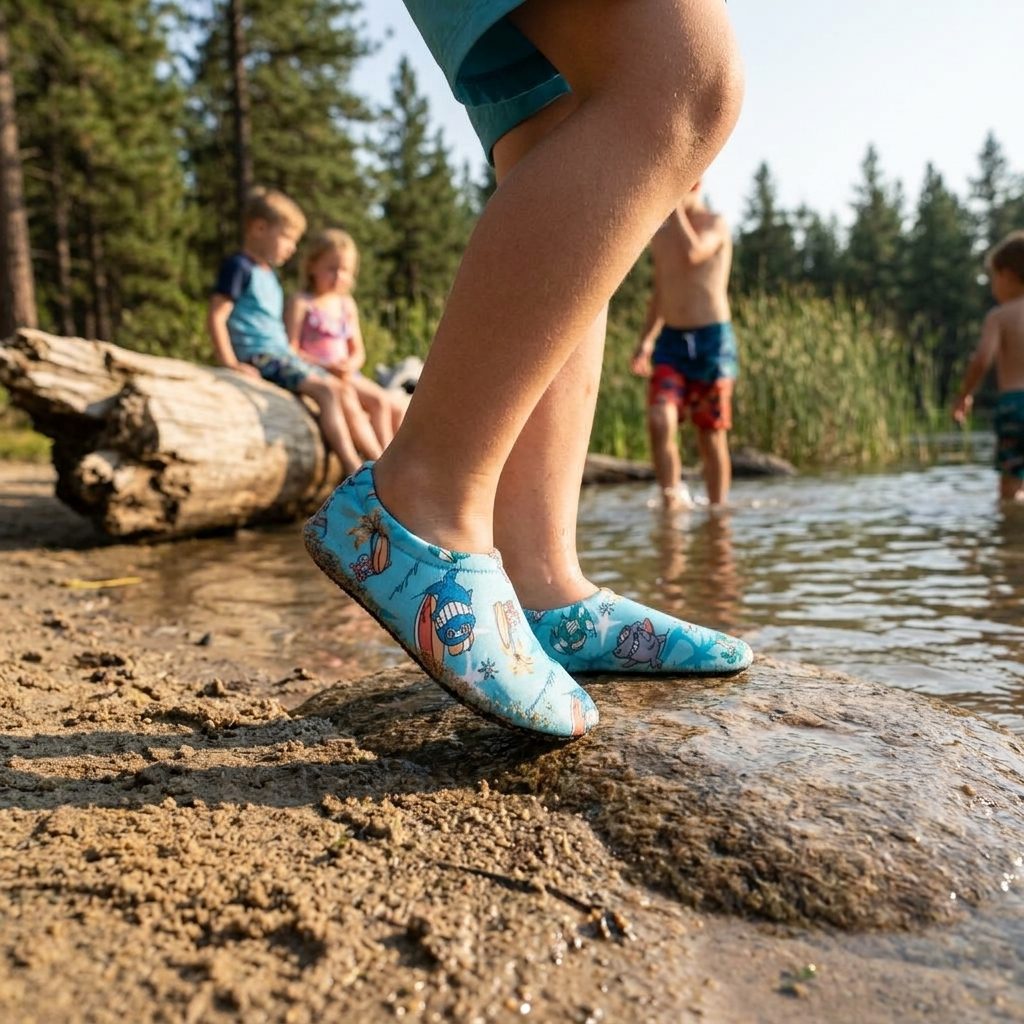
RAYVE SPLASHSAFE are exactly the thing. Lightweight, quick-drying, with a non-slip sole and a stretchy material that’s easy to pull on and fits comfortably. They protect against slipping in showers, hot sand and sharp stones in the water – and they take up hardly any space in a suitcase. In summer, you can use them as cabin slippers and as pool shoes too.
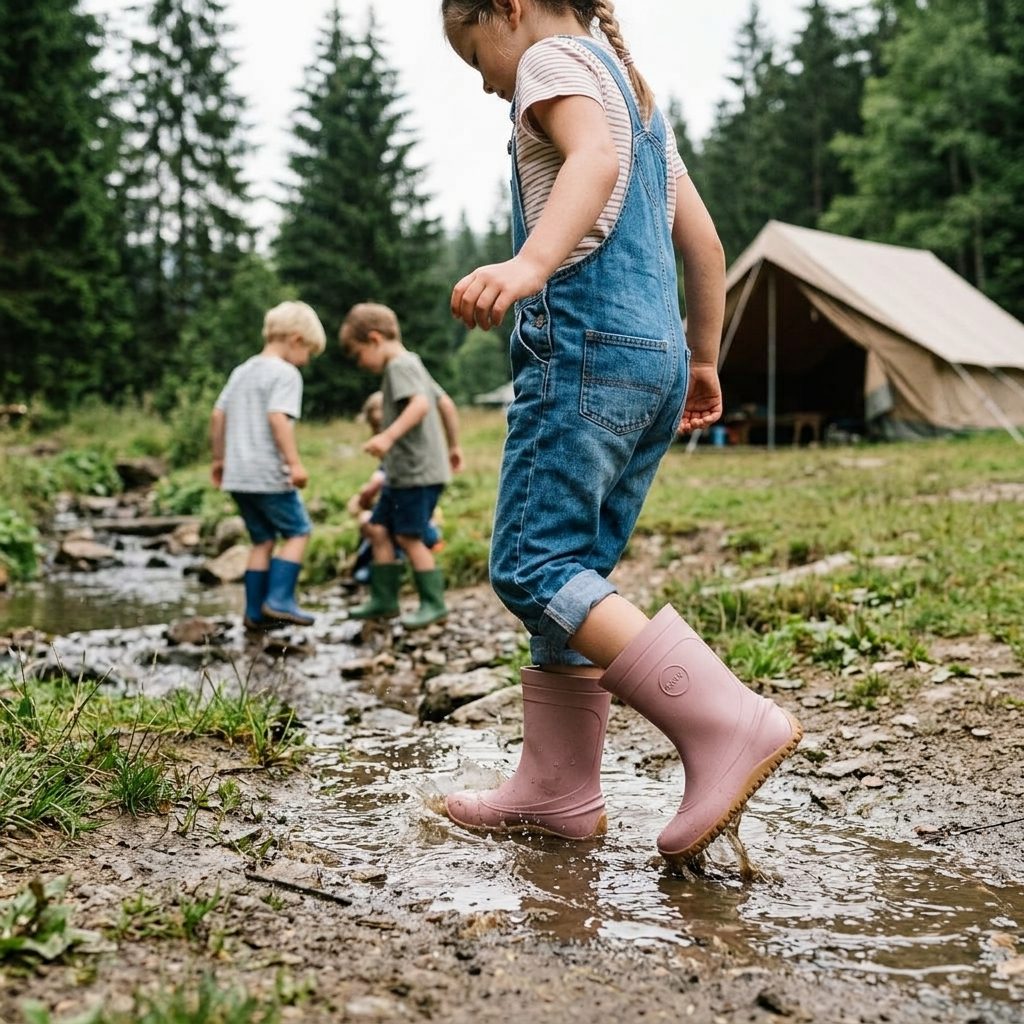
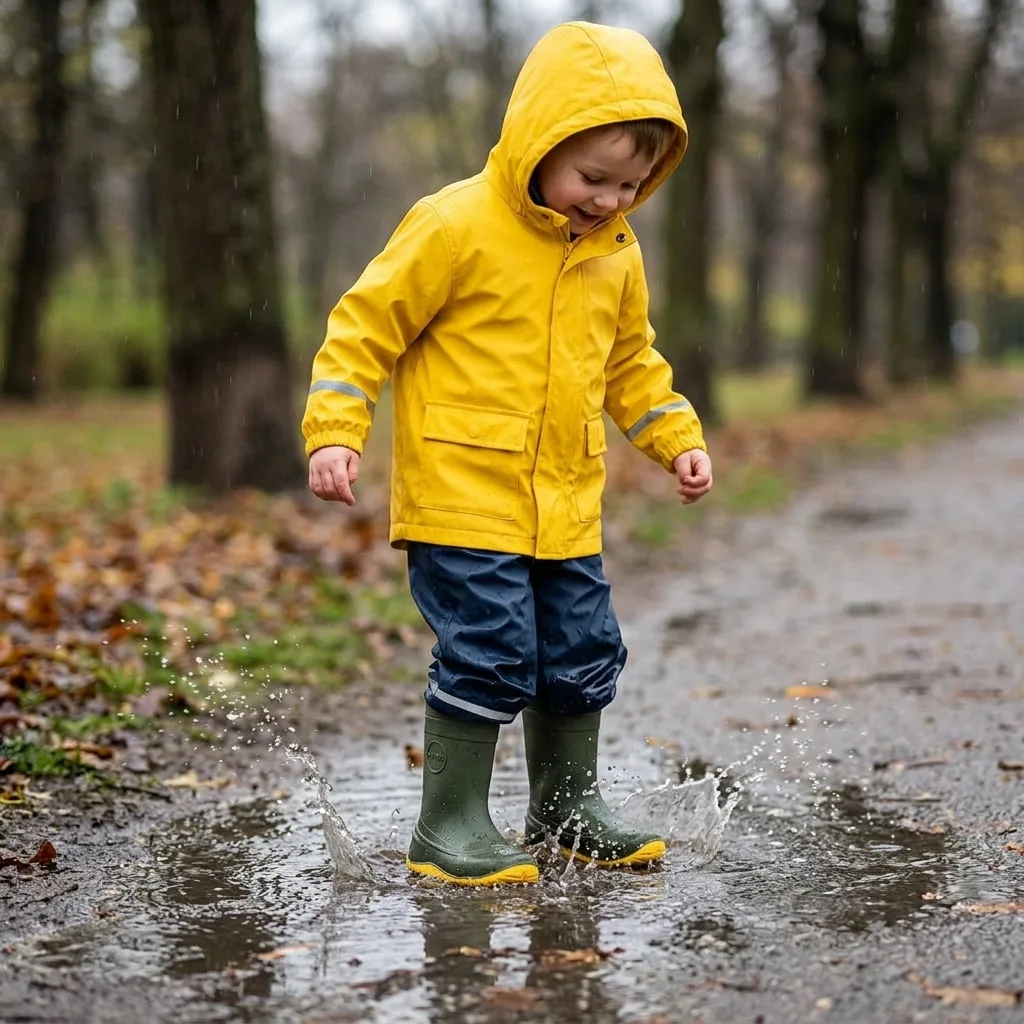
For a classic outdoor camp, wellies belong in the kit just as much as a sleeping mat. But forget heavy, stiff rubber boots that make it impossible to walk even a kilometre without complaints.
RAYVE MONSOON are in a different league. Incredibly lightweight and flexible, they let children run around in mud without restriction. The anatomically shaped toe box gives toes plenty of space, the thin sole supports ground feel, and the removable insole makes cleaning and drying easier after a long rainy day. They fit narrower heels well and suit average to wider feet – in short, a shoe that can handle any adventure.
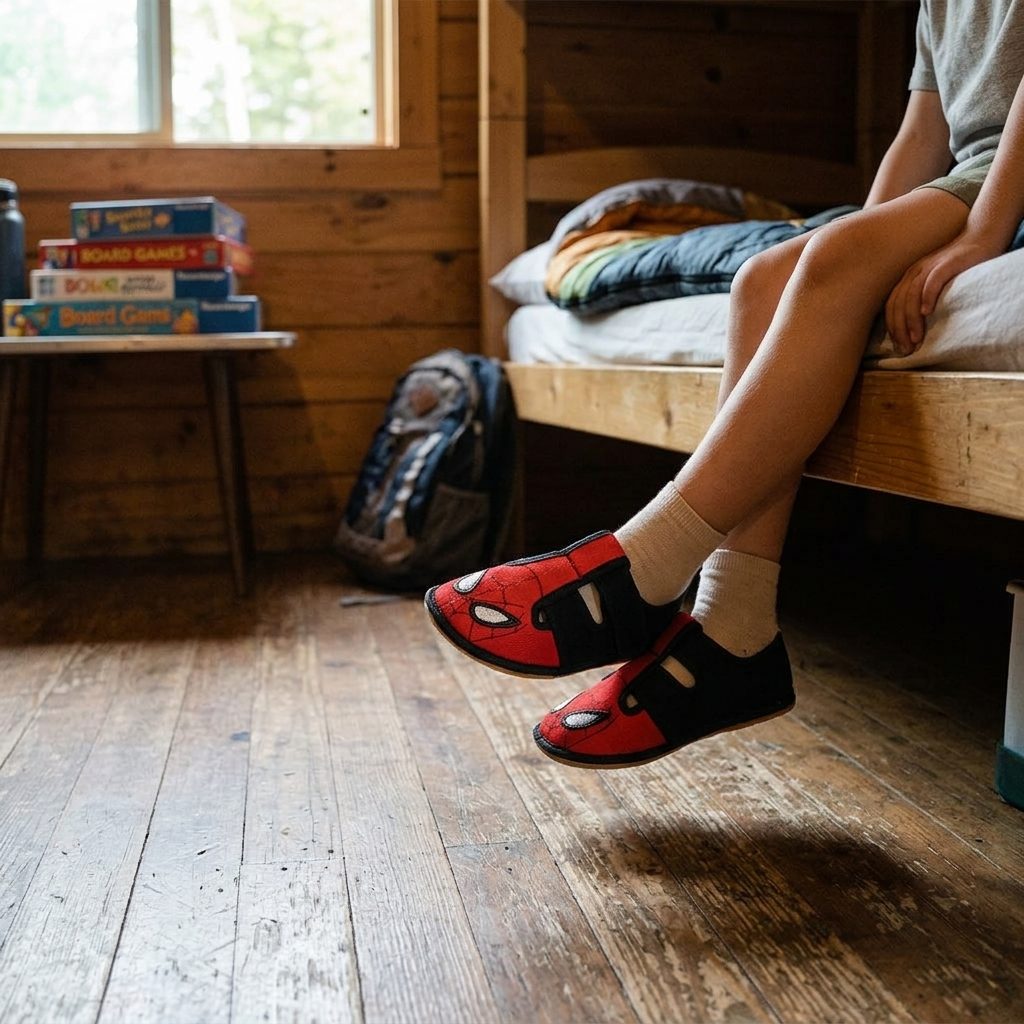
These are often required for cabins or day camps with indoor activities. Lightweight barefoot slippers or canvas shoes with a clean sole are enough. As with all footwear, it’s important they stay securely on the foot.
An ideal choice is RAYVE SLIPPERS – lightweight barefoot slippers with a thin sole and zero drop, allowing natural movement and good ground contact. They’re easy to slip on, stay put, and come in lots of cheerful patterns and colours.
Buy the shoes in advance. Ideally two to three weeks before departure, and let your child properly break them in outdoors. Blisters on the first trip are almost always down to brand-new shoes, not a bad choice.
Waterproof them. Even the best shoe will fail in morning dew if you don’t treat it. A good waterproofing spray will extend the life of the shoes and significantly improve water repellency.
Label the shoes. It sounds like a small thing, but in shared tents shoes get mixed up easily.
You’ll find all the models mentioned – and plenty more healthy shoes for little adventurers – in our e-shop. If you’re not sure which model to choose for your child, come and see us in our brick-and-mortar shop – we’ll measure their feet properly, answer your questions and help you find shoes that will handle camp life brilliantly. We’d love to see you!
This article was created in collaboration with Mgr. Lucie Kinclová, Ph.D. (Barefootcoaching), a physiotherapist focusing on children’s feet, psychomotor development and podology. She is also the author of the e-book O dětských nožičkách.


You are currently on www.premiumbarefoot.co.uk


 £ - EN
 Čeština
 English (US)
 Slovenčina
 Magyar
 български
 Polski
 Dansk
Dansk
 Nederlands
 Svenska
 Suomi
Suomi
 Español
 Français
 Slovenščina
 Română
 Português
 Deutsch (DE)
 Deutsch (AT)
 Deutsch (CH)


